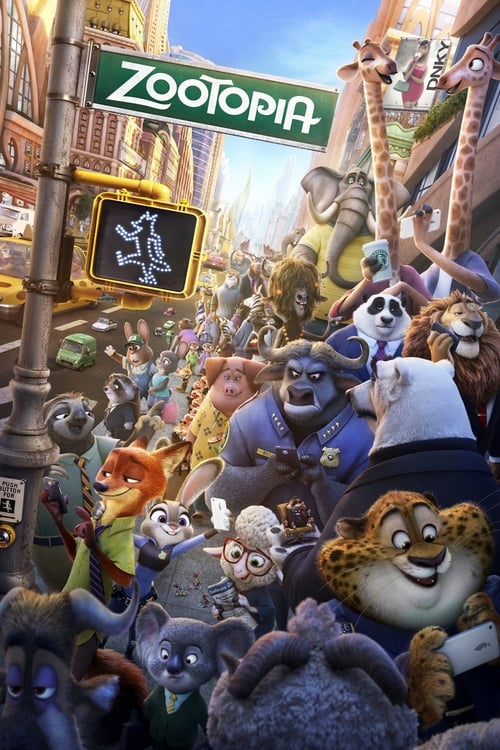
Zootopia
2016 · Directed by Byron Howard
Woke Score
Critic Score
Audience
Woke
Critics rated this 21 points above its woke score. Among Woke films, this critic score ranks #23 of 57.
Representation Casting
Score: 78/100
Diverse voice cast including Idris Elba and Octavia Spencer. Female protagonist in position of authority. Multiple character backgrounds represented.
LGBTQ+ Themes
Score: 0/100
No explicit LGBTQ+ representation or themes present in the film. Fan speculation exists but remains subtext rather than text.
Feminist Agenda
Score: 75/100
Strong feminist narrative with Judy overcoming institutional sexism and gender-based dismissal. Her arc centers professional achievement rather than romance.
Racial Consciousness
Score: 85/100
The entire film functions as an extended allegory for racial profiling and stereotyping. Predator-prey dynamics explicitly mirror racial hierarchies and institutional discrimination.
Climate Crusade
Score: 0/100
No environmental themes or climate-related commentary present in the narrative.
Eat the Rich
Score: 15/100
Nick Wilde operates as a hustler and outsider, but the film does not critique capitalism or economic systems themselves.
Body Positivity
Score: 40/100
Film displays diverse body types among animal characters, though body positivity is not an explicit thematic focus.
Neurodivergence
Score: 0/100
No representation of neurodivergent characters or themes related to neurodiversity in the film.
Revisionist History
Score: 55/100
Film presents an optimistic, sanitized vision of overcoming prejudice through individual good faith rather than systemic change, suggesting individual reform solves structural problems.
Lecture Energy
Score: 70/100
Final act increasingly abandons dramatic subtlety in favor of direct moral instruction, with characters spelling out lessons about prejudice and assumptions.


Synopsis
Determined to prove herself, Officer Judy Hopps, the first bunny on Zootopia's police force, jumps at the chance to crack her first case - even if it means partnering with scam-artist fox Nick Wilde to solve the mystery.
Consciousness Assessment
Zootopia arrives as a children's film that has quietly become one of Disney's most explicit exercises in progressive social instruction. The film operates with the earnest conviction of a community college seminar, using its anthropomorphic metropolis to explore institutional prejudice, systemic discrimination, and the persistence of stereotyping across social hierarchies. Officer Judy Hopps' journey from dismissed rookie to respected officer functions as the narrative vehicle for these lessons, though her arc also carries genuine feminist weight in its refusal to center romance or diminish her ambitions.
The film's primary mechanism for cultural commentary is its predator-prey allegory, which maps quite directly onto racial dynamics and the suspicion directed at marginalized communities by institutional power structures. This approach is neither subtle nor particularly innovative, but it is thorough. The final act abandons even the pretense of dramatic storytelling in favor of direct moral instruction, with characters becoming mouthpieces for lessons about the dangers of assumption and the prevalence of bias. There is a certain admirable commitment to didacticism here, a refusal to trust the audience to extract meaning from subtext.
Where the film's progressive sensibilities falter is in its fundamental optimism about individual reform solving structural problems. Zootopia suggests that prejudice dissolves when good people choose to see past their assumptions, a therapeutic rather than systemic vision of social change. The film also contains troubling implications in its resolution, wherein the conspiracy to manipulate predator-prey relations is framed as the real villain, potentially muddying the message about institutional racism. Still, for a mainstream animated feature aimed at children, the commitment to centering these conversations is notable, even if the execution sometimes mistakes earnestness for depth.
Analysis generated by our Consciousness Algorithm
Critic Reviews
“As crazy as the design of the world is, Zootopia ends up feeling like a genuine place. There's a vibrancy to it that runs through everything from the pace of the storytelling to the background details of the world in which the story takes place.”
“Zootopia is brimming with silly, slapstick humor and terrific one-liners — and yes, some simple yet valuable lessons about tolerance and prejudice and learning to embrace our differences. There's nothing wrong with a lesson or two when those lessons are packaged within such a great and memorable film.”
“Boasting a pitch perfect voice cast led by a terrific Ginnifer Goodwin as a righteous rural rabbit who becomes the first cotton-tailed police recruit in the mammal-centric city of Zootopia, the 3D caper expertly combines keen wit with a gentle, and very timely, message of inclusivity and empowerment.”
“Funny, smart, thought-provoking — and musical, too.”
Consciousness Markers
Diverse voice cast including Idris Elba and Octavia Spencer. Female protagonist in position of authority. Multiple character backgrounds represented.
No explicit LGBTQ+ representation or themes present in the film. Fan speculation exists but remains subtext rather than text.
Strong feminist narrative with Judy overcoming institutional sexism and gender-based dismissal. Her arc centers professional achievement rather than romance.
The entire film functions as an extended allegory for racial profiling and stereotyping. Predator-prey dynamics explicitly mirror racial hierarchies and institutional discrimination.
No environmental themes or climate-related commentary present in the narrative.
Nick Wilde operates as a hustler and outsider, but the film does not critique capitalism or economic systems themselves.
Film displays diverse body types among animal characters, though body positivity is not an explicit thematic focus.
No representation of neurodivergent characters or themes related to neurodiversity in the film.
Film presents an optimistic, sanitized vision of overcoming prejudice through individual good faith rather than systemic change, suggesting individual reform solves structural problems.
Final act increasingly abandons dramatic subtlety in favor of direct moral instruction, with characters spelling out lessons about prejudice and assumptions.