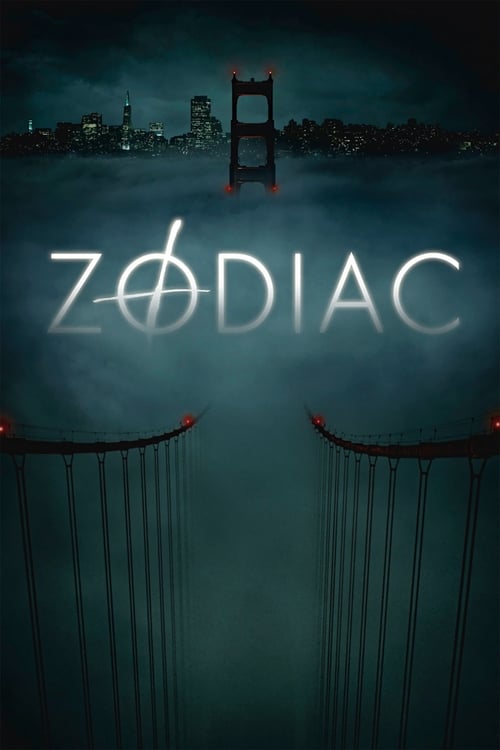
Zodiac
2007 · Directed by David Fincher
Woke Score
CriticCritic Score
Audience
Ultra Based
Critics rated this 77 points above its woke score. Among Ultra Based films, this critic score ranks #392 of 1469.
Representation Casting
Score: 5/100
The cast is predominantly male with minimal female presence. Chloë Sevigny plays a journalist but appears only briefly. No intentional diversity messaging, though casting reflects the period-accurate male-dominated institutions depicted.
LGBTQ+ Themes
Score: 0/100
No LGBTQ+ characters, themes, or representation present in the film.
Feminist Agenda
Score: 2/100
Female characters exist in minor roles without agency or development. No feminist themes or critique of gender dynamics. The marginalization reflects the film's focus on male obsession rather than intentional commentary.
Racial Consciousness
Score: 0/100
No exploration of racial themes, systemic racism, or racial consciousness. The film is set in 1970s San Francisco but does not engage with racial dynamics or commentary.
Climate Crusade
Score: 0/100
No environmental themes, climate messaging, or ecological consciousness present.
Eat the Rich
Score: 0/100
No critique of capitalism, wealth inequality, or economic systems. The film shows institutions functioning without commentary on their structures.
Body Positivity
Score: 0/100
No body diversity representation, body positivity messaging, or commentary on physical appearance and acceptance.
Neurodivergence
Score: 1/100
While the protagonist's obsessive behavior could be interpreted as neurodivergent traits, this is never explicitly framed or addressed as such. The film treats obsession as character choice rather than neurodivergence.
Revisionist History
Score: 0/100
The film is based on actual historical events and Robert Graysmith's nonfiction accounts. No revisionist reinterpretation of history occurs.
Lecture Energy
Score: 0/100
No expository dialogue explaining social issues, moral lessons, or preachy messaging. The film trusts the audience to follow procedural investigation without explanation.


Synopsis
Over the course of a decade, editors of the San Francisco Chronicle entice themselves in the murders of the Zodiac Killer. However, as time runs its course, interest in the case dwindles in the eyes of the professionals. The Killer stops interacting with the public. However, believing he has the answers, an amateur cartoonist from the initial sightings races against time to prevent what he believes is another murder.
Consciousness Assessment
David Fincher's Zodiac operates with the precision of a forensic examination and the obsessive attention of a man who has misplaced his car keys and refuses to accept they are simply gone. Released in 2007, the film predates the modern cultural preoccupations that would come to dominate discourse in the following decades. It is a work of meticulous craftsmanship concerned entirely with procedure, evidence, and the slow accumulation of data. The female characters present in the film exist primarily as auxiliary figures to the central male obsession. Chloë Sevigny appears as a journalist, but her role remains marginal to the narrative architecture. The film contains no identifiable progressive social agenda beyond what one might expect from any competent crime drama set in the 1970s.
The investigation into the Zodiac Killer unfolds without commentary on systemic inequality, environmental catastrophe, or alternative economic models. Fincher's camera remains fixed on the mechanics of detection itself: the crossing of names, the matching of handwriting, the comparison of ciphers. No character delivers speeches about representation in journalism or the gendered nature of violence. The film simply presents men pursuing a killer through bureaucratic channels, newspaper archives, and personal conviction. This is not progressive cinema. It is cinema about procedure, obsession, and the sometimes hollow nature of closure.
The minimal female presence and the total absence of LGBTQ+ representation, environmental concern, body diversity, neurodivergent characters, or anti-capitalist sentiment reflect the film's focus rather than any intentional conservative positioning. Zodiac remains committed to its narrow aperture: the hunt for a killer, the toll it takes on those conducting the hunt, and the possibility that some mysteries resist solution. In the context of modern cinema's cultural conversation, this restraint itself becomes a kind of statement, though not the kind that would register on contemporary sensitivity scales.
Analysis generated by our Consciousness Algorithm
Critic Reviews
“Zodiac exhausts more than one genre. Termite art par excellence, it burrows for the sake of burrowing, as fascinated by its own nooks and crannies as "Inland Empire."”
“Zodiac never veers from its stoically gripping, police-blotter tone, yet it begins to take on the quality of a dream.”
“Never takes off, but it never collapses. At times, it becomes frustrating -- for example, about 30 minutes are spent pursuing a lead that goes nowhere.”
Consciousness Markers
The cast is predominantly male with minimal female presence. Chloë Sevigny plays a journalist but appears only briefly. No intentional diversity messaging, though casting reflects the period-accurate male-dominated institutions depicted.
No LGBTQ+ characters, themes, or representation present in the film.
Female characters exist in minor roles without agency or development. No feminist themes or critique of gender dynamics. The marginalization reflects the film's focus on male obsession rather than intentional commentary.
No exploration of racial themes, systemic racism, or racial consciousness. The film is set in 1970s San Francisco but does not engage with racial dynamics or commentary.
No environmental themes, climate messaging, or ecological consciousness present.
No critique of capitalism, wealth inequality, or economic systems. The film shows institutions functioning without commentary on their structures.
No body diversity representation, body positivity messaging, or commentary on physical appearance and acceptance.
While the protagonist's obsessive behavior could be interpreted as neurodivergent traits, this is never explicitly framed or addressed as such. The film treats obsession as character choice rather than neurodivergence.
The film is based on actual historical events and Robert Graysmith's nonfiction accounts. No revisionist reinterpretation of history occurs.
No expository dialogue explaining social issues, moral lessons, or preachy messaging. The film trusts the audience to follow procedural investigation without explanation.