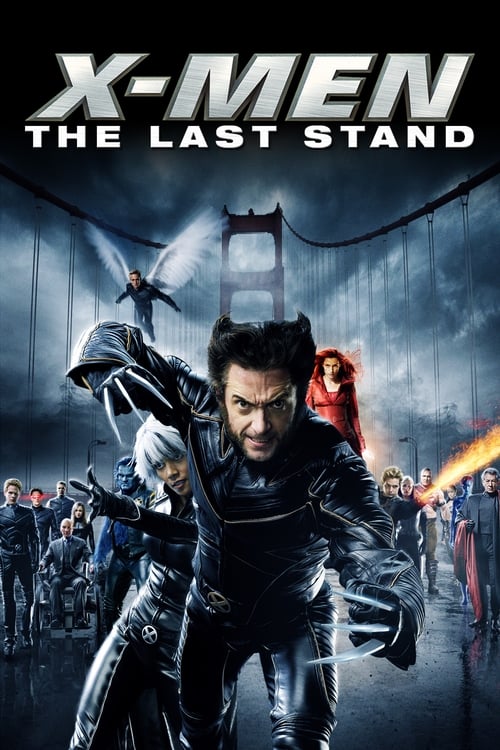
X-Men: The Last Stand
2006 · Directed by Brett Ratner
Woke Score
CriticCritic Score
Audience
Based
Critics rated this 30 points above its woke score. Among Based films, this critic score ranks #264 of 345.
Representation Casting
Score: 45/100
The cast includes actors of various backgrounds and the film features prominent roles for Black and Asian performers, though many are underutilized. This represents 2006-era diversity, which was notable for blockbusters at the time but lacks the intentional character development we would expect today.
LGBTQ+ Themes
Score: 15/100
Despite the franchise's rich history of LGBTQ allegory via the mutant metaphor, The Last Stand treats this material without explicit engagement. The presence of Elliot Page in the cast adds retrospective resonance, but the film itself offers no commentary on queerness or identity beyond the generic mutant-as-outsider narrative.
Feminist Agenda
Score: 25/100
Female characters are present but largely passive. Rogue's arc involves a romantic subplot predicated on her inability to touch, and female mutants in general serve supporting roles in an action narrative driven by male characters. The film does not interrogate gender dynamics in any meaningful way.
Racial Consciousness
Score: 30/100
The film features characters of color in significant roles but does not examine race as a structural concern. Magneto's backstory involves genocide, but this is presented as historical atrocity rather than as an invitation to consider contemporary racial systems or the franchise's own racial allegory.
Climate Crusade
Score: 0/100
No engagement with environmental themes whatsoever. The film's conflicts are entirely divorced from ecological or planetary concerns.
Eat the Rich
Score: 20/100
The film features corporate interests in the form of Worthington Industries and government authority as antagonistic forces, but this critique is superficial. The narrative treats these as obstacles to overcome rather than systems to interrogate, and offers no substantive commentary on economic power structures.
Body Positivity
Score: 15/100
The cure plot tangentially engages with bodily autonomy and the right to one's natural form, yet the film remains neutral on whether mutation is desirable or undesirable. There is no celebration of bodily diversity, only conflict over whether bodies should be modified.
Neurodivergence
Score: 10/100
While some mutant powers could metaphorically represent neurodivergence, the film does not engage with this interpretation explicitly. Mutation is presented as a trait, not as a neurological difference deserving of understanding or accommodation.
Revisionist History
Score: 25/100
Magneto's backstory references his experience as a Holocaust survivor and the genocide of mutants as an allegory for historical persecution. However, the film does not revise history so much as invoke it as thematic scaffolding without deep engagement or contemporary application.
Lecture Energy
Score: 35/100
Several scenes feature characters debating the ethics of the cure and mutant identity, particularly Xavier versus Magneto. These moments feel like obligatory moral exposition rather than organic character conflict, and the film does not lean heavily into preachy messaging, keeping this score moderate.


Synopsis
When a cure is found to treat mutations, lines are drawn amongst the X-Men—led by Professor Charles Xavier—and the Brotherhood, a band of powerful mutants organised under Xavier's former ally, Magneto.
Consciousness Assessment
X-Men: The Last Stand arrived in 2006 as a thoroughly 2000s blockbuster, which is to say it possessed the social awareness of a man in a suit checking his Blackberry. The film's central conceit involves a cure for mutation, a premise rich with allegory regarding identity acceptance and bodily autonomy, yet the film treats this material with the subtlety of a sledgehammer. Professor Xavier opposes the cure as a violation of mutant selfhood, while Magneto views it as genocide. These are reasonable positions, but the narrative never interrogates them with genuine conviction, instead using them as scaffolding for set pieces and character moments that feel obligatory rather than earned.
The cast itself is instructive in what the film declines to do. Elliot Page appears here in a supporting role (credited as Ellen Page), and the film offers no particular commentary on queerness despite the franchise's rich history of coded LGBTQ allegory. The film's approach to representation is passive. Halle Berry, despite being a bankable star, is relegated to a role so underwritten that the character amounts to little more than a set of powers and a costume. This was 2006, when such casting choices could feel progressive simply by existing. We know better now. The film traffics in the language of marginalization without the ideological commitment to actually examine what marginalization means beyond "people with unusual abilities face discrimination."
Brett Ratner's direction prioritizes spectacle over substance, and while spectacle is not inherently opposed to meaningful social commentary, in this case it serves as a distraction from the film's unwillingness to take any real position on its own themes. The narrative presents moral complexity as a puzzle to be solved through action rather than reflection. This explains why the film registers so mildly on the scale we're measuring. It exists in a pre-2010 space where progressive imagery was sufficient, where representation meant casting and nothing more. The film is neither hostile to progressive values nor genuinely committed to exploring them. It is, in the truest sense, inert.
Analysis generated by our Consciousness Algorithm
Critic Reviews
“Surprise, surprise. X-Men: The Last Stand, the third big-screen convocation of mutant shape shifters, weather changers, ice makers, energy suckers, healers and telepaths from Marvel Comics, has shifted the shape of the franchise from pretty good, if uninspired, to terrifically entertaining.”
“Ratner is unable to maintain the emotional intensity that has made this series so deeply epic. But he sure knows how to put on a show.”
“Love it or hate it, X-III packs more action and razzle-dazzle visuals into its 104-minute running time than "Mission: Impossible III," "Poseidon" and "The Da Vinci Code" combined.”
“What a comedown, after the weirdly beautiful things Singer and his technicians did in the first two movies.”
Consciousness Markers
The cast includes actors of various backgrounds and the film features prominent roles for Black and Asian performers, though many are underutilized. This represents 2006-era diversity, which was notable for blockbusters at the time but lacks the intentional character development we would expect today.
Despite the franchise's rich history of LGBTQ allegory via the mutant metaphor, The Last Stand treats this material without explicit engagement. The presence of Elliot Page in the cast adds retrospective resonance, but the film itself offers no commentary on queerness or identity beyond the generic mutant-as-outsider narrative.
Female characters are present but largely passive. Rogue's arc involves a romantic subplot predicated on her inability to touch, and female mutants in general serve supporting roles in an action narrative driven by male characters. The film does not interrogate gender dynamics in any meaningful way.
The film features characters of color in significant roles but does not examine race as a structural concern. Magneto's backstory involves genocide, but this is presented as historical atrocity rather than as an invitation to consider contemporary racial systems or the franchise's own racial allegory.
No engagement with environmental themes whatsoever. The film's conflicts are entirely divorced from ecological or planetary concerns.
The film features corporate interests in the form of Worthington Industries and government authority as antagonistic forces, but this critique is superficial. The narrative treats these as obstacles to overcome rather than systems to interrogate, and offers no substantive commentary on economic power structures.
The cure plot tangentially engages with bodily autonomy and the right to one's natural form, yet the film remains neutral on whether mutation is desirable or undesirable. There is no celebration of bodily diversity, only conflict over whether bodies should be modified.
While some mutant powers could metaphorically represent neurodivergence, the film does not engage with this interpretation explicitly. Mutation is presented as a trait, not as a neurological difference deserving of understanding or accommodation.
Magneto's backstory references his experience as a Holocaust survivor and the genocide of mutants as an allegory for historical persecution. However, the film does not revise history so much as invoke it as thematic scaffolding without deep engagement or contemporary application.
Several scenes feature characters debating the ethics of the cure and mutant identity, particularly Xavier versus Magneto. These moments feel like obligatory moral exposition rather than organic character conflict, and the film does not lean heavily into preachy messaging, keeping this score moderate.