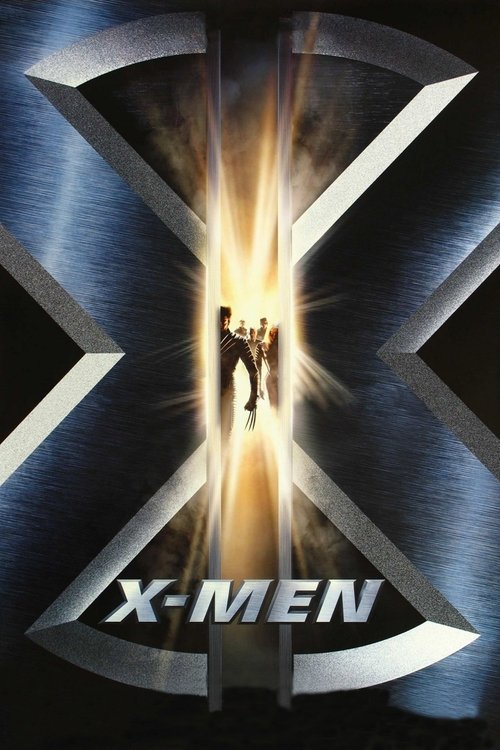
X-Men
2000 · Directed by Bryan Singer
Woke Score
CriticCritic Score
Audience
Based
Critics rated this 42 points above its woke score. Among Based films, this critic score ranks #213 of 345.
Representation Casting
Score: 35/100
The film features racial diversity in its cast with Halle Berry and others in significant roles, but this representation feels incidental rather than intentional, and the film offers no commentary on the casting choices or their significance.
LGBTQ+ Themes
Score: 15/100
While director Bryan Singer would later become known for LGBTQ+ themes in X-Men films, this 2000 entry contains no explicit LGBTQ+ representation or subtext, though the mutant metaphor has historically carried such associations.
Feminist Agenda
Score: 25/100
Female characters exist in the narrative but primarily in supporting roles defined by their relationships to male leads. Storm and Rogue are competent but not given particular emphasis on feminist themes or agency.
Racial Consciousness
Score: 30/100
The mutant-as-minority metaphor suggests some awareness of discrimination, but the film never develops this into explicit racial consciousness or commentary. Magneto's villainy is not framed through a race-specific lens.
Climate Crusade
Score: 0/100
The film contains no environmental themes or climate-related messaging. Its concerns are entirely within the superhero action genre.
Eat the Rich
Score: 10/100
No critique of capitalism or class structures appears in the narrative. The conflict remains between mutant groups rather than addressing economic systems or inequality.
Body Positivity
Score: 5/100
The film features conventionally attractive actors in superhero costumes and contains no messaging around body diversity or acceptance of different body types.
Neurodivergence
Score: 0/100
No representation of neurodivergent characters or themes related to neurodiversity appears in the film.
Revisionist History
Score: 0/100
The film makes no attempt to reinterpret historical events through a contemporary progressive lens. It operates entirely within fictional superhero mythology.
Lecture Energy
Score: 20/100
Professor Xavier delivers occasional speeches about acceptance and coexistence, but these are brief and thematic rather than the film stopping to lecture the audience at length about social issues.


Synopsis
Two mutants, Rogue and Wolverine, come to a private academy for their kind whose resident superhero team, the X-Men, must oppose a terrorist organization with similar powers.
Consciousness Assessment
X-Men arrives as a curiosity from the pre-awakening era of Hollywood blockbusters, a time when progressive sensibilities existed but had not yet calcified into the particular aesthetic of contemporary social consciousness. The film deploys the mutant metaphor to suggest parallels with real-world discrimination, a gesture toward empathy that registers more as liberal humanism than as modern progressive rhetoric. Patrick Stewart's Professor Xavier delivers occasional speeches about coexistence and acceptance, yet these function as thematic garnish rather than the film's primary concern, which remains the spectacle of superhero combat and the standard hero-versus-villain narrative machinery.
The casting presents a surface-level diversity that feels incidental to the storytelling. Halle Berry appears as Storm, Anna Paquin as Rogue, and various actors of color populate the ensemble, but they exist within the narrative without the film offering any particular commentary on their presence or the systems that have historically excluded them from such roles. The film simply places them in the frame and moves forward, which is to say it achieves representation without consciousness. The mutant metaphor, while occasionally evoking discussions of prejudice, never quite commits to any specific social analysis, instead remaining pleasantly abstract and therefore inoffensive to all parties.
What emerges is a film that occupies the comfortable middle ground of pre-2015 action cinema. It contains progressive elements in its worldview without exhibiting the specific cultural markers that would render it recognizable to the contemporary social justice consciousness. It is not actively regressive, nor does it demonstrate the particular anxieties and preoccupations of 2020s progressive filmmaking. It is simply a very expensive action film made during a moment when the culture had not yet developed the vocabulary or the obsessions that would later dominate critical discourse around representation and social themes.
Analysis generated by our Consciousness Algorithm
Critic Reviews
“It's a rich, impressive comic-book fantasy -- easily the summer's best "blockbuster."”
“The film's strength and its entertainment lie in John Myhre's production design, its generally appealing cast...and, perhaps most importantly, a canny degree of self-parody.”
“For diehard fans, X-Men is full of in jokes and sly references -- For everybody else, there's the thrill of the unknown.”
“Isn't juvenile, it isn't even infantile. It's prenatal!”
Consciousness Markers
The film features racial diversity in its cast with Halle Berry and others in significant roles, but this representation feels incidental rather than intentional, and the film offers no commentary on the casting choices or their significance.
While director Bryan Singer would later become known for LGBTQ+ themes in X-Men films, this 2000 entry contains no explicit LGBTQ+ representation or subtext, though the mutant metaphor has historically carried such associations.
Female characters exist in the narrative but primarily in supporting roles defined by their relationships to male leads. Storm and Rogue are competent but not given particular emphasis on feminist themes or agency.
The mutant-as-minority metaphor suggests some awareness of discrimination, but the film never develops this into explicit racial consciousness or commentary. Magneto's villainy is not framed through a race-specific lens.
The film contains no environmental themes or climate-related messaging. Its concerns are entirely within the superhero action genre.
No critique of capitalism or class structures appears in the narrative. The conflict remains between mutant groups rather than addressing economic systems or inequality.
The film features conventionally attractive actors in superhero costumes and contains no messaging around body diversity or acceptance of different body types.
No representation of neurodivergent characters or themes related to neurodiversity appears in the film.
The film makes no attempt to reinterpret historical events through a contemporary progressive lens. It operates entirely within fictional superhero mythology.
Professor Xavier delivers occasional speeches about acceptance and coexistence, but these are brief and thematic rather than the film stopping to lecture the audience at length about social issues.