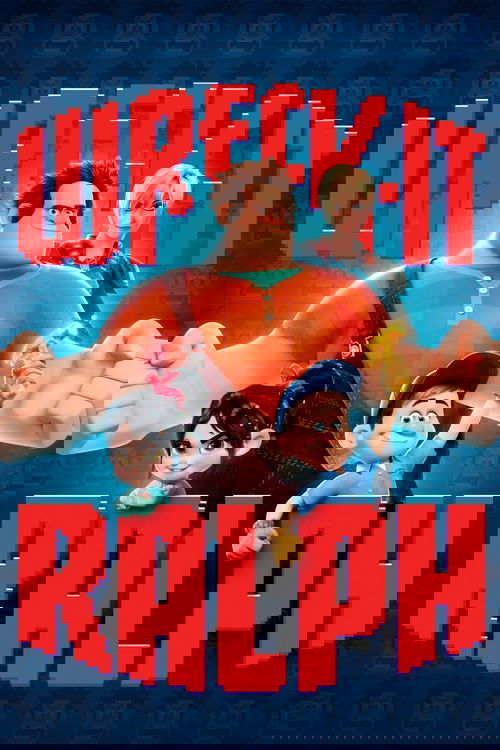
Wreck-It Ralph
2012 · Directed by Rich Moore
Woke Score
CriticCritic Score
Audience
Based
Critics rated this 50 points above its woke score. Among Based films, this critic score ranks #142 of 345.
Representation Casting
Score: 45/100
The film features a diverse voice cast and Vanellope is a capable female protagonist, though the representation exists within a pre-2015 sensibility that does not emphasize or foreground such diversity as a deliberate statement.
LGBTQ+ Themes
Score: 0/100
No LGBTQ+ themes or representation are present in this film. The story focuses entirely on heterosexual relationships and contains no exploration of gender or sexual identity.
Feminist Agenda
Score: 35/100
Vanellope is portrayed as intelligent and resourceful, but the film does not engage in contemporary feminist discourse or explicitly challenge gender dynamics. Her agency emerges naturally from plot requirements rather than thematic emphasis.
Racial Consciousness
Score: 20/100
While the voice cast includes performers of color, the film does not engage with racial themes or demonstrate consciousness about representation. Diversity is present but unremarked upon.
Climate Crusade
Score: 0/100
Climate change or environmental consciousness plays no role in this film. The narrative concerns video game mechanics and personal redemption entirely.
Eat the Rich
Score: 15/100
The film is set within the commercial arcade gaming industry but does not critique capitalism or consumerism. The Sugar Rush setting, while candy-themed, lacks any anti-capitalist commentary.
Body Positivity
Score: 25/100
Ralph is depicted as overweight and his size is occasionally the subject of humor, though the film does not treat this as a source of shame. Body positivity as a conscious theme is absent.
Neurodivergence
Score: 10/100
Vanellope's racing abilities and the game mechanics suggest possible neurodivergent traits, but the film makes no explicit statement about neurodiversity or mental health conditions.
Revisionist History
Score: 0/100
This animated fantasy contains no historical claims or revisionist framings of actual events. The film is entirely fictional.
Lecture Energy
Score: 20/100
The film conveys messages about friendship and self-worth, but these emerge from character interaction and plot rather than preachy exposition. The tone is entertainment-focused rather than pedagogical.


Synopsis
Wreck-It Ralph is the 9-foot-tall, 643-pound villain of an arcade video game named Fix-It Felix Jr., in which the game's titular hero fixes buildings that Ralph destroys. Wanting to prove he can be a good guy and not just a villain, Ralph escapes his game and lands in Hero's Duty, a first-person shooter where he helps the game's hero battle against alien invaders. He later enters Sugar Rush, a kart racing game set on tracks made of candies, cookies and other sweets. There, Ralph meets Vanellope von Schweetz who has learned that her game is faced with a dire threat that could affect the entire arcade, and one that Ralph may have inadvertently started.
Consciousness Assessment
Wreck-It Ralph arrives as a product of the early 2010s, a moment when Disney's animation division was beginning to diversify its voice cast and expand female character agency without yet developing the explicit framework of progressive consciousness that would crystallize over the following decade. The film presents Vanellope von Schweetz as a genuinely capable co-protagonist and features performers including Jane Lynch and Mindy Kaling in supporting roles, signaling a studio commitment to broader casting that predates the cultural moment when such choices became markers of deliberate social positioning.
The narrative itself operates within a fundamentally apolitical register. Ralph's journey concerns personal redemption and the acknowledgment that identity is not destiny, a theme of genuine emotional resonance that requires no contemporary progressive apparatus to function. The film does not interrogate its capitalist setting, the arcade itself, the corporate sponsorships within game worlds. It does not foreground the diversity it contains and offers no commentary on the systems it depicts. This is not a failure, merely a factual description of a work created before the specific cultural vocabulary we now use to discuss such matters had fully emerged.
What distinguishes this film is its refusal to perform consciousness about its own progressive elements. Vanellope's competence is presented as narrative fact, not as a corrective statement. The diverse cast voices characters without explanation or celebration. The film is, in this sense, genuinely guileless, which marks it as pre-contemporary in its sensibilities. A modern film with identical content would likely be far more insistent about what it contains.
Analysis generated by our Consciousness Algorithm
Critic Reviews
“With plenty to appeal to boys and girls, old and young, Walt Disney Animation Studios has a high-scoring hit on its hands in this brilliantly conceived, gorgeously executed toon, earning bonus points for backing nostalgia with genuine emotion.”
“It's a wildly exciting ride, the fastest-moving, most enthusiastically kinetic kids' action film since "The Incredibles."”
“The most inventive and entertaining family movie I've seen this year, packed with wickedly smart humor and joyful animation. ”
“Nothing but broad, pandering indexes tailored to appeal to the arcade wistfulness the film never even bothers to convincingly evoke.”
Consciousness Markers
The film features a diverse voice cast and Vanellope is a capable female protagonist, though the representation exists within a pre-2015 sensibility that does not emphasize or foreground such diversity as a deliberate statement.
No LGBTQ+ themes or representation are present in this film. The story focuses entirely on heterosexual relationships and contains no exploration of gender or sexual identity.
Vanellope is portrayed as intelligent and resourceful, but the film does not engage in contemporary feminist discourse or explicitly challenge gender dynamics. Her agency emerges naturally from plot requirements rather than thematic emphasis.
While the voice cast includes performers of color, the film does not engage with racial themes or demonstrate consciousness about representation. Diversity is present but unremarked upon.
Climate change or environmental consciousness plays no role in this film. The narrative concerns video game mechanics and personal redemption entirely.
The film is set within the commercial arcade gaming industry but does not critique capitalism or consumerism. The Sugar Rush setting, while candy-themed, lacks any anti-capitalist commentary.
Ralph is depicted as overweight and his size is occasionally the subject of humor, though the film does not treat this as a source of shame. Body positivity as a conscious theme is absent.
Vanellope's racing abilities and the game mechanics suggest possible neurodivergent traits, but the film makes no explicit statement about neurodiversity or mental health conditions.
This animated fantasy contains no historical claims or revisionist framings of actual events. The film is entirely fictional.
The film conveys messages about friendship and self-worth, but these emerge from character interaction and plot rather than preachy exposition. The tone is entertainment-focused rather than pedagogical.