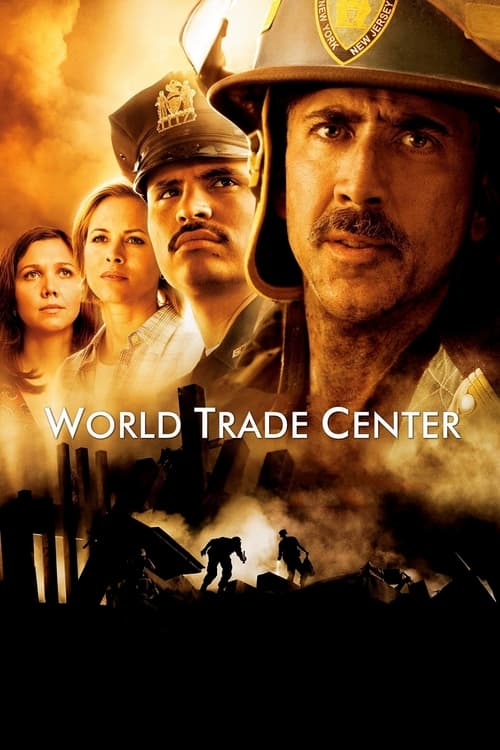
World Trade Center
2006 · Directed by Oliver Stone
Woke Score
CriticCritic Score
Audience
Ultra Based
Critics rated this 62 points above its woke score. Among Ultra Based films, this critic score ranks #740 of 1469.
Representation Casting
Score: 15/100
Michael Peña is cast as a real Latino officer, but this reflects historical accuracy rather than intentional representation strategy. No deliberate diversification of roles beyond factual casting.
LGBTQ+ Themes
Score: 0/100
No LGBTQ+ characters, themes, or storylines present in the film.
Feminist Agenda
Score: 0/100
The narrative centers entirely on male rescue workers. Female characters are marginal to the story and no feminist themes are developed.
Racial Consciousness
Score: 10/100
While featuring minority actors in authentic roles based on real people, the film does not engage in contemporary racial consciousness or social commentary about race.
Climate Crusade
Score: 0/100
No environmental or climate themes present in this disaster survival narrative.
Eat the Rich
Score: 0/100
The film celebrates heroic rescue workers and institutional response. No critique of capitalism or class systems is present.
Body Positivity
Score: 0/100
No body positivity themes or celebration of diverse body types in the film.
Neurodivergence
Score: 0/100
No representation of or commentary on neurodivergence or disability is present.
Revisionist History
Score: 0/100
The film presents a straightforward dramatization of historical events based on actual accounts, with no revisionist reframing.
Lecture Energy
Score: 5/100
The film is a narrative drama focused on personal survival and emotional experience rather than preachy messaging or social instruction.


Synopsis
Two police officers struggle to survive when they become trapped beneath the rubble of the World Trade Center on September 11, 2001.
Consciousness Assessment
Oliver Stone's "World Trade Center" represents the pre-woke era of disaster filmmaking, a time when serious dramatizations of national tragedy could proceed without contemporary cultural commentary. The film is a straightforward docudrama centered on the survival of two Port Authority police officers buried in the rubble of the Twin Towers on September 11, 2001. Nicolas Cage and Michael Peña carry the narrative through a harrowing ordeal that is more interested in physical endurance and human connection than in interrogating systemic structures or celebrating demographic representation.
The film's restraint in this regard is perhaps its defining characteristic. While Peña's character is Latino and his presence in the cast reflects the actual ethnic composition of the rescue operation, the film makes no effort to weaponize this casting choice as a statement about representation or inclusion. The story simply unfolds as it happened, with rescue workers of various backgrounds engaging in heroic action without commentary. This is fundamentally different from the modern impulse to foreground identity as a thematic concern.
Stone's approach is notably apolitical by contemporary standards. There is no critique of American militarism, no examination of labor exploitation, no celebration of bodily diversity or neurodivergent representation, no environmental consciousness, and no retrofitting of the narrative to serve progressive sensibilities. The film exists in a cultural moment before such frameworks became standard operating procedure in mainstream cinema. It is, in essence, a film about American resilience in the face of catastrophe, made without irony or ideological scaffolding. Whether one finds this refreshing or limiting depends entirely on one's view of the role cinema should play in cultural discourse.
Analysis generated by our Consciousness Algorithm
Critic Reviews
“World Trade Center celebrates the ties that bind us, the bonds that keep us going, the goodness that stands as a rebuke to the horror of that day. Perhaps, in the future, the times will call for more challenging, or polemical, or subversive visions. Right now, it feels like the 9/11 movie we need.”
“This is a film of terrific selectivity. By focusing on two of the few who did survive the collapse, the film achieves emotional power and an uplifting ending.”
“Very simply, World Trade Center is a powerful movie experience, a hymn in plainsong that glorifies that which is best in the American spirit.”
Consciousness Markers
Michael Peña is cast as a real Latino officer, but this reflects historical accuracy rather than intentional representation strategy. No deliberate diversification of roles beyond factual casting.
No LGBTQ+ characters, themes, or storylines present in the film.
The narrative centers entirely on male rescue workers. Female characters are marginal to the story and no feminist themes are developed.
While featuring minority actors in authentic roles based on real people, the film does not engage in contemporary racial consciousness or social commentary about race.
No environmental or climate themes present in this disaster survival narrative.
The film celebrates heroic rescue workers and institutional response. No critique of capitalism or class systems is present.
No body positivity themes or celebration of diverse body types in the film.
No representation of or commentary on neurodivergence or disability is present.
The film presents a straightforward dramatization of historical events based on actual accounts, with no revisionist reframing.
The film is a narrative drama focused on personal survival and emotional experience rather than preachy messaging or social instruction.