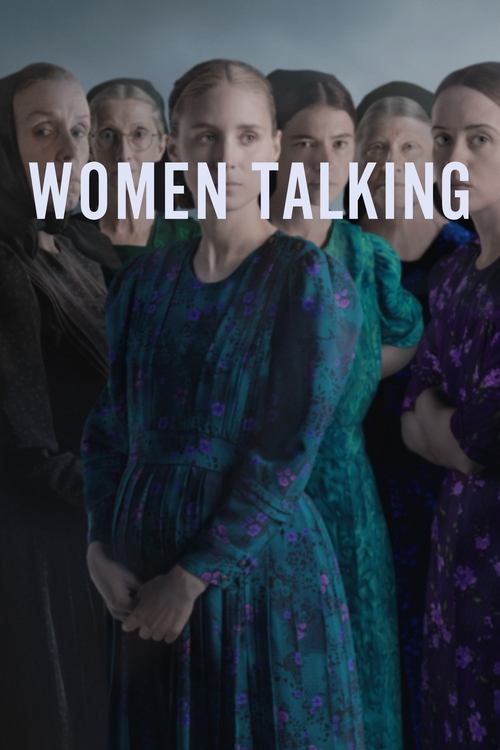
Women Talking
2022 · Directed by Sarah Polley
Woke Score
CriticCritic Score
Audience
Woke
Critics rated this 9 points above its woke score. Among Woke films, this critic score ranks #40 of 88.
Representation Casting
Score: 85/100
The film centers a predominantly female ensemble cast in leading roles, with male characters largely absent or peripheral. This deliberate structural choice prioritizes women's voices and perspectives.
LGBTQ+ Themes
Score: 0/100
No LGBTQ+ themes or representation are evident in the film, its plot, or cast information.
Feminist Agenda
Score: 88/100
The film is fundamentally organized around women's bodily autonomy, collective decision-making, and resistance to patriarchal religious authority. Female agency and solidarity form the narrative and thematic core.
Racial Consciousness
Score: 0/100
The film concerns a Mennonite community and does not engage with racial dynamics, racial consciousness, or multicultural perspectives.
Climate Crusade
Score: 0/100
No climate-related themes or environmental consciousness appear in the film.
Eat the Rich
Score: 15/100
While the film critiques patriarchal religious structures and male authority, it does not substantially interrogate capitalist systems or economic inequality.
Body Positivity
Score: 0/100
The film does not engage with body positivity, body diversity, or size representation.
Neurodivergence
Score: 0/100
No neurodivergence representation or themes are evident in the film.
Revisionist History
Score: 50/100
The film adapts a true event (sexual assaults in a Bolivian Mennonite colony) and centers women's historical agency in response, though it does not substantially revise historical narrative in a contemporary progressive framework.
Lecture Energy
Score: 45/100
The dialogue-heavy structure creates extended deliberative scenes that resemble consciousness-raising, though the film frames these as dramatic character moments rather than explicit messaging or instruction.


Synopsis
A group of women in an isolated religious colony struggle to reconcile their faith with a series of sexual assaults committed by the colony's men.
Consciousness Assessment
Sarah Polley's "Women Talking" presents itself as a chamber piece of feminist deliberation, adapted from Miriam Toews' novel about a Mennonite colony confronting systematic sexual violence. The film constructs a nearly complete female world where women must negotiate their collective future, a structural choice that positions female agency and solidarity as the primary dramatic and moral focus. What distinguishes this as a cultural artifact of the 2020s is not merely its serious treatment of sexual assault, but rather its framing: women as architects of their own response, deciding collectively whether to leave, stay, or fight, rather than waiting for external rescue or institutional justice.
The film's progressive sensibilities manifest most clearly in its representation and feminist framework. The ensemble cast is deliberately female-centered, with Rooney Mara, Claire Foy, and Jessie Buckley anchoring different ideological positions within the women's community. The dialogue-heavy structure functions almost as a consciousness-raising session, examining not only the violence but also how patriarchal religious doctrine has shaped women's capacity to imagine alternatives. The script does not shy from depicting the women's internal disagreements, their competing loyalties to faith and family, and the genuine difficulty of collective decision-making. This nuance prevents the film from collapsing into simplistic messaging.
However, the film's cultural consciousness remains largely bounded by gender and religious critique. It does not substantially engage with economic systems, climate concerns, racial dynamics, or other contemporary progressive frameworks. The violence itself is treated with appropriate gravity rather than exploitation, but the film offers no particular interrogation of how disability, body diversity, or neurodivergence intersect with the women's experiences. The result is a film that speaks powerfully to feminist concerns while remaining somewhat insulated from the broader constellation of 2020s progressive preoccupations. It is a serious work of cinema that reflects its historical moment without fully embracing every dimension of current cultural consciousness.
Analysis generated by our Consciousness Algorithm
Critic Reviews
“What Polley achieves here is an artful, incisive distillation of Toews’ arguments, effectively if somewhat visibly engineered for clarity and brevity. ”
“Women Talking is not melodramatic or desperate or exploitative. It is astute and urgent and may just help those previously unable to find words or even coherent feelings for their own traumatic experiences. And hopefully it might just inspire more works of wild female imagination.”
“It would easy to call Women Talking a #MeToo movie, but it’s a lot more than that. These aren’t trendy conversations; they’re long-held struggles that people of all genders have faced for generations. Instead, Polley asks why people are forced to endure such horrific repression and violence because they are female. The question resonates far beyond the end of the film, although there is no quick answer.”
“Women Talking has a remarkable cast — Rooney Mara, Jessie Buckley, Claire Foy, among others — and it’s grounded in dramatic real-life events. But it’s mannered in its conception and wooden in its execution, and has little to do with living, breathing people.”
Consciousness Markers
The film centers a predominantly female ensemble cast in leading roles, with male characters largely absent or peripheral. This deliberate structural choice prioritizes women's voices and perspectives.
No LGBTQ+ themes or representation are evident in the film, its plot, or cast information.
The film is fundamentally organized around women's bodily autonomy, collective decision-making, and resistance to patriarchal religious authority. Female agency and solidarity form the narrative and thematic core.
The film concerns a Mennonite community and does not engage with racial dynamics, racial consciousness, or multicultural perspectives.
No climate-related themes or environmental consciousness appear in the film.
While the film critiques patriarchal religious structures and male authority, it does not substantially interrogate capitalist systems or economic inequality.
The film does not engage with body positivity, body diversity, or size representation.
No neurodivergence representation or themes are evident in the film.
The film adapts a true event (sexual assaults in a Bolivian Mennonite colony) and centers women's historical agency in response, though it does not substantially revise historical narrative in a contemporary progressive framework.
The dialogue-heavy structure creates extended deliberative scenes that resemble consciousness-raising, though the film frames these as dramatic character moments rather than explicit messaging or instruction.