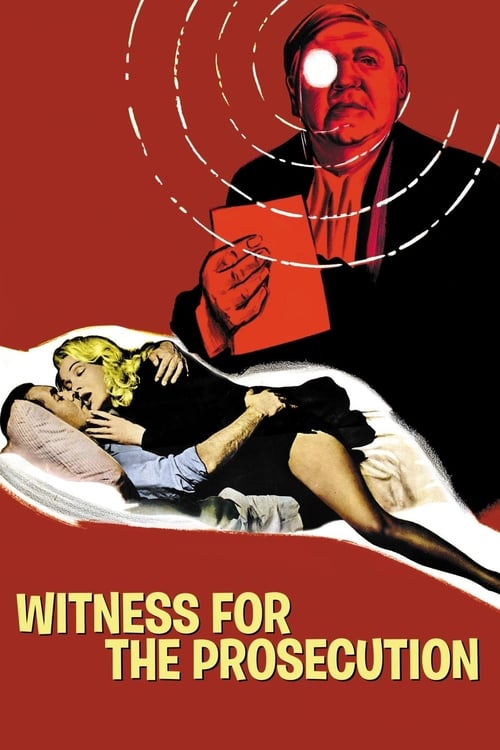
Witness for the Prosecution
1957 · Directed by Billy Wilder
Woke Score
CriticCritic Score
Audience
Ultra Based
Critics rated this 74 points above its woke score. Among Ultra Based films, this critic score ranks #461 of 1469.
Representation Casting
Score: 2/100
The cast reflects 1950s Hollywood conventions with no attention to diversity or inclusive representation. The film casts white actors in all major roles as a matter of course, without consideration of racial representation.
LGBTQ+ Themes
Score: 0/100
There is no LGBTQ+ representation or themes present in the film. No characters are coded as or explicitly identified as LGBTQ+, and the film contains no engagement with such topics.
Feminist Agenda
Score: 2/100
While Marlene Dietrich's character is central to the plot, she functions as a plot device rather than as an examination of gender or female agency. Her actions are motivated by her relationship to her husband, and the film presents no feminist critique of this dynamic.
Racial Consciousness
Score: 0/100
The film contains no engagement with racial themes, racial consciousness, or any consideration of race as a meaningful category. The film was made in an era where such considerations were absent from mainstream Hollywood storytelling.
Climate Crusade
Score: 0/100
There is no environmental or climate-related content in the film. The film is a courtroom drama with no engagement with ecological or environmental themes.
Eat the Rich
Score: 0/100
The film contains no critique of capitalism or 'eat the rich' sensibilities. The wealthy and powerful characters are presented without moral judgment regarding their economic status.
Body Positivity
Score: 0/100
There is no body positivity messaging in the film. The film does not engage with contemporary standards of body acceptance or representation.
Neurodivergence
Score: 0/100
The film contains no representation of neurodivergence or engagement with neurodiverse experiences. No characters are coded as autistic, ADHD, or otherwise neurodivergent.
Revisionist History
Score: 0/100
The film makes no attempt to revise historical narratives or reinterpret historical events. It is a fictional legal drama with no historical revisionism.
Lecture Energy
Score: 1/100
The film contains minimal moralizing or preachy intent. It is constructed as entertainment and mystery rather than as a vehicle for social instruction or moral lectures.


Synopsis
An ailing barrister is thrust back into the courtroom in what becomes one of the most unusual and eventful murder cases of the lawyer's career when he finds himself defending a man being tried for the murder of a socialite.
Consciousness Assessment
Witness for the Prosecution is a masterfully constructed legal thriller from 1957 that exists in a cultural moment entirely predating contemporary progressive sensibilities. Billy Wilder's film is concerned exclusively with the mechanics of plot construction, misdirection, and character surprise. The narrative functions as an elaborate puzzle designed to manipulate audience expectations, and it accomplishes this goal with considerable precision and craft. The film contains no engagement with social consciousness in any form that would be recognizable to contemporary standards.
The cast reflects standard 1950s Hollywood conventions without commentary or self-awareness about such choices. Marlene Dietrich's Christine Vole is presented as a mysterious woman whose motivations drive the central emotional and narrative tension, but she functions as a plot device rather than as a character examined through any progressive lens. Her loyalty, her deception, her ultimate choice, these are presented as dramatic mechanics rather than as explorations of gender, agency, or power dynamics. She is simply a woman in a story, without the film pausing to consider what it means that she is a woman in that story.
The film contains zero engagement with racial themes, LGBTQ+ representation, environmental concerns, capitalist critique, body positivity, neurodivergence, or any form of social consciousness that would characterize 2020s progressive sensibilities. It does not attempt to revise history or lecture the audience. It is a work of pure craft in service of entertainment, and this is not criticism. The film is genuinely excellent within its chosen parameters. The observation is simply that the film exists outside the cultural frameworks we are using to measure it, which is precisely what we should expect from a film made in 1957.
Analysis generated by our Consciousness Algorithm
Critic Reviews
“Dietrich steals it. WITNESS FOR THE PROSECUTION is a witty, terse adaptation of the Agatha Christie hit play brought to the screen with ingenuity and vitality by Billy Wilder.”
“For a courtroom melodrama pegged to a single plot device--a device that, of course, everybody promises not to reveal--the Arthur Hornblow Jr. film production of the Agatha Christie play "Witness for the Prosecution" comes off extraordinarily well. This results mainly from Billy Wilder's splendid staging of some splintering courtroom scenes and a first-rate theatrical performance by Charles Laughton in the defense-attorney role.”
“The courtroom scenes are terrific, with brittle dialogue expertly delivered. And Wilder milks Christie's surprise denouement for all it's worth. [21 Nov 1986, p.92]”
“Billy Wilder's inane yet moderately entertaining version of an Agatha Christie courtroom thriller, with Charles Laughton wiggling his wattles.”
Consciousness Markers
The cast reflects 1950s Hollywood conventions with no attention to diversity or inclusive representation. The film casts white actors in all major roles as a matter of course, without consideration of racial representation.
There is no LGBTQ+ representation or themes present in the film. No characters are coded as or explicitly identified as LGBTQ+, and the film contains no engagement with such topics.
While Marlene Dietrich's character is central to the plot, she functions as a plot device rather than as an examination of gender or female agency. Her actions are motivated by her relationship to her husband, and the film presents no feminist critique of this dynamic.
The film contains no engagement with racial themes, racial consciousness, or any consideration of race as a meaningful category. The film was made in an era where such considerations were absent from mainstream Hollywood storytelling.
There is no environmental or climate-related content in the film. The film is a courtroom drama with no engagement with ecological or environmental themes.
The film contains no critique of capitalism or 'eat the rich' sensibilities. The wealthy and powerful characters are presented without moral judgment regarding their economic status.
There is no body positivity messaging in the film. The film does not engage with contemporary standards of body acceptance or representation.
The film contains no representation of neurodivergence or engagement with neurodiverse experiences. No characters are coded as autistic, ADHD, or otherwise neurodivergent.
The film makes no attempt to revise historical narratives or reinterpret historical events. It is a fictional legal drama with no historical revisionism.
The film contains minimal moralizing or preachy intent. It is constructed as entertainment and mystery rather than as a vehicle for social instruction or moral lectures.