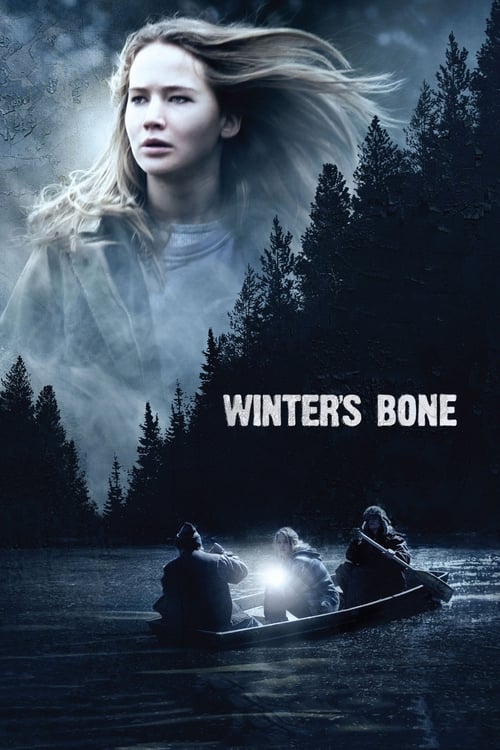
Winter's Bone
2010 · Directed by Debra Granik
Woke Score
CriticCritic Score
Audience
Ultra Based
Critics rated this 82 points above its woke score. Among Ultra Based films, this critic score ranks #131 of 1469.
Representation Casting
Score: 0/100
The cast is drawn primarily from the Ozark region with many nonprofessional actors, reflecting the authentic demographic makeup of the setting rather than demonstrating conscious diversity casting choices.
LGBTQ+ Themes
Score: 0/100
No LGBTQ+ themes, characters, or subtext appear in the film.
Feminist Agenda
Score: 15/100
While the protagonist is a capable young woman navigating a male-dominated criminal world, the film presents this as circumstantial rather than thematic. There is no explicit feminist commentary or consciousness-raising.
Racial Consciousness
Score: 0/100
The film does not address racial issues or demonstrate explicit racial consciousness. The Ozark setting and characters are portrayed without racial commentary.
Climate Crusade
Score: 0/100
No climate-related themes or environmental consciousness appears in the narrative.
Eat the Rich
Score: 25/100
The film depicts a criminal economy born from economic desperation, suggesting critique of legitimate economic structures that leave communities behind, though this critique is implicit rather than explicit.
Body Positivity
Score: 0/100
The film does not engage with body positivity themes or demonstrate consciousness about body diversity and acceptance.
Neurodivergence
Score: 0/100
No neurodivergence representation or themes are present in the film.
Revisionist History
Score: 0/100
The film does not attempt to reinterpret historical events or narratives.
Lecture Energy
Score: 5/100
The film maintains a documentary-like restraint and rarely addresses the audience directly with moral instruction, though its implicit social commentary could register as faintly preachy to some viewers.


Synopsis
After discovering her father put their house up for his bail bond and then disappeared, 17-year-old Ree Dolly must confront the local criminal underworld and the harsh Ozark wilderness in order to to track down her father and save her family.
Consciousness Assessment
Winter's Bone is a film about deprivation that never mistakes the gravity of its subject for an invitation to proselytize. Debra Granik's direction captures the texture of Ozark poverty with the precision of an anthropologist, which is to say she observes rather than editorializes. The narrative follows Ree Dolly, a 17-year-old girl navigating a world of drug manufacturing and family obligation with a fortitude that would exhaust most adults, but the film does not ask us to feel superior to these circumstances or to draw progressive conclusions about systemic inequality. The central character happens to be female and must navigate a male-dominated criminal ecosystem, yet this is rendered as simple fact rather than as a vehicle for commentary on patriarchal structures.
The film's restraint is its primary virtue. We watch Ree work, we watch her suffer, we watch her persist. There is no moment where the camera lingers meaningfully on her hardship to ensure we understand its injustice. The landscape itself becomes a character, indifferent to human struggle, which places the film firmly in the tradition of American naturalism rather than progressive pedagogy. John Hawkes and Dale Dickey deliver performances of unsettling authenticity, and the supporting cast of nonprofessional actors lends an ethnographic quality that might have tipped into exploitation if handled less carefully.
This is a serious film about serious poverty, but it operates according to the logic of art rather than activism. It trusts the audience to draw their own moral conclusions without narrative guidance. For those seeking a film that explicitly advances contemporary progressive sensibilities, this will register as a disappointment. For those who value observation over instruction, Winter's Bone remains a masterwork of American realism that refuses the comfort of easy answers or moral certainty.
Analysis generated by our Consciousness Algorithm
Critic Reviews
“For all the horror, it's the drive toward life, not the decay, that lingers in the mind. As a modern heroine, Ree Dolly has no peer, and Winter's Bone is the year's most stirring film.”
“Again, Granik has foregrounded a bold woman, expertly balanced between fearlessness and Ree's own private nervousness.”
“One of the unshowiest and most true-blooded epics of Americana you're ever likely to see.”
“The main reason for Winter's Bone to exist is that it delivers a little voyeuristic thrill -- a bit of poverty porno -- for the critics who awarded it their highest honors at this year's Sundance Film Festival.”
Consciousness Markers
The cast is drawn primarily from the Ozark region with many nonprofessional actors, reflecting the authentic demographic makeup of the setting rather than demonstrating conscious diversity casting choices.
No LGBTQ+ themes, characters, or subtext appear in the film.
While the protagonist is a capable young woman navigating a male-dominated criminal world, the film presents this as circumstantial rather than thematic. There is no explicit feminist commentary or consciousness-raising.
The film does not address racial issues or demonstrate explicit racial consciousness. The Ozark setting and characters are portrayed without racial commentary.
No climate-related themes or environmental consciousness appears in the narrative.
The film depicts a criminal economy born from economic desperation, suggesting critique of legitimate economic structures that leave communities behind, though this critique is implicit rather than explicit.
The film does not engage with body positivity themes or demonstrate consciousness about body diversity and acceptance.
No neurodivergence representation or themes are present in the film.
The film does not attempt to reinterpret historical events or narratives.
The film maintains a documentary-like restraint and rarely addresses the audience directly with moral instruction, though its implicit social commentary could register as faintly preachy to some viewers.