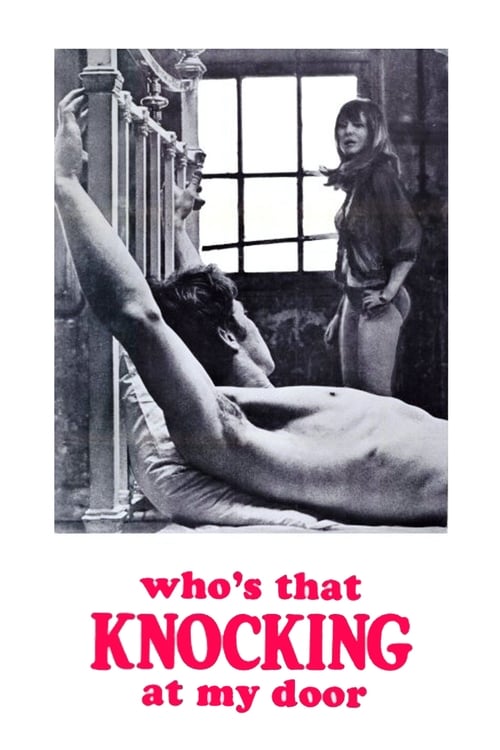
Who's That Knocking at My Door
1968 · Directed by Martin Scorsese
Woke Score
CriticCritic Score
Audience
Ultra Based
Critics rated this 59 points above its woke score. Among Ultra Based films, this critic score ranks #833 of 1469.
Representation Casting
Score: 0/100
The cast reflects the Italian-American neighborhood setting naturally, with no apparent consideration of broader representation. This is a period piece about a specific community.
LGBTQ+ Themes
Score: 0/100
No LGBTQ+ themes, characters, or representation present in the film.
Feminist Agenda
Score: 15/100
The female character maintains agency and refuses to accept the male protagonist's judgment of her sexuality, but the film itself frames this as a source of conflict rather than advocating for her position. No feminist agenda is present.
Racial Consciousness
Score: 0/100
The film contains no exploration of racial consciousness or racial themes. It is focused entirely on Italian-American Catholic identity.
Climate Crusade
Score: 0/100
No climate-related themes or messaging present in this intimate character study.
Eat the Rich
Score: 0/100
No anti-capitalist themes or critique of economic systems are present in the film.
Body Positivity
Score: 0/100
Body positivity is not a concern in this 1968 drama about Catholic guilt and romantic conflict.
Neurodivergence
Score: 0/100
No representation of neurodivergence or disability is present in the film.
Revisionist History
Score: 0/100
This is not a historical film and contains no revisionist historical narratives.
Lecture Energy
Score: 0/100
The film is a character study with minimal dialogue. It presents conflict through dramatic action rather than exposition or preachy speech.


Synopsis
A Catholic New Yorker falls in love with a girl and wants to marry her, but he struggles to accept her past and what it means for their future.
Consciousness Assessment
Martin Scorsese's directorial debut is a portrait of masculine Catholic guilt so pointed that it becomes almost inadvertently progressive, though not in any intentional sense. The film centers on J.R., an Italian-American man wrestling with his faith and his inability to reconcile a woman's sexual autonomy with his desire to marry her. The entire narrative apparatus treats this conflict with complete seriousness, presenting the male protagonist's anguish as the film's emotional core. In 1968, this was a deeply conventional perspective on female sexuality, yet the film's unflinching examination of the double standard, however unexamined by Scorsese himself, creates an artifact of cultural attitudes that modern viewers might read against the grain.
The film's treatment of its female lead is the crux of the matter. The woman is depicted not as a villain or seductress but as a human being with a past, and her refusal to be ashamed of it creates friction that the film presents without moral judgment. She is intelligent, articulate, and refuses to accept the protagonist's judgment. This is not feminist cinema by any modern standard, yet the passive act of giving her agency, even within a limited narrative scope, marks a minor deviation from the era's typical treatment of female characters. The film does not celebrate her autonomy or frame it as a political statement. It simply exists.
Scorsese's preoccupations here are entirely theological and autobiographical. The film is interested in Catholic guilt, Italian-American identity, and masculine honor. Questions of gender politics never enter his field of vision. This is a film made by a man working through personal anxieties, not one advancing any coherent social philosophy. By the standards of modern progressive cinema, it is entirely innocent of such concerns, which paradoxically places it in a strange middle ground. It is neither aggressively regressive nor consciously progressive. It is simply a document of a man's internal conflict, presented with the intensity and specificity that would come to define Scorsese's career.
Analysis generated by our Consciousness Algorithm
Critic Reviews
“I have no reservations in describing it as a great moment in American movies.”
“To be sure, Scorsese was occasionally too obvious, and the film has serious structural flaws, but nobody who loves movies believes a perfect one will ever be made. What we hope for instead are small gains on the fronts of hope, love, comedy and tragedy. It is possible that with more experience and maturity Scorsese will direct more polished, finished films--but this work, completed when he was 25, contains a frankness he may have diluted by then.”
“In the aggressive self-confidence, the use of rock music, and the perceptive observation, Scorsese reveals an anthropological feel for street life and the attitudes of male adolescence, particularly how introversion and weakness are reserved for moments with the opposite sex, kept carefully apart from the mainstream of life.”
“Zina Bethune, as the girl, is believable but Harvey Keitel, as the anti-hero, is alternatively boorish or bewildered. Scorsese occasionally brings the film to life.... Generally, however, his script and direction lack any dramatic value and give far too much exposure to sexual fantasies on the part of the boy.”
Consciousness Markers
The cast reflects the Italian-American neighborhood setting naturally, with no apparent consideration of broader representation. This is a period piece about a specific community.
No LGBTQ+ themes, characters, or representation present in the film.
The female character maintains agency and refuses to accept the male protagonist's judgment of her sexuality, but the film itself frames this as a source of conflict rather than advocating for her position. No feminist agenda is present.
The film contains no exploration of racial consciousness or racial themes. It is focused entirely on Italian-American Catholic identity.
No climate-related themes or messaging present in this intimate character study.
No anti-capitalist themes or critique of economic systems are present in the film.
Body positivity is not a concern in this 1968 drama about Catholic guilt and romantic conflict.
No representation of neurodivergence or disability is present in the film.
This is not a historical film and contains no revisionist historical narratives.
The film is a character study with minimal dialogue. It presents conflict through dramatic action rather than exposition or preachy speech.