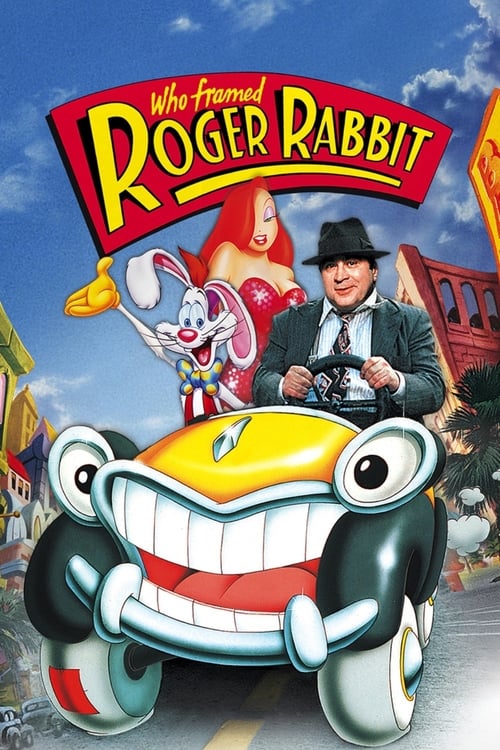
Who Framed Roger Rabbit
1988 · Directed by Robert Zemeckis
Woke Score
CriticCritic Score
Audience
Ultra Based
Critics rated this 79 points above its woke score. Among Ultra Based films, this critic score ranks #299 of 1469.
Representation Casting
Score: 25/100
The film includes diverse background characters reflecting 1980s Los Angeles demographics, but lacks any intentional commitment to representation. Lead and supporting roles remain predominantly white and male.
LGBTQ+ Themes
Score: 0/100
No LGBTQ+ themes, characters, or subtext present in the film. The narrative is entirely heteronormative and treats sexuality only through the lens of male desire.
Feminist Agenda
Score: 5/100
Jessica Rabbit epitomizes the male gaze object rather than a fully realized character. She exists to motivate the plot and satisfy male visual interest, with no agency of her own.
Racial Consciousness
Score: 10/100
The film contains no racial consciousness, commentary on racism, or examination of systemic inequality. Diversity exists incidentally in background elements only.
Climate Crusade
Score: 0/100
Climate concerns are entirely absent from the narrative. The film shows no environmental awareness or sustainability messaging whatsoever.
Eat the Rich
Score: 20/100
The villain's plan involves corporate consolidation and urban displacement for profit, which could be interpreted as mildly critical of capitalism, though the film treats this as personal villainy rather than systemic critique.
Body Positivity
Score: 0/100
The film does not engage with body positivity. Jessica Rabbit's design emphasizes conventional sexualized femininity, and the narrative celebrates this rather than questioning it.
Neurodivergence
Score: 0/100
No representation of neurodivergence or neurodivergent perspectives appears in the film. The narrative shows no awareness of this category.
Revisionist History
Score: 0/100
The film contains no historical revisionism. It is a fictional noir detective story set in a stylized version of 1940s Hollywood with no historical claims.
Lecture Energy
Score: 0/100
The film maintains a light entertainment tone throughout and contains no preachy messaging, moral lectures, or educational intent regarding social issues.


Synopsis
'Toon star Roger is worried that his wife Jessica is playing pattycake with someone else, so the studio hires detective Eddie Valiant to snoop on her. But the stakes are quickly raised when Marvin Acme is found dead and Roger is the prime suspect.
Consciousness Assessment
Who Framed Roger Rabbit exists in a state of cultural innocence that feels almost archaeological in retrospect. Released in 1988, this hybrid live-action/animation achievement concerns itself primarily with spectacle, narrative mechanics, and the technological marvel of seamlessly integrating cartoon characters into a photorealistic world. The film's Los Angeles setting allows for some incidental diversity in background casting, but this reflects demographic reality rather than any conscious effort toward representation as a philosophical project. The story unfolds with the casual sexism endemic to 1980s Hollywood, where Jessica Rabbit functions as a plot device and object of male desire rather than a character with agency or interiority. Her famous line about not being bad, merely drawn that way, codifies her status as a male fantasy rather than a subject worthy of genuine consideration.
The film's only marginally progressive element lies in its implicit critique of corporate consolidation and urban planning, which could be read as vaguely anti-capitalist if one approaches it with generosity. The conspiracy to destroy Toontown and replace it with a freeway represents a form of economic coercion and displacement, though the film never develops this theme with particular sophistication or commitment. Judge Doom's villainy stems from his industrial ambitions, but the narrative frames this as personal malice rather than systemic critique. The film remains a product of its era, concerned with entertainment value and technical innovation rather than with social consciousness or progressive sensibility.
By contemporary standards, Who Framed Roger Rabbit reads as a film that happens to include diverse people in frame without interrogating power structures, representation hierarchies, or the nature of exploitation itself. It is simply not interested in these questions. This is not a moral failing so much as a statement of historical fact. The film belongs to a cinema that treated such concerns as irrelevant to the business of making audiences marvel and laugh.
Analysis generated by our Consciousness Algorithm
Critic Reviews
“Combines live-action and animation with breathtaking wizardry... Alternately hilarious, frightening, and awesome.”
“What is astonishing about this movie is how all the elements are so deftly mixed - the technology of real sets and people interwoven with the cartoon world, and yet Zemeckis hardly sacrifices a beat in laying out a curlicuing '40s-style thriller. [22 June 1988]”
“If you don't like Who Framed Roger Rabbit, have your pulse checked... You'll forget yourself right through to the end when Porky Pig, dressed as a cop, says "M-move along, there's n-nothing more to s-see folks." [24 June 1988]”
“The plot, the gags, the action are so stupid and strident, so unfunnily parodic, that the film's only interest is in wondering how they did it-the mix of animation and live action. [1 Aug 1988]”
Consciousness Markers
The film includes diverse background characters reflecting 1980s Los Angeles demographics, but lacks any intentional commitment to representation. Lead and supporting roles remain predominantly white and male.
No LGBTQ+ themes, characters, or subtext present in the film. The narrative is entirely heteronormative and treats sexuality only through the lens of male desire.
Jessica Rabbit epitomizes the male gaze object rather than a fully realized character. She exists to motivate the plot and satisfy male visual interest, with no agency of her own.
The film contains no racial consciousness, commentary on racism, or examination of systemic inequality. Diversity exists incidentally in background elements only.
Climate concerns are entirely absent from the narrative. The film shows no environmental awareness or sustainability messaging whatsoever.
The villain's plan involves corporate consolidation and urban displacement for profit, which could be interpreted as mildly critical of capitalism, though the film treats this as personal villainy rather than systemic critique.
The film does not engage with body positivity. Jessica Rabbit's design emphasizes conventional sexualized femininity, and the narrative celebrates this rather than questioning it.
No representation of neurodivergence or neurodivergent perspectives appears in the film. The narrative shows no awareness of this category.
The film contains no historical revisionism. It is a fictional noir detective story set in a stylized version of 1940s Hollywood with no historical claims.
The film maintains a light entertainment tone throughout and contains no preachy messaging, moral lectures, or educational intent regarding social issues.