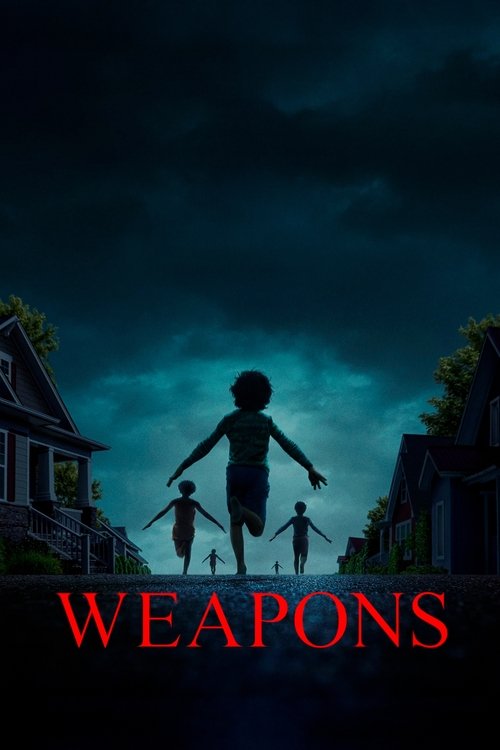
Weapons
2025 · Directed by Zach Cregger
Woke Score
CriticCritic Score
Audience
Ultra Based
Critics rated this 63 points above its woke score. Among Ultra Based films, this critic score ranks #330 of 1469.
Representation Casting
Score: 45/100
The film features a diverse ensemble cast including female leads and Asian representation, though this appears to reflect contemporary casting norms rather than deliberate progressive statement-making.
LGBTQ+ Themes
Score: 0/100
No evidence of LGBTQ+ themes, characters, or representation in the available plot description or cast information.
Feminist Agenda
Score: 25/100
Julia Garner carries significant narrative weight as a lead, but the film's focus on a mystery-horror plot does not suggest deliberate feminist thematic engagement.
Racial Consciousness
Score: 20/100
Diverse casting exists, but no evidence suggests the film interrogates racial themes or offers commentary on racial systems as part of its narrative.
Climate Crusade
Score: 0/100
No evidence of climate-related themes or environmental consciousness in this supernatural mystery-horror narrative.
Eat the Rich
Score: 0/100
No evidence of anti-capitalist messaging or critique of economic systems in the film's plot or themes.
Body Positivity
Score: 0/100
No evidence of body positivity messaging or intentional representation of diverse body types as a thematic concern.
Neurodivergence
Score: 0/100
No evidence of neurodivergent representation or engagement with neurodiversity as a narrative element.
Revisionist History
Score: 0/100
This contemporary horror film contains no historical elements or revisionist historical consciousness.
Lecture Energy
Score: 10/100
The film maintains a genre-focused approach without evident preachy moralizing, though any contemporary film may carry some implicit cultural assumptions.


Synopsis
When all but one child from the same class mysteriously vanish on the same night at exactly the same time, a community is left questioning who or what is behind their disappearance.
Consciousness Assessment
Weapons arrives as a straightforward genre exercise that has absorbed certain contemporary casting practices without displaying any particular ideological commitment to them. The film assembles a demographically mixed ensemble, including Julia Garner in a lead role and Benedict Wong in the supporting cast, but these choices function primarily as the baseline expectation of 2025 studio filmmaking rather than as evidence of conscious progressive sensibility. Zach Cregger's direction prioritizes suspense and mystery mechanics over any sustained engagement with social themes, which is entirely legitimate for a horror film about vanishing children. The narrative appears focused on the supernatural or conspiratorial dimensions of the disappearances rather than on interrogating systemic inequities or offering commentary on contemporary social anxieties through a progressive lens.
The film's modest woke score reflects its fundamental disinterest in the markers that typically signal contemporary cultural awareness. There is no discernible engagement with climate catastrophism, no lecture-adjacent moralizing about capitalist structures, no explicit neurodivergent representation that disrupts narrative convention, and no revisionist historical consciousness. The casting diversity, while present, lacks the performative emphasis that would suggest a deliberate statement. Amy Madigan's supporting performance, noted for its quality, operates within a conventional dramatic framework rather than as an act of reclamation or visibility politics. What emerges is a competent horror-mystery that reflects the demographics of the era in which it was made without claiming any particular cultural work on behalf of those demographics.
This is not to fault Weapons for its restraint. The film grossed $270 million against a modest budget, suggesting audiences responded to its genre pleasures rather than to any progressive grandstanding. In this regard, it represents a species of contemporary filmmaking that has simply internalized demographic diversity as a production standard, neither weaponizing it for thematic purposes nor denying it entirely. It is a position of cultural neutrality that some might interpret as progress itself, while others might see it as the bare minimum. The woke score reflects this middle distance: present without insistence, contemporary without crusade.
Analysis generated by our Consciousness Algorithm
Critic Reviews
“Weapons underscores how in command Creeger is of his entire movie, the mise-en-scène, the craft, tone, mood and sweaty, ominous, dread-inducing atmosphere. Its final act is batshit crazy and climaxes in a jaw-dropping wave of exhilarating, terrifying feeding frenzy of satisfying comeuppance. Weapons will leave you thrilled, aghast, horrified and wowed.”
“There’ll be moans from horrorheads that it’s not scary throughout, but in deepening his exploration of family life in the ‘burbs, Cregger sharpens his twisted scares to a dagger point. And the frights, when they come, really land.”
“A hugely accomplished horror achievement, and a significant step up from Barbarian: tense, sad, hilarious, unsettling, ridiculously entertaining, and ultimately oddly uplifting.”
“Once Mr. Cregger starts to let loose his revelations, though, disappointment creeps in, and the scale and soul of the film shrink before our eyes. It’s impossible to say how without getting into spoilers. But the movie’s potential richness, kept in play by its ever-circling narrative style, is finally brought crashing to the ground by its denouement.”
Consciousness Markers
The film features a diverse ensemble cast including female leads and Asian representation, though this appears to reflect contemporary casting norms rather than deliberate progressive statement-making.
No evidence of LGBTQ+ themes, characters, or representation in the available plot description or cast information.
Julia Garner carries significant narrative weight as a lead, but the film's focus on a mystery-horror plot does not suggest deliberate feminist thematic engagement.
Diverse casting exists, but no evidence suggests the film interrogates racial themes or offers commentary on racial systems as part of its narrative.
No evidence of climate-related themes or environmental consciousness in this supernatural mystery-horror narrative.
No evidence of anti-capitalist messaging or critique of economic systems in the film's plot or themes.
No evidence of body positivity messaging or intentional representation of diverse body types as a thematic concern.
No evidence of neurodivergent representation or engagement with neurodiversity as a narrative element.
This contemporary horror film contains no historical elements or revisionist historical consciousness.
The film maintains a genre-focused approach without evident preachy moralizing, though any contemporary film may carry some implicit cultural assumptions.