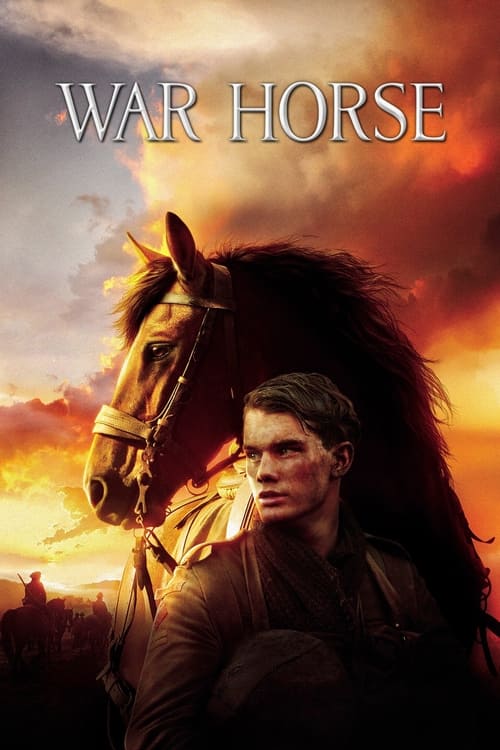
War Horse
2011 · Directed by Steven Spielberg
Woke Score
CriticCritic Score
Audience
Ultra Based
Critics rated this 68 points above its woke score. Among Ultra Based films, this critic score ranks #559 of 1469.
Representation Casting
Score: 15/100
The cast includes some non-British actors and Emily Watson, but the primary roles remain overwhelmingly white European men. Representation appears incidental rather than intentional, reflecting the historical setting rather than contemporary casting consciousness.
LGBTQ+ Themes
Score: 0/100
No evidence of LGBTQ+ themes or representation in the film. The narrative concerns itself exclusively with heterosexual familial and romantic bonds.
Feminist Agenda
Score: 5/100
Female characters exist primarily as emotional support figures (mother, love interest) rather than active participants in the narrative. Emily Watson's character is sympathetic but peripheral to the central quest.
Racial Consciousness
Score: 0/100
The film contains no examination of racial dynamics, colonialism, or racial injustice. The story focuses exclusively on European soldiers and civilians during World War I.
Climate Crusade
Score: 0/100
Climate themes are entirely absent from the film. Environmental consciousness plays no role in the narrative or visual strategy.
Eat the Rich
Score: 10/100
The film implicitly critiques the machinery of war as a capitalist enterprise, though this critique emerges from the narrative rather than explicit ideological positioning. War is presented as a dehumanizing system, but without contemporary anti-capitalist framing.
Body Positivity
Score: 0/100
Body positivity is not a concern of this historical war drama. The film depicts suffering bodies and wounded soldiers but frames these as tragic consequences rather than opportunities for body-conscious representation.
Neurodivergence
Score: 0/100
No representation or discussion of neurodivergence appears in the film. The narrative makes no attempt to address psychological trauma or neurodevelopmental conditions.
Revisionist History
Score: 0/100
The film presents a conventional account of World War I without revisionist intent. It adapts a children's novel faithfully rather than reinterpreting historical events through a contemporary lens.
Lecture Energy
Score: 0/100
The film allows its narrative and images to speak without preachy intervention. Spielberg's approach is emotional and contemplative rather than pedagogical or hectoring.


Synopsis
On the brink of the First World War, Albert's beloved horse Joey is sold to the Cavalry by his father. Against the backdrop of the Great War, Joey begins an odyssey full of danger, joy, and sorrow, and he transforms everyone he meets along the way. Meanwhile, Albert, unable to forget his equine friend, searches the battlefields of France to find Joey and bring him home.
Consciousness Assessment
War Horse stands as a curious artifact of early 2010s Spielbergian sentiment, a lush and thoroughly earnest meditation on war's capacity to strip away human dignity. The film's emotional register operates at the level of a World War I monument: solemn, beautifully crafted, and entirely devoid of irony. Spielberg's visual palette evokes the chromatic qualities of early cinema, a deliberate stylistic choice that positions the film as a kind of memorial to lost artistic traditions as much as to lost lives. The narrative concerns itself with suffering as ennobling, with innocence (both human and equine) as a corrective to the machinery of war. The cast, predominantly British and European, moves through the muddy fields of the Somme and Passchendaele with the gravitas of actors who understand they are participating in something historically solemn.
The film's relationship to progressive sensibility is minimal and incidental. The presence of Emily Watson and a diverse supporting cast reflects nothing more than the practical requirements of a large ensemble piece set in World War I. The narrative contains no examination of systemic inequality, environmental catastrophe, or structural injustice. The story concerns itself with the timeless human impulse to preserve connection in the face of mechanized slaughter. This is humanist cinema of the most traditional sort, which is to say it operates entirely outside the frameworks of contemporary cultural consciousness. The film's few female characters exist primarily as observers to male experience, their agency limited to maternal concern and romantic longing.
War Horse is so aesthetically committed to the grammar of classic war cinema that it seems almost immune to contemporary sensibility. It is, in essence, a film made in 2011 that could have been made in 1975 without significant alteration. This is neither condemnation nor praise, merely observation. The film received six Academy Award nominations, a sign that the Academy recognized its technical accomplishment if not its cultural intervention. It remains the work of a master craftsman executing a vision entirely committed to tradition.
Analysis generated by our Consciousness Algorithm
Critic Reviews
“In his most painterly film, Spielberg has appropriated the lavish visual palette of John Ford movies: "The Quiet Man" for the rural settings, "The Horse Soldiers" for the war scenes. Boldly emotional, nakedly heartfelt, War Horse will leave only the stoniest hearts untouched. ”
“War Horse is a don't-miss Spielberg classic that reaches true perfection.”
“To create his disarmingly earnest film, Spielberg draws from the past. Its tone is humanistic and its technique classic. ”
“War Horse is a bland, bizarrely unimaginative piece of work. [2 Jan. 2012, p.79]”
Consciousness Markers
The cast includes some non-British actors and Emily Watson, but the primary roles remain overwhelmingly white European men. Representation appears incidental rather than intentional, reflecting the historical setting rather than contemporary casting consciousness.
No evidence of LGBTQ+ themes or representation in the film. The narrative concerns itself exclusively with heterosexual familial and romantic bonds.
Female characters exist primarily as emotional support figures (mother, love interest) rather than active participants in the narrative. Emily Watson's character is sympathetic but peripheral to the central quest.
The film contains no examination of racial dynamics, colonialism, or racial injustice. The story focuses exclusively on European soldiers and civilians during World War I.
Climate themes are entirely absent from the film. Environmental consciousness plays no role in the narrative or visual strategy.
The film implicitly critiques the machinery of war as a capitalist enterprise, though this critique emerges from the narrative rather than explicit ideological positioning. War is presented as a dehumanizing system, but without contemporary anti-capitalist framing.
Body positivity is not a concern of this historical war drama. The film depicts suffering bodies and wounded soldiers but frames these as tragic consequences rather than opportunities for body-conscious representation.
No representation or discussion of neurodivergence appears in the film. The narrative makes no attempt to address psychological trauma or neurodevelopmental conditions.
The film presents a conventional account of World War I without revisionist intent. It adapts a children's novel faithfully rather than reinterpreting historical events through a contemporary lens.
The film allows its narrative and images to speak without preachy intervention. Spielberg's approach is emotional and contemplative rather than pedagogical or hectoring.