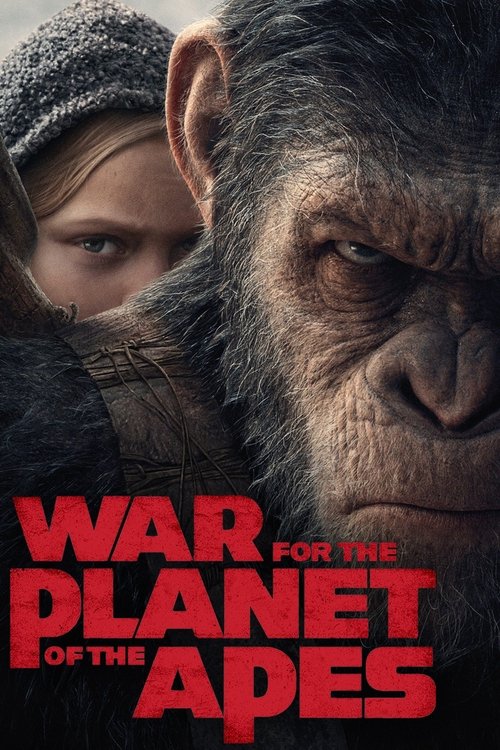
War for the Planet of the Apes
2017 · Directed by Matt Reeves
Woke Score
CriticCritic Score
Audience
Ultra Based
Critics rated this 64 points above its woke score. Among Ultra Based films, this critic score ranks #311 of 1469.
Representation Casting
Score: 35/100
The cast includes some female characters (Karin Konoval, Amiah Miller) in supporting roles, but the narrative remains centered on male leadership and conflict. Representation exists but is not foregrounded or particularly diverse.
LGBTQ+ Themes
Score: 0/100
No LGBTQ+ themes, characters, or subtext are present in the film. The narrative contains no representation of sexual or gender diversity.
Feminist Agenda
Score: 15/100
While female characters exist in the film, there is minimal feminist consciousness or thematic engagement. The narrative centers on male conflict and male leadership throughout.
Racial Consciousness
Score: 25/100
The film presents conflict between humans and apes as a species divide rather than engaging with contemporary racial discourse. While allegory could be read into the conflict, the film does not explicitly address racial consciousness or systemic racism.
Climate Crusade
Score: 0/100
Climate change and environmental themes are entirely absent from the narrative. The post-apocalyptic setting does not engage with climate consciousness or ecological concerns.
Eat the Rich
Score: 10/100
The film shows military and authoritarian power structures as antagonistic, but does not meaningfully critique capitalism or present anti-capitalist ideology as central to its themes.
Body Positivity
Score: 0/100
Body positivity messaging is entirely absent. The film does not engage with contemporary discussions of body image, disability representation, or physical diversity in any meaningful way.
Neurodivergence
Score: 0/100
No representation of neurodivergence or neurodiverse characters appears in the film. This theme is not addressed.
Revisionist History
Score: 0/100
The film does not engage with historical revisionism or reexamination of historical narratives. It is a fictional science fiction narrative, not a historical retelling.
Lecture Energy
Score: 20/100
While the Colonel delivers some ideological monologues about human supremacy and necessity, the film generally allows action and character to drive narrative rather than explicit preachiness about social issues.


Synopsis
Caesar and his apes are forced into a deadly conflict with an army of humans led by a ruthless Colonel. After the apes suffer unimaginable losses, Caesar wrestles with his darker instincts and begins his own mythic quest to avenge his kind. As the journey finally brings them face to face, Caesar and the Colonel are pitted against each other in an epic battle that will determine the fate of both their species and the future of the planet.
Consciousness Assessment
War for the Planet of the Apes arrives as a technologically impressive war film that concerns itself primarily with the mechanics of conflict rather than the cultural preoccupations of contemporary progressive discourse. The narrative follows Caesar's apes through a devastating military campaign against human forces, with the thematic weight falling on questions of vengeance, leadership, and the cycle of violence. These are substantial dramatic concerns, certainly, but they operate in registers that predate the specific constellation of social justice sensibilities that have come to define modern cultural consciousness.
The film's representation of its ensemble remains largely conventional for the action-adventure genre. While Karin Konoval appears as a sympathetic ape character and Amiah Miller provides a human perspective, the narrative gravitates toward male-centered conflict and leadership structures. The Colonel (Woody Harrelson) exists as a fascistic antagonist, but this represents a straightforward moral opposition rather than a specific engagement with contemporary racial or systemic critique. The film's treatment of power dynamics, militarism, and the dehumanization of the enemy certainly echoes themes that progressive filmmaking might foreground, yet the execution remains largely apolitical in its refusal to explicitly connect these conflicts to the specific social anxieties of the 2020s.
What emerges from War for the Planet of the Apes is a competent, emotionally resonant spectacle that operates on the level of mythic confrontation rather than cultural commentary. The motion-capture performances anchor the film in genuine dramatic stakes, and the technical achievements deserve recognition. Nevertheless, the film exhibits minimal engagement with the markers of contemporary social consciousness, preferring instead the timeless language of war, honor, and the corrupting nature of vengeance. It is a film of the moment only insofar as all films are products of their time, not because it actively interrogates the social preoccupations that define that moment.
Analysis generated by our Consciousness Algorithm
Critic Reviews
“The effects are incredible, the action is exciting, the music is great, and Andy Serkis, once again embodying a non-human character through motion-capture technology, remains terrific. But there’s something more here.”
“It would be hard to overstate just how singular this picture feels in its seriousness of purpose and in its cumulative power to enthrall and astonish.”
“There is a scene toward the end of War for the Planet of the Apes that is as vivid and haunting as anything I’ve seen in a Hollywood blockbuster in ages, a moment of rousing and dreadful cinematic clarity that I don’t expect to shake off any time soon.”
“War for the Planet of the Apes manages to be both alienating and sappy, and the biblical finale seems to come from a different universe altogether. It’s an awesome, dull movie.”
Consciousness Markers
The cast includes some female characters (Karin Konoval, Amiah Miller) in supporting roles, but the narrative remains centered on male leadership and conflict. Representation exists but is not foregrounded or particularly diverse.
No LGBTQ+ themes, characters, or subtext are present in the film. The narrative contains no representation of sexual or gender diversity.
While female characters exist in the film, there is minimal feminist consciousness or thematic engagement. The narrative centers on male conflict and male leadership throughout.
The film presents conflict between humans and apes as a species divide rather than engaging with contemporary racial discourse. While allegory could be read into the conflict, the film does not explicitly address racial consciousness or systemic racism.
Climate change and environmental themes are entirely absent from the narrative. The post-apocalyptic setting does not engage with climate consciousness or ecological concerns.
The film shows military and authoritarian power structures as antagonistic, but does not meaningfully critique capitalism or present anti-capitalist ideology as central to its themes.
Body positivity messaging is entirely absent. The film does not engage with contemporary discussions of body image, disability representation, or physical diversity in any meaningful way.
No representation of neurodivergence or neurodiverse characters appears in the film. This theme is not addressed.
The film does not engage with historical revisionism or reexamination of historical narratives. It is a fictional science fiction narrative, not a historical retelling.
While the Colonel delivers some ideological monologues about human supremacy and necessity, the film generally allows action and character to drive narrative rather than explicit preachiness about social issues.