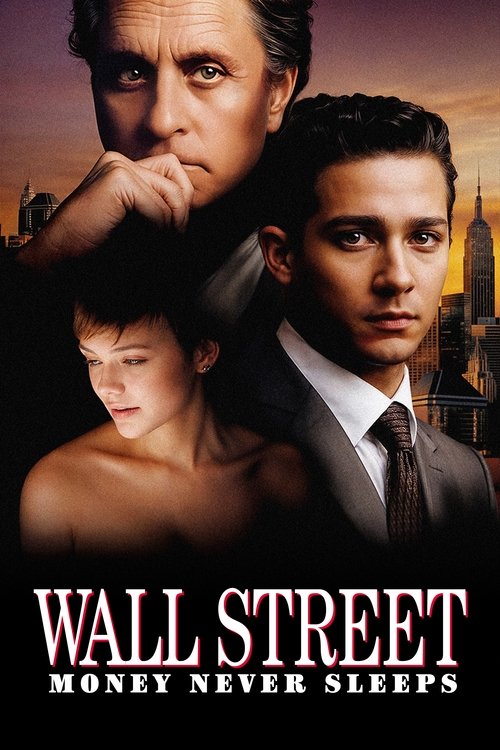
Wall Street: Money Never Sleeps
2010 · Directed by Oliver Stone
Woke Score
CriticCritic Score
Audience
Based
Critics rated this 37 points above its woke score. Among Based films, this critic score ranks #252 of 345.
Representation Casting
Score: 25/100
The cast includes one significant female character (Carey Mulligan) in a primarily male-dominated narrative. The film reflects Wall Street's actual demographics but makes no attempt to challenge or reimagine them through diverse casting.
LGBTQ+ Themes
Score: 0/100
No LGBTQ+ themes, characters, or representation present in the film.
Feminist Agenda
Score: 15/100
Carey Mulligan's character operates as a capable professional, but her narrative arc centers on romantic entanglement and serving as moral counterweight to male characters rather than autonomous feminist agency.
Racial Consciousness
Score: 0/100
The film makes no attempt to address racial dynamics, representation, or consciousness. The cast and narrative remain predominantly focused on white characters.
Climate Crusade
Score: 0/100
No climate-related themes or environmental consciousness appears in the film.
Eat the Rich
Score: 35/100
The film critiques individual financial excess and moral corruption among traders, framing the problem as personal greed rather than systemic capitalism. The critique remains individualistic rather than structural.
Body Positivity
Score: 0/100
No body positivity messaging or disability representation present in the film.
Neurodivergence
Score: 0/100
No neurodivergence representation or acknowledgment appears in the narrative.
Revisionist History
Score: 0/100
The film does not attempt to reinterpret or revise historical events. It treats the 2008 financial crisis as context for individual character drama.
Lecture Energy
Score: 20/100
Stone delivers moral commentary about financial ethics and personal redemption, but the lectures remain relatively restrained compared to his more polemical work and lack the intensity one might expect from addressing such catastrophic economic failure.


Synopsis
As the global economy teeters on the brink of disaster, a young Wall Street trader partners with disgraced former Wall Street corporate raider Gordon Gekko on a two tiered mission: To alert the financial community to the coming doom, and to find out who was responsible for the death of the young trader's mentor.
Consciousness Assessment
Wall Street: Money Never Sleeps arrives as a well-intentioned moral fable about financial corruption, yet it remains fundamentally a creature of 2010 sensibilities, which is to say it barely registers on the contemporary scale of social consciousness. Oliver Stone's sequel to his 1987 original attempts to grapple with the 2008 financial crisis through the lens of individual greed and redemption, a framework that permits the film to critique excess without questioning the systems that enable it. Carey Mulligan appears as Winnie Gekko, a competent financial journalist, though her presence functions primarily as a romantic interest and moral compass rather than an autonomous agent. The film's world remains overwhelmingly male and white, reflecting Wall Street demographics without interrogating them.
The narrative trajectory follows a path of personal moral awakening that sits comfortably within the tradition of 1980s and 1990s financial dramas. There is no attempt at revisionist interpretation of historical events, no engagement with climate concerns, and no exploration of neurodivergence or disability. The anti-capitalist sentiment present in the film stems from a critique of individual moral failing rather than systemic exploitation. Stone treats his subject with the gravity of a moralist scolding a wayward child, but the lecture energy never quite reaches the fevered pitch one might expect from a director of his stature addressing the greatest financial catastrophe since the Great Depression.
What remains is a film caught between eras, too restrained for the progressive sensibilities that would emerge in the years following its release, yet earnest in its desire to castigate financial malfeasance. It functions as a period artifact of a moment when Hollywood still believed that individual redemption and institutional reform could occupy the same narrative space. The film's modest box office performance suggests audiences found little reason to revisit Wall Street's moral compromises in the aftermath of genuine economic devastation.
Analysis generated by our Consciousness Algorithm
Critic Reviews
“Among an excellent cast, Douglas truly is the nexus; he and Stone make this sequel pay off big-time. ”
“That rare sequel that took its time -- 23 years -- so it not only advances a story but also has something new to say. ”
“It's a wholly successful sequel - audacious, entertaining and bracingly pertinent.”
“The pretentious title might be trying to make a statement about the new, fast-moving economy. It's also a weak reference to the first Wall Street. But mainly, no, it's just pretentious.”
Consciousness Markers
The cast includes one significant female character (Carey Mulligan) in a primarily male-dominated narrative. The film reflects Wall Street's actual demographics but makes no attempt to challenge or reimagine them through diverse casting.
No LGBTQ+ themes, characters, or representation present in the film.
Carey Mulligan's character operates as a capable professional, but her narrative arc centers on romantic entanglement and serving as moral counterweight to male characters rather than autonomous feminist agency.
The film makes no attempt to address racial dynamics, representation, or consciousness. The cast and narrative remain predominantly focused on white characters.
No climate-related themes or environmental consciousness appears in the film.
The film critiques individual financial excess and moral corruption among traders, framing the problem as personal greed rather than systemic capitalism. The critique remains individualistic rather than structural.
No body positivity messaging or disability representation present in the film.
No neurodivergence representation or acknowledgment appears in the narrative.
The film does not attempt to reinterpret or revise historical events. It treats the 2008 financial crisis as context for individual character drama.
Stone delivers moral commentary about financial ethics and personal redemption, but the lectures remain relatively restrained compared to his more polemical work and lack the intensity one might expect from addressing such catastrophic economic failure.