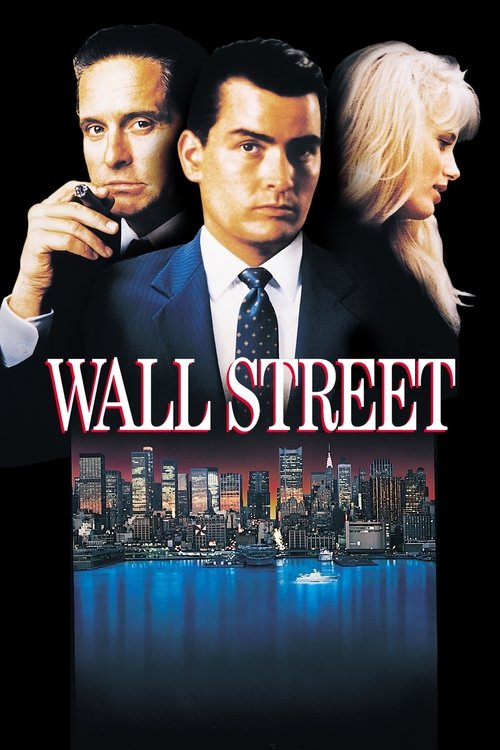
Wall Street
1987 · Directed by Oliver Stone
Woke Score
CriticCritic Score
Audience
Ultra Based
Critics rated this 52 points above its woke score. Among Ultra Based films, this critic score ranks #1033 of 1469.
Representation Casting
Score: 0/100
The cast is predominantly white and male, reflecting 1980s Wall Street demographics but with no apparent concern for diverse representation or casting choices that challenge industry norms.
LGBTQ+ Themes
Score: 0/100
No LGBTQ+ themes, characters, or subtext are present in the film. The narrative is entirely heterosexual and makes no engagement with queer identity or experience.
Feminist Agenda
Score: 0/100
Daryl Hannah's character exists primarily as romantic interest and moral support rather than as a fully realized professional character. No feminist critique of gender dynamics or institutional sexism appears in the narrative.
Racial Consciousness
Score: 0/100
The film contains no explicit engagement with racial consciousness, racial diversity in casting, or acknowledgment of race as a structural factor in Wall Street institutions.
Climate Crusade
Score: 0/100
Climate change, environmental concerns, or ecological consciousness are entirely absent from the film's thematic concerns.
Eat the Rich
Score: 25/100
The film presents capitalism and greed as moral problems through its narrative arc and Gordon Gekko's cautionary portrayal, but this critique is implicit rather than preachy and predates contemporary anti-capitalist framing.
Body Positivity
Score: 0/100
No engagement with body positivity, diverse body representation, or any critique of beauty standards or physical appearance norms appears in the film.
Neurodivergence
Score: 0/100
No characters displaying neurodivergence or any thematic engagement with neurodivergent representation or experience is present.
Revisionist History
Score: 0/100
The film does not attempt to revise historical narratives or reframe historical events through contemporary progressive perspectives.
Lecture Energy
Score: 5/100
While the film contains moral arguments about greed and corruption delivered through dialogue, these operate within dramatic narrative rather than as preachy exposition or lecture-like instruction.


Synopsis
A young and impatient stockbroker is willing to do anything to get to the top, including trading on illegal inside information taken through a ruthless and greedy corporate raider, whom takes the youth under his wing.
Consciousness Assessment
Wall Street arrives as Oliver Stone's thunderously capitalist critique, released mere months after the actual 1987 market collapse, and it presents a paradox that has only sharpened with age. The film offers a narrative warning about greed and corruption, yet it has been persistently misread as a celebration of both, a confusion that speaks to the ambiguity baked into its DNA. Gordon Gekko's infamous monologue about greed being good functions as Stone's thesis statement, but the moral framework surrounding it remains decidedly pre-contemporary in its approach. This is a film that critiques capitalism through dramatic storytelling rather than through the lens of modern progressive consciousness.
The cast is overwhelmingly white and male, which accurately reflects the actual demographics of 1980s Wall Street but also betrays a complete indifference to representation as a cultural concern. Daryl Hannah appears as Darien Taylor, a character who exists primarily as romantic interest and moral compass rather than as a professional peer to the male leads. There is no acknowledgment of gender dynamics as a structural problem, no racial consciousness beyond the implicit assumption that power brokers are white, and certainly no engagement with climate, neurodivergence, body positivity, or any of the thematic preoccupations that would emerge in progressive cinema decades later. The film's critique of capitalism is real but limited, focused on individual corruption rather than systemic injustice.
What emerges is a document of 1980s political filmmaking, which is to say a film that operates within entirely different cultural coordinates than those that would eventually define contemporary progressive sensibilities. Stone made a serious moral argument about greed and institutional corruption, and that argument retains its force. But the film contains virtually no evidence of the specific constellation of social consciousness that became identified with modern progressive cultural production. It is simply a well-constructed drama about powerful men engaged in illegal activity, made at a moment when such stories could be told without reference to the diversity, inclusivity, and systemic awareness that would later become reflexive to the form.
Analysis generated by our Consciousness Algorithm
Critic Reviews
“It's slick, melodramatic, even inherently trashy - but a blue-chip moviegoer investment. [11 Dec 1987, p.1D]”
“Stone's most impressive achievement in this film is to allow all the financial wheeling and dealing to seem complicated and convincing, and yet always have it make sense.”
“As with Platoon, Stone captures the horrific essence of an environment and transfers it to us without the need for prior knowledge. Dazzling filmmaking.”
“For all its hip, rat-a-tat dialogue and a sharp photographic look that give Wall Street a feeling that something exciting is happening, the movie's a bankrupt deal. [11 Dec 1987, p.E1]”
Consciousness Markers
The cast is predominantly white and male, reflecting 1980s Wall Street demographics but with no apparent concern for diverse representation or casting choices that challenge industry norms.
No LGBTQ+ themes, characters, or subtext are present in the film. The narrative is entirely heterosexual and makes no engagement with queer identity or experience.
Daryl Hannah's character exists primarily as romantic interest and moral support rather than as a fully realized professional character. No feminist critique of gender dynamics or institutional sexism appears in the narrative.
The film contains no explicit engagement with racial consciousness, racial diversity in casting, or acknowledgment of race as a structural factor in Wall Street institutions.
Climate change, environmental concerns, or ecological consciousness are entirely absent from the film's thematic concerns.
The film presents capitalism and greed as moral problems through its narrative arc and Gordon Gekko's cautionary portrayal, but this critique is implicit rather than preachy and predates contemporary anti-capitalist framing.
No engagement with body positivity, diverse body representation, or any critique of beauty standards or physical appearance norms appears in the film.
No characters displaying neurodivergence or any thematic engagement with neurodivergent representation or experience is present.
The film does not attempt to revise historical narratives or reframe historical events through contemporary progressive perspectives.
While the film contains moral arguments about greed and corruption delivered through dialogue, these operate within dramatic narrative rather than as preachy exposition or lecture-like instruction.