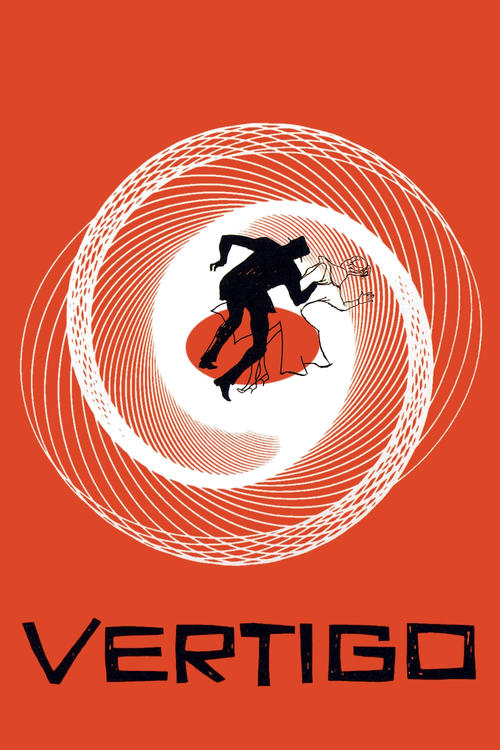
Vertigo
1958 · Directed by Alfred Hitchcock
Woke Score
CriticCritic Score
Audience
Ultra Based
Critics rated this 98 points above its woke score. Among Ultra Based films, this critic score ranks #7 of 1469.
Representation Casting
Score: 0/100
The cast reflects 1958 Hollywood demographics with no consideration for diversity or representation. All major roles are white, and female characters exist primarily as objects of male desire.
LGBTQ+ Themes
Score: 0/100
No LGBTQ+ themes, representation, or subtext. The film is entirely centered on heterosexual male desire and pursuit.
Feminist Agenda
Score: 5/100
While contemporary feminist theory has identified the film's deeply patriarchal structures and male gaze as worthy of critical analysis, the film itself exhibits no feminist consciousness. The narrative endorses male obsession and control rather than critiquing it.
Racial Consciousness
Score: 0/100
No acknowledgment of race, racial dynamics, or racial consciousness. The film exists in an all-white universe with no reference to racial issues whatsoever.
Climate Crusade
Score: 0/100
No environmental messaging, climate concerns, or ecological consciousness of any kind.
Eat the Rich
Score: 0/100
No critique of capitalism, wealth, or class structures. The protagonist is a wealthy detective in San Francisco; economic systems are entirely unremarked upon.
Body Positivity
Score: 0/100
The film's treatment of the female body is purely aesthetic and objectifying. There is no body positivity messaging or celebration of diverse body types.
Neurodivergence
Score: 5/100
The protagonist's acrophobia and resulting psychological obsession could be read as depicting mental health struggle, but the film does not frame this as neurodivergence or offer any therapeutic perspective. It is simply pathology.
Revisionist History
Score: 0/100
The film contains no historical revisionism or reframing of historical narratives. It is set in contemporary (1958) San Francisco with no historical pretensions.
Lecture Energy
Score: 0/100
The film does not pause to lecture the audience about social issues or moral lessons. It is purely a psychological thriller focused on narrative and suspense.


Synopsis
A retired San Francisco detective suffering from acrophobia investigates the strange activities of an old friend's wife, all the while becoming dangerously obsessed with her.
Consciousness Assessment
Vertigo stands as a masterwork of psychological cinema, and also as a comprehensive study in how a film can be simultaneously artistically brilliant and culturally regressive. Hitchcock's 1958 thriller examines obsession through the lens of a detective who becomes fixated on reshaping a woman into his ideal, a narrative that feminist film theory has spent decades unpacking as a portrait of male domination and objectification. The film's visual language, with its spiraling camera work and emphasis on the female form as object of desire, has become canonical in discussions of the male gaze. Yet none of this constitutes modern progressive consciousness. Hitchcock was not endorsing these structures as a critique; he was simply making a thriller in the idiom of his era, which happened to center masculine desire and agency as the natural order.
The film contains no representation initiatives, no acknowledgment of marginalized identities, no environmental messaging, no anti-capitalist sentiment, no body positivity, no neurodivergence, and certainly no revisionist historical consciousness. It is a product of 1958 Hollywood, where such concerns did not yet exist in the cultural vocabulary. The presence of troubling patriarchal dynamics does not make a film "woke" any more than the absence of representation makes it progressive. Vertigo remains what it always was: a technically extraordinary exploration of psychological pathology that happens to reveal the era's assumptions about gender and desire through its very structure.
This is the distinction we must maintain. A film can be morally serious about trauma and psychology without being socially conscious in the modern sense. Vertigo is important cinema, but it is not progressive cinema. It is a mirror held up to mid-century masculine anxiety, not a challenge to it.
Analysis generated by our Consciousness Algorithm
Critic Reviews
“Vertigo, which is one of the two or three best films Hitchcock ever made, is the most confessional, dealing directly with the themes that controlled his art. ”
“All great art has within it some irreducible, inexplicable element, beyond its cleverness and craft. Such is the hold Vertigo has. This strange, frustrating story of a haunted pervert, Hitchcock's Byronic opus, still evades capture, and refuses to be something it's not.”
“Vertigo is one of the great movies about movies, and about Hitchcock’s own way with them.”
“The old master, now a slave to television, has turned out another Hitchcock-and-bull story in which the mystery is not so much who done it as who cares.”
Consciousness Markers
The cast reflects 1958 Hollywood demographics with no consideration for diversity or representation. All major roles are white, and female characters exist primarily as objects of male desire.
No LGBTQ+ themes, representation, or subtext. The film is entirely centered on heterosexual male desire and pursuit.
While contemporary feminist theory has identified the film's deeply patriarchal structures and male gaze as worthy of critical analysis, the film itself exhibits no feminist consciousness. The narrative endorses male obsession and control rather than critiquing it.
No acknowledgment of race, racial dynamics, or racial consciousness. The film exists in an all-white universe with no reference to racial issues whatsoever.
No environmental messaging, climate concerns, or ecological consciousness of any kind.
No critique of capitalism, wealth, or class structures. The protagonist is a wealthy detective in San Francisco; economic systems are entirely unremarked upon.
The film's treatment of the female body is purely aesthetic and objectifying. There is no body positivity messaging or celebration of diverse body types.
The protagonist's acrophobia and resulting psychological obsession could be read as depicting mental health struggle, but the film does not frame this as neurodivergence or offer any therapeutic perspective. It is simply pathology.
The film contains no historical revisionism or reframing of historical narratives. It is set in contemporary (1958) San Francisco with no historical pretensions.
The film does not pause to lecture the audience about social issues or moral lessons. It is purely a psychological thriller focused on narrative and suspense.