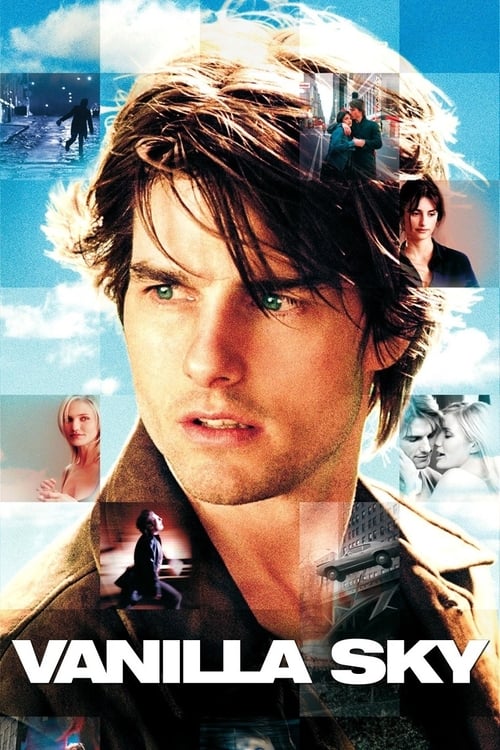
Vanilla Sky
2001 · Directed by Cameron Crowe
Woke Score
CriticCritic Score
Audience
Ultra Based
Critics rated this 41 points above its woke score. Among Ultra Based films, this critic score ranks #1269 of 1469.
Representation Casting
Score: 5/100
The cast includes Penélope Cruz, reflecting the original film's Spanish heritage, but this is not driven by contemporary representation consciousness. Casting appears incidental rather than intentional diversification.
LGBTQ+ Themes
Score: 0/100
No LGBTQ+ themes, characters, or subtext are present in the narrative.
Feminist Agenda
Score: 5/100
Female characters exist primarily as love interests and support roles. Sofia and Julianna lack agency and development independent of the male protagonist's emotional arc.
Racial Consciousness
Score: 0/100
The film contains no explicit engagement with race, racism, or racial identity. These themes are entirely absent from the narrative.
Climate Crusade
Score: 0/100
Environmental or climate-related themes do not appear in the film. The story is purely psychological and romantic.
Eat the Rich
Score: 0/100
Wealth and privilege are presented as neutral facts of the protagonist's existence. There is no critique of capitalism or economic systems.
Body Positivity
Score: 0/100
The entire premise hinges on the horror of facial disfigurement and its consequences for desirability. The film reinforces appearance-based hierarchies rather than challenging them.
Neurodivergence
Score: 0/100
No representation of neurodivergence or neurodivergent characters appears in the film.
Revisionist History
Score: 0/100
The film is a contemporary psychological thriller with no historical narrative to revise or reframe.
Lecture Energy
Score: 0/100
The film is a personal, introspective drama that does not lecture or heavy-handedly present moral or political messages to the audience.


Synopsis
David Aames has it all: wealth, good looks and gorgeous women on his arm. But just as he begins falling for the warmhearted Sofia, his face is horribly disfigured in a car accident. That's just the beginning of his troubles as the lines between illusion and reality, between life and death, are blurred.
Consciousness Assessment
Vanilla Sky arrives from a different era of American cinema, one in which a wealthy Manhattan publisher could lose his face in a car accident and spend two hours grappling with the metaphysical implications rather than, say, systemic inequality. Cameron Crowe's adaptation of Alejandro Amenábar's Open Your Eyes transplants the Spanish original into a glossy, celebrity-studded landscape where the real horror is not disfigurement itself but the possibility that one's subjective reality might be compromised. The film treats beauty and desirability as natural consequences of appearance, and wealth as a neutral fact of the protagonist's existence rather than something deserving of critical examination.
What cultural consciousness the film possesses operates at the level of individual psychology and existential anxiety. Penélope Cruz, retained from the original cast, provides romantic interest without substantial character development, while Cameron Diaz embodies the archetypal temptress whose agency exists primarily to service the male lead's emotional journey. The narrative makes no effort to interrogate these dynamics, nor does it register any awareness that such interrogation might be necessary or valuable. This is not a film that asks questions about representation, equity, or systemic injustice. It asks whether reality itself can be trusted, which is a perfectly respectable philosophical inquiry but one conducted entirely within the bubble of privileged male neurosis.
The film's relationship to disability is particularly instructive in its indifference to modern sensibilities. Disfigurement functions as a plot mechanism and psychological trauma, not as an opportunity to explore lived experience or challenge aesthetic hierarchies. That Vanilla Sky was made in 2001 explains but does not excuse this myopia. Even then, more thoughtful cinema existed. This is simply a film of its moment, concerned primarily with the interior experience of its protagonist and the technical puzzle of its narrative structure, blithely unconcerned with the cultural conversations that would come to dominate filmmaking within the next decade.
Analysis generated by our Consciousness Algorithm
Critic Reviews
“A mostly fascinating, often frustrating, boldly uncommercial Hollywood version of a boldly uncommercial art film. It's very atypical of the previous work of both director and star, and it's as personal a film, I suspect, as Cruise will ever make.”
“Highly entertaining, erotic science-fiction thriller that takes Mr. Crowe into Steven Spielberg territory.”
“It's a film that you can take home and chew over later, both abrasive in its loudness and reflective in its fleeting, feminine moments of silence. Well done.”
“Overblown and idiotic, this new "erotic thriller" is neither erotic nor thrilling; it's long, boring and self-indulgent.”
Consciousness Markers
The cast includes Penélope Cruz, reflecting the original film's Spanish heritage, but this is not driven by contemporary representation consciousness. Casting appears incidental rather than intentional diversification.
No LGBTQ+ themes, characters, or subtext are present in the narrative.
Female characters exist primarily as love interests and support roles. Sofia and Julianna lack agency and development independent of the male protagonist's emotional arc.
The film contains no explicit engagement with race, racism, or racial identity. These themes are entirely absent from the narrative.
Environmental or climate-related themes do not appear in the film. The story is purely psychological and romantic.
Wealth and privilege are presented as neutral facts of the protagonist's existence. There is no critique of capitalism or economic systems.
The entire premise hinges on the horror of facial disfigurement and its consequences for desirability. The film reinforces appearance-based hierarchies rather than challenging them.
No representation of neurodivergence or neurodivergent characters appears in the film.
The film is a contemporary psychological thriller with no historical narrative to revise or reframe.
The film is a personal, introspective drama that does not lecture or heavy-handedly present moral or political messages to the audience.