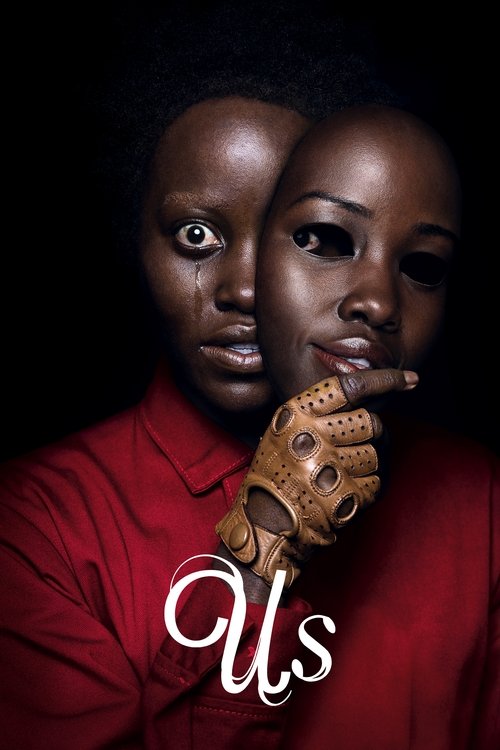
Us
2019 · Directed by Jordan Peele · $1.6M domestic
Woke Score
CriticCritic Score
Audience
Woke
Critics rated this 13 points above its woke score. Among Woke films, this critic score ranks #28 of 88.
Representation Casting
Score: 65/100
Features a predominantly Black cast in leading roles within a major studio horror film, with Lupita Nyong'o in a dual lead role that was uncommon for the genre at the time.
LGBTQ+ Themes
Score: 0/100
No LGBTQ+ themes, characters, or representation in the film.
Feminist Agenda
Score: 35/100
Female characters are agents of agency and violence, but the film does not foreground feminist ideology or activism as a primary theme.
Racial Consciousness
Score: 70/100
The film explicitly engages with racial marginalization, class inequality, and systemic abandonment through its central metaphor of the Tethered as the forgotten underclass.
Climate Crusade
Score: 0/100
No climate-related themes or environmental messaging present in the film.
Eat the Rich
Score: 75/100
The Tethered represent those abandoned by neoliberal capitalism, and the film frames class hierarchy, consumption, and privilege as sources of systemic violence and horror.
Body Positivity
Score: 0/100
No body positivity messaging or representation in the film.
Neurodivergence
Score: 0/100
No neurodivergence representation or themes present.
Revisionist History
Score: 0/100
While the film contains historical resonances, it does not engage in contemporary revisionist history in the 2020s cultural sense.
Lecture Energy
Score: 55/100
The film's symbolism is heavy-handed and unmissable (scissors, mirrors, shadows), creating a preachy quality that borders on the preachy without explicit dialogue-based lecturing.


Synopsis
Husband and wife Gabe and Adelaide Wilson take their kids to their beach house expecting to unplug and unwind with friends. But as night descends, their serenity turns to tension and chaos when some shocking visitors arrive uninvited.
Consciousness Assessment
Jordan Peele's "Us" arrives as a calculated deployment of horror cinema in service of social allegory. The film constructs its commentary through the Tethered, literal shadows of the surface-dwelling Wilson family, representing the systemic abandonment of an underclass rendered invisible by capitalist indifference. This is not subtle work. The scissors are class conflict. The mirrors are duality. The beach house is American comfort built on exploitation. One respects the commitment to the metaphor, if not always the execution.
The film's engagement with progressive sensibilities operates primarily through narrative structure rather than explicit activism. By centering Black protagonists in a prestige horror film and making their marginalization the thematic core, Peele participates in a contemporary conversation about representation and whose stories deserve the machinery of major studio production. Elisabeth Moss's appearance as a white character navigating the same horror serves a comparative function, though the film resists spelling this out entirely. The cast performs this material with the gravity it demands, particularly Nyong'o's dual performance as both Adelaide and her doppelganger Red, which carries the full weight of the film's ideological burden.
Yet "Us" remains fundamentally a horror film first and a political statement second. Its progressive markers are genuine if somewhat distributed unevenly. The anti-capitalist framework is its strongest suit, though the racial consciousness and representation elements register powerfully as well. The film lacks the explicit cultural lecturing of more preachy contemporary cinema, though its symbolism borders on the overwrought. It grossed 256 million dollars, suggesting that audiences responded to both the scares and the subtext, a rare combination in contemporary horror. This is a film that takes its social commentary as seriously as its jump scares, which is to say, very seriously indeed.
Analysis generated by our Consciousness Algorithm
Critic Reviews
“Like “The Shining,” there are a number of different ways to interpret Jordan Peele’s excellent new horror movie, Us. Every image seems to be a clue for what’s about to happen or a stand-in for something outside the main story of a family in danger. Peele’s film, which he directed, wrote and produced, will likely reward audiences on multiple viewings, each visit revealing a new secret, showing you something you missed before in a new light.”
“This is an unforgettable dance with the devil.”
“It is unquestionably Nyong’o’s film, and the 12 Years a Slave actress gives a nerve-flaying double performance. As Adelaide, every facial expression seems to embody an emotion in its purest, uncut form, while her evil double has a twisting, buckling physicality that comes close to avant-garde butoh dance.”
“It pains me to say this. I spent a good deal of Us straining to like it, to get on its slightly preening wavelength, to be nourished by its heady stew of tropes. I couldn’t get there, though. As loaded up on stuff as Us is, there’s not enough to grab onto; it’s an alienating idea piece that lumbers away just as it’s about to reveal its true nature. ”
Consciousness Markers
Features a predominantly Black cast in leading roles within a major studio horror film, with Lupita Nyong'o in a dual lead role that was uncommon for the genre at the time.
No LGBTQ+ themes, characters, or representation in the film.
Female characters are agents of agency and violence, but the film does not foreground feminist ideology or activism as a primary theme.
The film explicitly engages with racial marginalization, class inequality, and systemic abandonment through its central metaphor of the Tethered as the forgotten underclass.
No climate-related themes or environmental messaging present in the film.
The Tethered represent those abandoned by neoliberal capitalism, and the film frames class hierarchy, consumption, and privilege as sources of systemic violence and horror.
No body positivity messaging or representation in the film.
No neurodivergence representation or themes present.
While the film contains historical resonances, it does not engage in contemporary revisionist history in the 2020s cultural sense.
The film's symbolism is heavy-handed and unmissable (scissors, mirrors, shadows), creating a preachy quality that borders on the preachy without explicit dialogue-based lecturing.