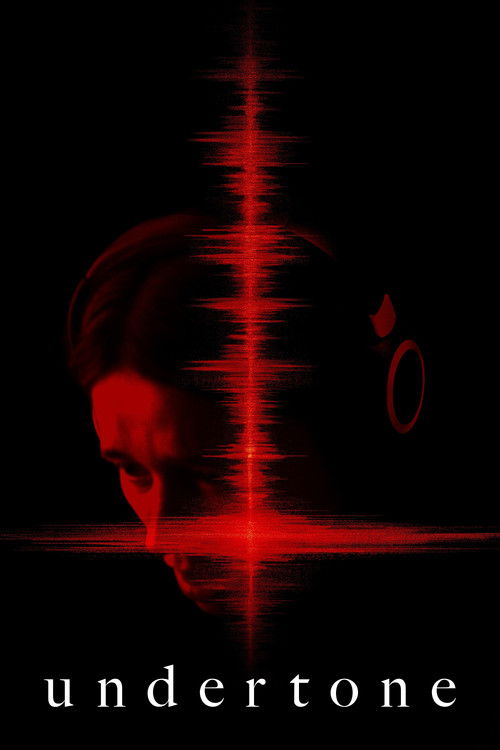
undertone
2026 · Directed by Ian Tuason · $19.5M domestic
Woke Score
CriticCritic Score
Audience
Ultra Based
Critics rated this 60 points above its woke score. Among Ultra Based films, this critic score ranks #723 of 1469.
Representation Casting
Score: 5/100
An all-white cast in a middle-class Canadian setting with no apparent attention to diversity or inclusion. The presence of a female lead is notable but does not constitute meaningful representation work.
LGBTQ+ Themes
Score: 0/100
No evidence of LGBTQ+ themes, characters, or representation in the available material. The film is described as focused entirely on audio horror mechanics.
Feminist Agenda
Score: 10/100
A female protagonist in a leadership role within the narrative could suggest minimal feminist engagement, but there is no indication of thematic exploration of gender dynamics or power structures.
Racial Consciousness
Score: 2/100
The explicitly all-white cast and lack of any racial or cultural commentary in reviews suggests the film operates entirely outside frameworks of racial awareness or examination.
Climate Crusade
Score: 0/100
No evidence of climate-related themes or environmental consciousness in a paranormal horror film focused on audio recordings and psychological terror.
Eat the Rich
Score: 5/100
The paranormal podcast setting could theoretically engage with critiques of media commodification or the influencer economy, but reviews suggest the film remains focused on pure horror mechanics rather than systemic critique.
Body Positivity
Score: 0/100
An audio-driven horror film with minimal visual elements would have limited opportunity for body-related themes, and no evidence suggests such engagement.
Neurodivergence
Score: 0/100
No indication of representation or thematic engagement with neurodivergent characters or experiences in the available material.
Revisionist History
Score: 0/100
A contemporary horror film about paranormal podcasting does not engage with historical narratives or revisionist frameworks.
Lecture Energy
Score: 15/100
While the film is praised for sophisticated sound design and technical craft, there is no indication of preachy moralizing or explicit ideological messaging in the reviews.
Synopsis
The host of a popular paranormal podcast becomes haunted by terrifying recordings mysteriously sent her way.
Consciousness Assessment
Ian Tuason's feature debut is an audio-centric horror exercise that weaponizes sound design to terrifying effect, which is precisely the problem. The film arrives at a cultural moment when A24 distribution almost guarantees a certain ideological scrutiny, yet "undertone" sidesteps most of it by simply not engaging with the world at all. The premise, a paranormal skeptic receiving mysterious audio files, could have explored podcasting as a medium for marginalized voices seeking alternative truth-telling. Instead, we get an all-white cast navigating a middle-class Canadian milieu with no discernible cultural or social dimension whatsoever. The horror here is purely sonic, not social.
What emerges from the available reviews is a film so committed to minimalism that it becomes almost aggressively apolitical. There is no representation beyond the accident of casting, no thematic engagement with systemic issues, no structural critique of the paranormal entertainment industry. The female protagonist hosting a podcast reads as a baseline acknowledgment of gender rather than any serious feminist inquiry. One suspects Tuason was interested in pure craft, in the technical challenge of making an audience fear what they cannot see. That is a legitimate artistic goal, but it is also a choice to remain in the tradition of horror as escapism rather than horror as social metaphor.
The film's status as an A24 release positions it within a distribution ecosystem increasingly associated with progressive cultural sensibilities. Yet "undertone" seems almost determined to frustrate such expectations, content to haunt its audience with disembodied voices rather than with any examination of power, identity, or systemic unease. It is, in that sense, a perfectly calibrated product for a 2026 horror landscape that has learned to market sophistication while avoiding substance.
Analysis generated by our Consciousness Algorithm
Critic Reviews
“A medley of fears, anxieties, and regrets that repeatedly messes with the senses, it exists at the nexus of sanity and madness, life and death, Heaven and Hell, and sound and image.”
“Some will argue that all of the themes of “undertone” don’t connect, but that’s a feature, not a bug. This is a film that doesn’t feel the need to explain itself. Nightmares rarely do.”
“With undertone, Tuason has created one of the few horror films that’s even more horrifying to hear than it is to see. ”
“There’s a swirl of creepy noises in A24’s new hyped-up horror Undertone – screaming, gargling, singing, banging – but nothing is quite loud enough to drown out the swirl of films it’s cribbing from.”
Consciousness Markers
An all-white cast in a middle-class Canadian setting with no apparent attention to diversity or inclusion. The presence of a female lead is notable but does not constitute meaningful representation work.
No evidence of LGBTQ+ themes, characters, or representation in the available material. The film is described as focused entirely on audio horror mechanics.
A female protagonist in a leadership role within the narrative could suggest minimal feminist engagement, but there is no indication of thematic exploration of gender dynamics or power structures.
The explicitly all-white cast and lack of any racial or cultural commentary in reviews suggests the film operates entirely outside frameworks of racial awareness or examination.
No evidence of climate-related themes or environmental consciousness in a paranormal horror film focused on audio recordings and psychological terror.
The paranormal podcast setting could theoretically engage with critiques of media commodification or the influencer economy, but reviews suggest the film remains focused on pure horror mechanics rather than systemic critique.
An audio-driven horror film with minimal visual elements would have limited opportunity for body-related themes, and no evidence suggests such engagement.
No indication of representation or thematic engagement with neurodivergent characters or experiences in the available material.
A contemporary horror film about paranormal podcasting does not engage with historical narratives or revisionist frameworks.
While the film is praised for sophisticated sound design and technical craft, there is no indication of preachy moralizing or explicit ideological messaging in the reviews.