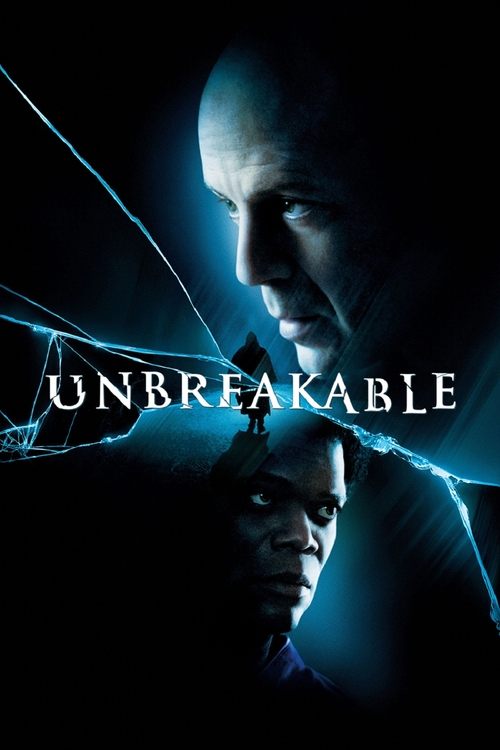
Unbreakable
2000 · Directed by M. Night Shyamalan
Woke Score
CriticCritic Score
Audience
Ultra Based
Critics rated this 58 points above its woke score. Among Ultra Based films, this critic score ranks #848 of 1469.
Representation Casting
Score: 15/100
The cast includes Samuel L. Jackson and Charlayne Woodard, but their presence reflects standard casting practices of 2000 rather than deliberate progressive representation efforts. Diversity exists but without ideological intentionality.
LGBTQ+ Themes
Score: 0/100
No LGBTQ+ characters, relationships, or themes present in the film.
Feminist Agenda
Score: 5/100
Robin Wright's character Audrey is defined primarily through her relationships to her husband and son. She demonstrates some agency but is not presented as advancing feminist themes or messaging.
Racial Consciousness
Score: 0/100
While the cast includes Black actors, the film contains no exploration of race, racial identity, or racial themes. Race is entirely absent from the narrative.
Climate Crusade
Score: 0/100
No environmental or climate-related themes, messaging, or concerns appear in the film.
Eat the Rich
Score: 0/100
The film contains no critique of capitalism, wealth inequality, or institutional power. Characters' occupations are presented as ordinary without ideological commentary.
Body Positivity
Score: 0/100
Elijah Price's disability is portrayed as tragic and pathological, linking his physical fragility to psychological damage and villainy. This represents a regressive rather than affirming approach to disability.
Neurodivergence
Score: 5/100
Elijah Price displays obsessive interests in comic books and superhero theory, but these traits are not explicitly framed as neurodivergence. Any connection is speculative rather than substantive.
Revisionist History
Score: 0/100
The film contains no historical revisionism or reinterpretation of historical events.
Lecture Energy
Score: 0/100
While exploring philosophical themes about heroism and destiny, the film maintains a narrative-driven approach. Shyamalan does not lecture or preach to the audience about social issues.


Synopsis
An ordinary man makes an extraordinary discovery when a train accident leaves his fellow passengers dead — and him unscathed. The answer to this mystery could lie with the mysterious Elijah Price, a man who suffers from a disease that renders his bones as fragile as glass.
Consciousness Assessment
Unbreakable arrives from an era when the concept of progressive sensibilities had not yet calcified into its contemporary form. M. Night Shyamalan's 2000 superhero thriller features a capable ensemble including Samuel L. Jackson and Charlayne Woodard, but their presence reflects colorblind casting rather than any deliberate commitment to social consciousness. The film explores themes of destiny, masculinity, and purpose without trafficking in contemporary cultural activism.
The film's treatment of disability merits particular attention. Elijah Price's brittle bone disease is portrayed as a source of profound psychological trauma and villainy, his physical fragility inextricably linked to his moral corruption. Rather than embracing any modern conception of body positivity or neurodivergence awareness, the narrative suggests that his disability has warped him into a manipulative antagonist. His condition is presented as tragedy deserving pity rather than as a simple fact of human variation.
What emerges is a competent thriller genuinely unconcerned with the social markers that would define progressive cinema in the decades to come. Shyamalan's focus remains on narrative structure, the deconstruction of superhero mythology, and the exploration of hidden potential within ordinary lives. The film operates in a pre-2015 register of cultural consciousness, indifferent to questions of representation, institutional critique, or identity politics that would later become central to mainstream discourse.
Analysis generated by our Consciousness Algorithm
Critic Reviews
“"The Sixth Sense" was no fluke. Unbreakable, writer-director M. Night Shyamalan's dazzling reunion with Bruce Willis confirms he's one of the most brilliant filmmakers working today.”
“An exquisitely crafted film filled with little shocks and deep echoes of humanity. It'll stick with you.”
“A potentially interesting idea deflated by the absurd proclamations of an arch screenplay and smothered under the ponderous gravity of M. Night Shyamalan's dreary direction.”
Consciousness Markers
The cast includes Samuel L. Jackson and Charlayne Woodard, but their presence reflects standard casting practices of 2000 rather than deliberate progressive representation efforts. Diversity exists but without ideological intentionality.
No LGBTQ+ characters, relationships, or themes present in the film.
Robin Wright's character Audrey is defined primarily through her relationships to her husband and son. She demonstrates some agency but is not presented as advancing feminist themes or messaging.
While the cast includes Black actors, the film contains no exploration of race, racial identity, or racial themes. Race is entirely absent from the narrative.
No environmental or climate-related themes, messaging, or concerns appear in the film.
The film contains no critique of capitalism, wealth inequality, or institutional power. Characters' occupations are presented as ordinary without ideological commentary.
Elijah Price's disability is portrayed as tragic and pathological, linking his physical fragility to psychological damage and villainy. This represents a regressive rather than affirming approach to disability.
Elijah Price displays obsessive interests in comic books and superhero theory, but these traits are not explicitly framed as neurodivergence. Any connection is speculative rather than substantive.
The film contains no historical revisionism or reinterpretation of historical events.
While exploring philosophical themes about heroism and destiny, the film maintains a narrative-driven approach. Shyamalan does not lecture or preach to the audience about social issues.