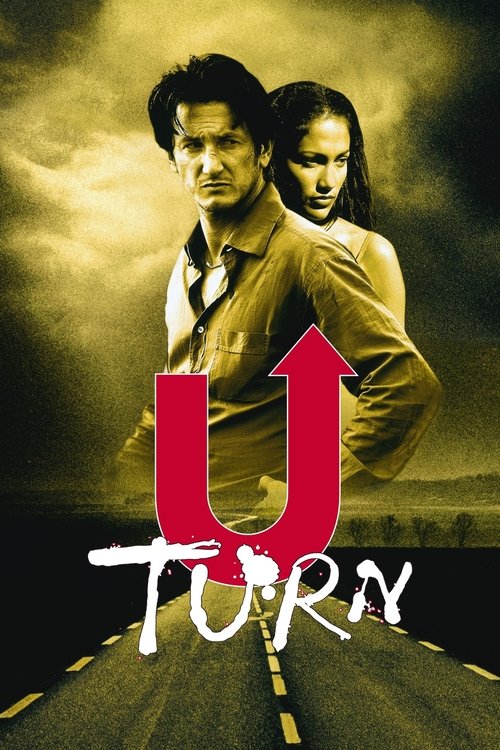
U Turn
1997 · Directed by Oliver Stone
Woke Score
CriticCritic Score
Audience
Ultra Based
Critics rated this 46 points above its woke score. Among Ultra Based films, this critic score ranks #1070 of 1469.
Representation Casting
Score: 35/100
The cast includes Jennifer Lopez in a prominent role and diverse supporting players, but the narrative treats these characters instrumentally rather than as fully developed individuals with agency.
LGBTQ+ Themes
Score: 0/100
The film contains no LGBTQ+ themes, representation, or subtext of any kind.
Feminist Agenda
Score: 5/100
The female lead exists primarily as a temptress and object of male desire whose role is to manipulate men into violence, offering no feminist perspective or critique of this dynamic.
Racial Consciousness
Score: 0/100
The film demonstrates no racial consciousness or engagement with racial themes despite its Arizona desert setting and diverse cast.
Climate Crusade
Score: 0/100
Climate or environmental themes are entirely absent from this crime thriller.
Eat the Rich
Score: 15/100
The film depicts greed and corruption but frames these as inevitable human nature rather than systemic critique, offering no anti-capitalist analysis.
Body Positivity
Score: 0/100
Body positivity is not a consideration in this film's visual or narrative approach.
Neurodivergence
Score: 0/100
No neurodivergent representation or themes are present in the film.
Revisionist History
Score: 0/100
The film contains no historical content or revisionist engagement with historical narratives.
Lecture Energy
Score: 10/100
While the film occasionally gestures toward cynical commentary about human nature and morality, it lacks any sustained attempt to educate or convince the audience of a particular worldview.


Synopsis
When a desperate man's car breaks down in a bizarre desert town while evading vengeful bookies, he becomes entangled in a dangerous love triangle. Caught between a married couple, he's faced with deadly contracts to kill them both.
Consciousness Assessment
U Turn arrives as a sweaty desert noir in which Oliver Stone applied his characteristic stylistic excess to what amounts to a glorified pulp fiction exercise. The film concerns itself primarily with greed, lust, and the mechanics of murder plots, territories well-trodden by the genre. What cultural consciousness the picture might possess remains buried beneath layers of gratuitous violence and sexual degradation, particularly in its treatment of Jennifer Lopez's character as a temptress whose agency consists mainly of manipulating men toward their mutual destruction. The film traffics in the language of 1990s cynicism, where moral emptiness passes for artistic seriousness.
The casting does include performers of various backgrounds, with Lopez's role as a significant character in the narrative structure. However, this representation exists within a framework that treats her primarily as an object of desire and instrument of chaos rather than as a fully realized individual with autonomous motivations. The film shows no interest in examining or complicating this dynamic. Stone's approach to the material suggests indifference toward any consideration of how his female characters are positioned and portrayed, a posture entirely consistent with 1990s mainstream cinema but bereft of what might be called progressive consciousness.
The picture's nihilism and its investment in depicting human behavior at its basest levels might be mistaken for social critique, but the film offers no framework, no perspective, no suggestion that it understands itself as commentary on anything beyond the immediate mechanics of its plot. U Turn remains a curiosity in Stone's filmography, a brief detour into genre work that demonstrates his visual facility without demonstrating much of anything else.
Analysis generated by our Consciousness Algorithm
Critic Reviews
“U-Turn is an overdue event, a chance for Stone to apply his hypnotic acid-trip-of-the-soul wizardry to something sexy and lowdown.”
“However simply he approaches this familiar milieu, Mr. Stone winds up treating his story's sin-soaked connivers the way Francis Ford Coppola treated vampires. Neither of them is really capable of anything plain.”
“The stylistic fun Stone has in dramatizing this crime of passion thoroughly revitalizes the well-worked genre.”
“The parade of eccentrics never ends, and Stone's near-miraculous achievement is to drain the life right out of material so sordid you'd think it couldn't help but be interesting. A must to avoid.”
Consciousness Markers
The cast includes Jennifer Lopez in a prominent role and diverse supporting players, but the narrative treats these characters instrumentally rather than as fully developed individuals with agency.
The film contains no LGBTQ+ themes, representation, or subtext of any kind.
The female lead exists primarily as a temptress and object of male desire whose role is to manipulate men into violence, offering no feminist perspective or critique of this dynamic.
The film demonstrates no racial consciousness or engagement with racial themes despite its Arizona desert setting and diverse cast.
Climate or environmental themes are entirely absent from this crime thriller.
The film depicts greed and corruption but frames these as inevitable human nature rather than systemic critique, offering no anti-capitalist analysis.
Body positivity is not a consideration in this film's visual or narrative approach.
No neurodivergent representation or themes are present in the film.
The film contains no historical content or revisionist engagement with historical narratives.
While the film occasionally gestures toward cynical commentary about human nature and morality, it lacks any sustained attempt to educate or convince the audience of a particular worldview.