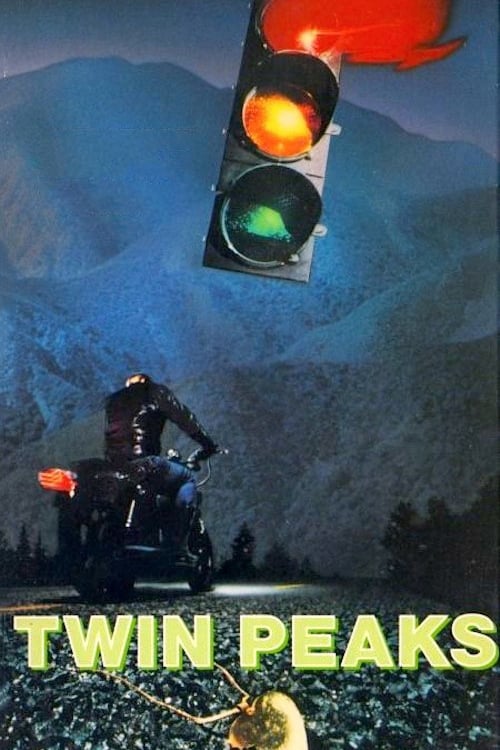
Twin Peaks
1989 · Directed by David Lynch
Woke Score
CriticCritic Score
Ultra Based
Critics rated this 79 points above its woke score. Among Ultra Based films, this critic score ranks #298 of 1469.
Representation Casting
Score: 5/100
The cast is predominantly white with minimal representation of minorities. Peripheral characters exist but are not central to the narrative or its themes.
LGBTQ+ Themes
Score: 0/100
No LGBTQ themes are present in this pilot version. The later series would introduce transgender representation, but this film contains no such elements.
Feminist Agenda
Score: 15/100
The film centers on violence against a young woman and uses her murder as narrative fuel. While this would later become subject to feminist critique, the pilot itself does not engage in feminist consciousness or interrogation.
Racial Consciousness
Score: 0/100
No themes related to racial consciousness or racial justice are present. The town is presented as historically white without commentary on this fact.
Climate Crusade
Score: 0/100
Climate or environmental themes are entirely absent from this work.
Eat the Rich
Score: 0/100
No critique of capitalism or class systems is evident. The narrative focuses on mystery and character rather than economic structures.
Body Positivity
Score: 0/100
No themes related to body positivity or acceptance of diverse body types appear in the pilot.
Neurodivergence
Score: 0/100
No representation or discussion of neurodivergence is present in this version.
Revisionist History
Score: 0/100
The film does not engage in revisionist historical narratives or reexamination of historical events.
Lecture Energy
Score: 0/100
The film maintains a deadpan, mysterious tone and never lectures the audience about social or political matters.
Synopsis
An idiosyncratic FBI agent investigates the murder of a young woman in the even more idiosyncratic town of Twin Peaks. (This standalone version of the series pilot was produced for the European VHS market and has an alternate, closed ending.)
Consciousness Assessment
Twin Peaks arrives as a work substantially ahead of its time in certain respects, though this distinction requires careful parsing. The pilot presents a predominantly white Pacific Northwest town of the sort that rarely acknowledged minority presences in 1989 television. The representation casting is sparse and largely peripheral. Yet the series would later introduce Agent Denise Bryson, a transgender character treated with remarkable dignity for 1990, suggesting Lynch's sensibilities extended beyond the binary conventions of mainstream television. This forward motion, however, does not retroactively woke-ify the pilot itself.
The film's treatment of gender remains its most contested legacy. Lynch employs violence against women as a narrative motor, centering the murder of Laura Palmer as the engine of plot. Feminist scholars have long grappled with whether this constitutes critique or exploitation, a tension that remains unresolved. The female characters exist within a framework that often treats their victimization as aesthetically compelling rather than politically interrogated. The film does not lecture on these matters, nor does it appear to seek approval for progressive sensibilities. It simply presents a world.
What emerges is a work of genuine artistic ambition that predates the contemporary cultural moment by several years. The absence of explicit social consciousness should not be mistaken for absence of consciousness itself. Lynch was working within the conventions of network television, creating something surrealist and strange that would eventually expand television's possibilities. The film scores modestly on contemporary metrics not because it is regressive, but because it is simply not interested in the categories by which we now measure such things.
Analysis generated by our Consciousness Algorithm
Critic Reviews
“It's stunning for a TV mystery. It's actually mysterious. The mood, the characters, the surreal quality of how the story is told, are something different.”
“How pleasurable it is to really care about a TV series, to the point of (national) obsession.”
“A captivating blend of the existential and the pulpy, the surreal and the neo-real, the grim and the farcical, Twin Peaks is new age music for the eyes.”
“Television, for all of its frequent blood, guts and skin, is tame territory... when something as wild, weird and wicked as Twin Peaks comes along, it rattles the network landscape like a tornado in full fury.”
Consciousness Markers
The cast is predominantly white with minimal representation of minorities. Peripheral characters exist but are not central to the narrative or its themes.
No LGBTQ themes are present in this pilot version. The later series would introduce transgender representation, but this film contains no such elements.
The film centers on violence against a young woman and uses her murder as narrative fuel. While this would later become subject to feminist critique, the pilot itself does not engage in feminist consciousness or interrogation.
No themes related to racial consciousness or racial justice are present. The town is presented as historically white without commentary on this fact.
Climate or environmental themes are entirely absent from this work.
No critique of capitalism or class systems is evident. The narrative focuses on mystery and character rather than economic structures.
No themes related to body positivity or acceptance of diverse body types appear in the pilot.
No representation or discussion of neurodivergence is present in this version.
The film does not engage in revisionist historical narratives or reexamination of historical events.
The film maintains a deadpan, mysterious tone and never lectures the audience about social or political matters.