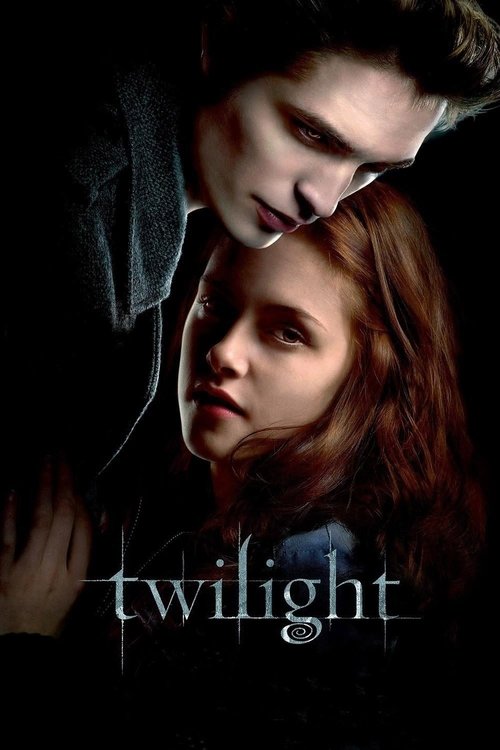
Twilight
2008 · Directed by Catherine Hardwicke
Woke Score
CriticCritic Score
Audience
Ultra Based
Critics rated this 52 points above its woke score. Among Ultra Based films, this critic score ranks #1023 of 1469.
Representation Casting
Score: 5/100
Cast is predominantly white with Bella, Edward, and the Cullens all white. Minimal meaningful representation in primary narrative roles.
LGBTQ+ Themes
Score: 0/100
No LGBTQ+ themes, characters, or subtext present in the film.
Feminist Agenda
Score: 15/100
Bella is passive and defined entirely by her relationship with Edward, abandoning agency and personal life. Female creative leadership (director/screenwriter) provides minimal points, but narrative itself is anti-feminist.
Racial Consciousness
Score: 0/100
No exploration of racial themes, racial justice, or cultural identity in the film.
Climate Crusade
Score: 0/100
No environmental themes or climate messaging present in this vampire romance narrative.
Eat the Rich
Score: 0/100
The wealthy Cullen family is depicted positively and aspirationally, with no critique of capitalism or class structures.
Body Positivity
Score: 0/100
Film reinforces conventional beauty standards by depicting thin, conventionally attractive vampires as superior to ordinary humans.
Neurodivergence
Score: 0/100
No representation of or engagement with neurodivergent characters or themes.
Revisionist History
Score: 0/100
Contemporary fiction with no historical elements to revise.
Lecture Energy
Score: 0/100
While Edward warns Bella of danger, this is plot exposition delivered through romantic tension, not preachy social messaging.


Synopsis
When Bella Swan moves to a small town in the Pacific Northwest, she falls in love with Edward Cullen, a mysterious classmate who reveals himself to be a 108-year-old vampire. Despite Edward's repeated cautions, Bella can't stay away from him, a fatal move that endangers her own life.
Consciousness Assessment
Twilight arrives from an earlier era of popular cinema, one in which female agency was not yet a pressing concern for mainstream audiences and the concept of progressive representation had not yet calcified into its current form. The film concerns itself with a teenage girl who moves to a small town, meets a vampire, and systematically dismantles her own autonomy in service of romantic obsession. Bella is not the hero of her own story; she is the prize in Edward's narrative, defined entirely by her proximity to him. She abandons her friends, her interests, and her safety with the kind of single-minded devotion that the film frames as romantic rather than cautionary.
The production boasts female creative leadership, which might suggest progressive credentials, but the actual content suggests otherwise. Director Catherine Hardwicke and screenwriter Melissa Rosenberg have adapted a source material that reinforces traditional gender hierarchies and celebrates female subordination as the ultimate expression of love. The supporting cast is overwhelmingly white, with no meaningful exploration of racial identity or cultural diversity. The Cullens, depicted as wealthy and beautiful, are presented as aspirational figures rather than subjects of critique. There is no climate consciousness, no queer subtext, no neurodivergent representation, no class consciousness.
What emerges from Twilight is a film fundamentally untouched by the social consciousness that would come to dominate mainstream cinema in the years following. It is not bad because it lacks these markers, precisely. It is simply a product of its time, when audiences were comfortable with narratives of female self-erasure and when cultural critique had not yet demanded that popular entertainment reflect the values now considered progressive. To evaluate it through the lens of 2020s sensibilities is to watch it fail rather comprehensively on nearly every axis of modern cultural awareness.
Analysis generated by our Consciousness Algorithm
Critic Reviews
“A sometimes girlie swirl of obsession that will delight fans, this faithful adaptation is after teenage blood, and will most likely hit a box office artery.”
“A genuine love story might be difficult for a young audience to handle, but this fantasy is blissful madness--an abstinence fable sexier than sex.”
“On screen, Twilight is repetitive and a tad sodden, too prosaic to really soar. But Hardwicke stirs this teen pulp to a pleasing simmer.”
“Watching Twilight, I was floored by how earnest all of this was, how seriously everyone involved took what is clearly a horrible, unhealthy, doomed relationship. And is there anything more teenage than that?”
Consciousness Markers
Cast is predominantly white with Bella, Edward, and the Cullens all white. Minimal meaningful representation in primary narrative roles.
No LGBTQ+ themes, characters, or subtext present in the film.
Bella is passive and defined entirely by her relationship with Edward, abandoning agency and personal life. Female creative leadership (director/screenwriter) provides minimal points, but narrative itself is anti-feminist.
No exploration of racial themes, racial justice, or cultural identity in the film.
No environmental themes or climate messaging present in this vampire romance narrative.
The wealthy Cullen family is depicted positively and aspirationally, with no critique of capitalism or class structures.
Film reinforces conventional beauty standards by depicting thin, conventionally attractive vampires as superior to ordinary humans.
No representation of or engagement with neurodivergent characters or themes.
Contemporary fiction with no historical elements to revise.
While Edward warns Bella of danger, this is plot exposition delivered through romantic tension, not preachy social messaging.