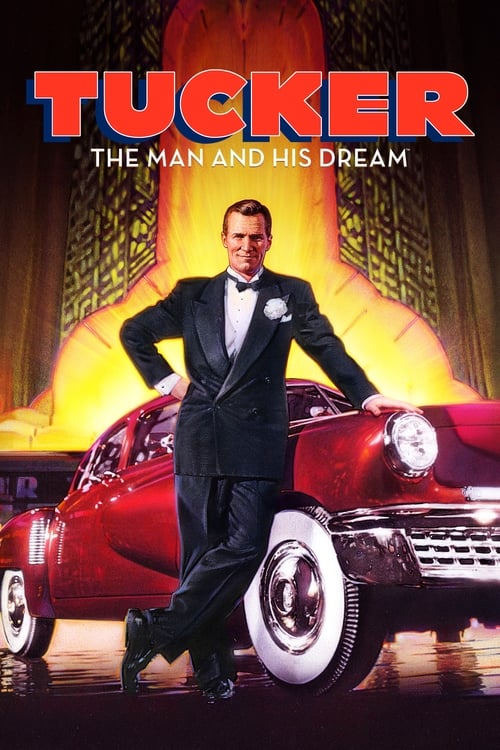
Tucker: The Man and His Dream
1988 · Directed by Francis Ford Coppola
Woke Score
CriticCritic Score
Audience
Ultra Based
Critics rated this 68 points above its woke score. Among Ultra Based films, this critic score ranks #458 of 1469.
Representation Casting
Score: 5/100
The cast includes Mako in a supporting role, but representation appears coincidental rather than deliberate. No evidence of conscious casting for diversity or meaningful roles for underrepresented groups.
LGBTQ+ Themes
Score: 0/100
No LGBTQ+ themes, characters, or representation present in the film.
Feminist Agenda
Score: 15/100
Joan Allen's character serves as a supportive wife and moral anchor, but lacks substantial agency or arc. No feminist critique or consciousness evident beyond a woman existing in the domestic sphere.
Racial Consciousness
Score: 0/100
No interrogation of racial dynamics, systemic racism, or racial consciousness present. The film treats its historical setting without engaging racial dimensions of 1940s America.
Climate Crusade
Score: 0/100
No environmental consciousness or climate-related themes. The automotive industry is critiqued for corporate malfeasance, not environmental impact.
Eat the Rich
Score: 25/100
The film portrays corporate sabotage and monopolistic practices negatively, but frames this as individual villainy rather than systemic critique. The narrative remains within capitalist mythology of the visionary entrepreneur.
Body Positivity
Score: 0/100
No engagement with body representation, disability inclusion, or body positivity themes.
Neurodivergence
Score: 0/100
No representation of neurodivergence or exploration of cognitive diversity.
Revisionist History
Score: 0/100
The film presents a straightforward historical narrative without revisionist intent or reframing of historical events through contemporary social consciousness.
Lecture Energy
Score: 5/100
Minimal preachy or preachy qualities. The film tells its story through narrative and character rather than explicit messaging, though Coppola's directorial vision imposes some thematic clarity.


Synopsis
Ypsilanti, Michigan, 1945. Engineer Preston Tucker dreams of designing the car of future, but his innovative envision will be repeatedly sabotaged by his own unrealistic expectations and the Detroit automobile industry tycoons.
Consciousness Assessment
Francis Ford Coppola's 1988 biography of Preston Tucker is a film concerned with the suffocation of individual visionary capacity within the machinery of American capitalism, which might seem like fertile ground for progressive cultural commentary. Instead, it remains steadfastly focused on the romantic tragedy of the entrepreneur crushed by corporate forces, a narrative that has more in common with the entrepreneurial mythology of the 1980s than with any systematic interrogation of power structures. The film's critique of the automobile industry and regulatory capture is real but remains apolitical, operating in the register of "good man, bad system" rather than examining the system itself with any ideological rigor.
The cast, while competent and led by Jeff Bridges in a charismatic performance, reflects the demographics of 1988 Hollywood without any deliberate consciousness toward representation. Mako appears in a supporting role as a factory worker, but the film does not concern itself with questions of whose stories are being told or whose labor is being rendered visible. Joan Allen provides a sturdy presence as Tucker's wife, functioning primarily as the moral anchor and domestic concern rather than as a character with her own substantive arc. There is no attempt to grapple with race, gender, disability, or any other marker of contemporary social consciousness. The film is a period piece that treats the postwar automotive industry as a stage for masculine ambition and capitalist corruption, nothing more.
Coppola's visual flair cannot compensate for the absence of any meaningful engagement with progressive sensibilities or cultural awareness. This is a film made in 1988 about 1945, and it carries the sensibilities of neither era's social movements. It is simply a tale of a dreamer done in by circumstance and villainy, told with the directorial assurance of a master craftsman but the ideological commitments of a period drama content to inhabit its historical moment without interrogating it.
Analysis generated by our Consciousness Algorithm
Critic Reviews
“A gorgeous, fluid, wonderfully exhilarating movie.”
“Tucker is the best Capra movie since Capra quit making them himself. [12 Aug 1988]”
“Mr. Coppola has done things this fancily before, but never with so clear and moving a sense of purpose.”
“Tucker came up with a classic, but poor Coppola has turned a great American tragedy into a gas-guzzling human comedy”
Consciousness Markers
The cast includes Mako in a supporting role, but representation appears coincidental rather than deliberate. No evidence of conscious casting for diversity or meaningful roles for underrepresented groups.
No LGBTQ+ themes, characters, or representation present in the film.
Joan Allen's character serves as a supportive wife and moral anchor, but lacks substantial agency or arc. No feminist critique or consciousness evident beyond a woman existing in the domestic sphere.
No interrogation of racial dynamics, systemic racism, or racial consciousness present. The film treats its historical setting without engaging racial dimensions of 1940s America.
No environmental consciousness or climate-related themes. The automotive industry is critiqued for corporate malfeasance, not environmental impact.
The film portrays corporate sabotage and monopolistic practices negatively, but frames this as individual villainy rather than systemic critique. The narrative remains within capitalist mythology of the visionary entrepreneur.
No engagement with body representation, disability inclusion, or body positivity themes.
No representation of neurodivergence or exploration of cognitive diversity.
The film presents a straightforward historical narrative without revisionist intent or reframing of historical events through contemporary social consciousness.
Minimal preachy or preachy qualities. The film tells its story through narrative and character rather than explicit messaging, though Coppola's directorial vision imposes some thematic clarity.