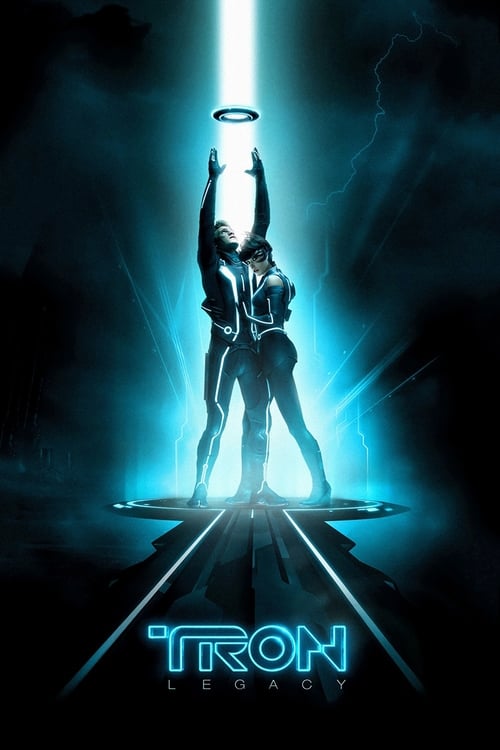
TRON: Legacy
2010 · Directed by Joseph Kosinski
Woke Score
CriticCritic Score
Audience
Ultra Based
Critics rated this 41 points above its woke score. Among Ultra Based films, this critic score ranks #1183 of 1469.
Representation Casting
Score: 15/100
Cast includes Olivia Wilde and Yaya DaCosta, but remains predominantly white and male-centered. Female characters exist in subordinate roles to the male protagonists.
LGBTQ+ Themes
Score: 0/100
No LGBTQ+ themes, characters, or representation are present in the narrative.
Feminist Agenda
Score: 10/100
Quorra demonstrates combat capability and intelligence, but remains largely a companion figure supporting the male protagonist's journey rather than driving her own arc.
Racial Consciousness
Score: 5/100
Minimal racial diversity in principal cast. Yaya DaCosta appears in a minor role without significant development or agency.
Climate Crusade
Score: 0/100
No environmental themes or climate consciousness present in the narrative.
Eat the Rich
Score: 0/100
The antagonist represents tyranny within the digital realm, but the film does not engage with economic systems, labor, or wealth distribution.
Body Positivity
Score: 0/100
The film features conventionally attractive actors within a sleek, minimalist aesthetic with no body diversity messaging.
Neurodivergence
Score: 0/100
No representation of neurodivergent characters or conditions present.
Revisionist History
Score: 0/100
This is a science fiction narrative with no claims to historical revision or reinterpretation.
Lecture Energy
Score: 5/100
The film prioritizes visual spectacle over philosophical exposition, though some scenes explain The Grid's mechanics and rules with expository dialogue.


Synopsis
Sam Flynn, the tech-savvy and daring son of Kevin Flynn, investigates his father's disappearance and is pulled into The Grid. With the help of a mysterious program named Quorra, Sam quests to stop evil dictator Clu from crossing into the real world.
Consciousness Assessment
TRON: Legacy exists as a monument to late-2000s aesthetic minimalism, a film so committed to visual sleekness that it rarely pauses to consider matters of representation or social consciousness. The narrative concerns itself with fathers, sons, and the digital frontier, all territories mapped long ago by masculine action cinema. Olivia Wilde's Quorra represents the film's primary concession to female presence, though she functions largely as a companion figure orbiting the protagonist's arc rather than as a fully realized dramatic entity.
The film's world-building prioritizes spectacle over substance. The Grid operates as a neutral battleground for philosophical abstraction rather than as a space where social dynamics might be interrogated. No climate concerns intrude upon this digital realm. No economic systems face scrutiny. No marginalized voices emerge to complicate the straightforward narrative of a privileged young man entering a dangerous space to solve a problem created by his father. The casting reflects the era's comfortable defaults: predominantly white, conventionally attractive, organized around masculine heroics.
What emerges from this assessment is a film wholly unconcerned with the social consciousness that would later become a cultural fixture. TRON: Legacy predates the specific cultural moment we now analyze. It belongs to an earlier cinema, one where spectacle sufficed as its own justification, where representation was not yet a language critics routinely spoke. In this sense, the film is not hostile to progressive sensibilities so much as simply indifferent to them.
Analysis generated by our Consciousness Algorithm
Critic Reviews
“On the heels of another revelatory turn in True Grit, Bridges is sensational again, here in a groundbreaking performance.”
“The sequel, more successfully (if less innocently), injects you into a luminous technological wonderland and asks you to be happy with the ride.”
“Tron: Legacy, a sequel made 28 years after the original but with the same actor, is true to the first film: It also can't be understood, but looks great. Both films, made so many years apart, can fairly lay claim to being state of the art. This time that includes the use of 3-D. ”
“Tron: Legacy will only be enjoyed by men in their thirties and early forties searching for a Proustian moment.”
Consciousness Markers
Cast includes Olivia Wilde and Yaya DaCosta, but remains predominantly white and male-centered. Female characters exist in subordinate roles to the male protagonists.
No LGBTQ+ themes, characters, or representation are present in the narrative.
Quorra demonstrates combat capability and intelligence, but remains largely a companion figure supporting the male protagonist's journey rather than driving her own arc.
Minimal racial diversity in principal cast. Yaya DaCosta appears in a minor role without significant development or agency.
No environmental themes or climate consciousness present in the narrative.
The antagonist represents tyranny within the digital realm, but the film does not engage with economic systems, labor, or wealth distribution.
The film features conventionally attractive actors within a sleek, minimalist aesthetic with no body diversity messaging.
No representation of neurodivergent characters or conditions present.
This is a science fiction narrative with no claims to historical revision or reinterpretation.
The film prioritizes visual spectacle over philosophical exposition, though some scenes explain The Grid's mechanics and rules with expository dialogue.