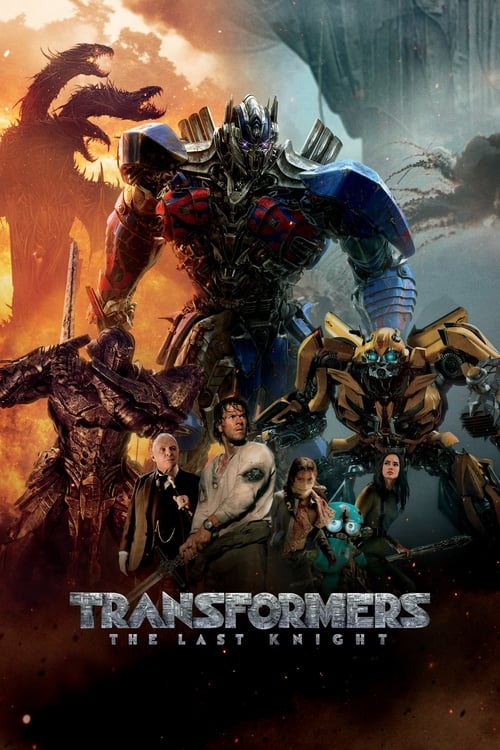
Transformers: The Last Knight
2017 · Directed by Michael Bay
Woke Score
CriticCritic Score
Audience
Ultra Based
Critics rated this 19 points above its woke score. Among Ultra Based films, this critic score ranks #1446 of 1469.
Representation Casting
Score: 25/100
The film includes female leads and a diverse supporting cast, but representation remains superficial with female characters occupying secondary narrative roles.
LGBTQ+ Themes
Score: 0/100
No LGBTQ+ themes or representation present in the film.
Feminist Agenda
Score: 15/100
Isabela Merced's character provides minimal feminist consciousness, existing primarily as a plot device rather than a vehicle for feminist themes.
Racial Consciousness
Score: 5/100
The film features a diverse cast, but racial consciousness is not engaged as a thematic concern in the narrative.
Climate Crusade
Score: 0/100
No climate-related messaging or environmental consciousness present.
Eat the Rich
Score: 0/100
The film contains no critique of capitalism or systemic wealth inequality despite its conflict-based premise.
Body Positivity
Score: 0/100
No body positivity messaging or representation of non-normative body types.
Neurodivergence
Score: 0/100
No representation of neurodivergent characters or neurodiversity awareness.
Revisionist History
Score: 10/100
The film attempts to rewrite Transformers history by claiming their presence on Earth spans centuries, but this is underdeveloped as a thematic element.
Lecture Energy
Score: 5/100
Minimal expository dialogue necessary for plot comprehension, but no sermon-like lectures on social issues.


Synopsis
Humans and Transformers are at war. Optimus Prime is gone. The key to saving our future lies buried in the secrets of the past, in the hidden history of Transformers on Earth. Saving our world falls upon the shoulders of an unlikely alliance: Cade Yeager; Bumblebee; an English Lord; and an Oxford Professor.
Consciousness Assessment
Michael Bay's fifth entry into the Transformers franchise is, in essence, a Michael Bay film. It contains the requisite explosions, robot combat, and rapid cutting that have defined the series since 2007. The inclusion of Isabela Merced and Laura Haddock in supporting roles provides a degree of gender representation, though their narrative function remains subordinate to the machinery and mayhem. One notes that Merced's character Izabella serves as the film's moral conscience, a role that at least gestures toward some awareness of female agency, though the film's architecture offers little opportunity for this to develop into anything resembling thematic weight.
The script, credited to multiple writers, concerns itself primarily with exposition and spectacle. There is no evidence of engagement with contemporary social consciousness, climate awareness, or systemic critique. The film presents a simple binary conflict between humans and robots, resolved through alliance and firepower. Anthony Hopkins' inclusion in the cast lends gravitas to proceedings, though his character serves largely as a plot device to explain historical Transformer presence on Earth. The revisionist history angle is present in concept but underdeveloped as a thematic element.
By 2017 standards, this film represents an older model of blockbuster filmmaking, one in which progressive sensibilities have not yet infiltrated the fundamental DNA of the production. It is, quite simply, a machine designed to generate revenue and spectacle, indifferent to the cultural winds shifting around it.
Analysis generated by our Consciousness Algorithm
Critic Reviews
“If you’re not staggered by the technique on display here – the stuff that sets Bay’s work miles above the Fast & Furiouses, X-Men: Apocalypses and Tom Cruise-chasing Mummies of this world – you’re not paying attention.”
“It’s been reported that this “Transformers” sequel had a $217 million budget. The special effects — especially in IMAX 3-D — on the screen make you believe it.”
“For the first time, the messy hyperactive form and nihilistic crunched-metal content seem to reinforce each other.”
“It all culminates, of course, in a cacophonous and interminable final battle involving far too many participants to possibly keep straight.”
Consciousness Markers
The film includes female leads and a diverse supporting cast, but representation remains superficial with female characters occupying secondary narrative roles.
No LGBTQ+ themes or representation present in the film.
Isabela Merced's character provides minimal feminist consciousness, existing primarily as a plot device rather than a vehicle for feminist themes.
The film features a diverse cast, but racial consciousness is not engaged as a thematic concern in the narrative.
No climate-related messaging or environmental consciousness present.
The film contains no critique of capitalism or systemic wealth inequality despite its conflict-based premise.
No body positivity messaging or representation of non-normative body types.
No representation of neurodivergent characters or neurodiversity awareness.
The film attempts to rewrite Transformers history by claiming their presence on Earth spans centuries, but this is underdeveloped as a thematic element.
Minimal expository dialogue necessary for plot comprehension, but no sermon-like lectures on social issues.