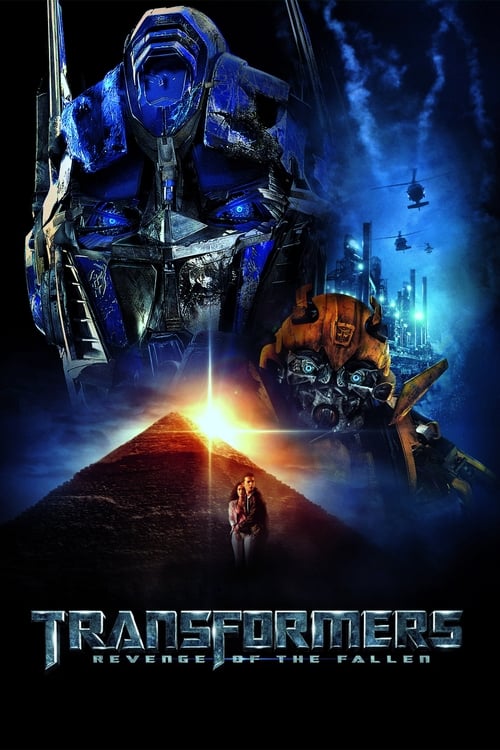
Transformers: Revenge of the Fallen
2009 · Directed by Michael Bay
Woke Score
CriticCritic Score
Audience
Ultra Based
Critics rated this 31 points above its woke score. Among Ultra Based films, this critic score ranks #1398 of 1469.
Representation Casting
Score: 12/100
The film features some racial diversity in secondary roles, but the narrative centering remains firmly on white protagonists. Minority characters are largely confined to comedic or supporting functions.
LGBTQ+ Themes
Score: 0/100
No LGBTQ+ themes or representation of any kind. The film is aggressively heteronormative and focused exclusively on romantic tension between the male and female leads.
Feminist Agenda
Score: 2/100
Megan Fox's character exists primarily as a sexualized object. The film is notorious for its camera work emphasizing her body rather than her agency or character development.
Racial Consciousness
Score: 5/100
The film contains the infamous twin Autobot characters widely criticized for embodying offensive African American stereotypes in speech and behavior. This remains one of the most pointed examples of thoughtless racial representation in mainstream cinema.
Climate Crusade
Score: 0/100
No environmental themes or climate consciousness present. The film celebrates mechanical warfare and mass destruction without irony or consequence.
Eat the Rich
Score: 0/100
The film is fundamentally a product placement showcase and corporate advertisement. It celebrates consumption and military-industrial power without critical examination.
Body Positivity
Score: 3/100
The film presents a narrow aesthetic ideal through its focus on conventionally attractive actors. No representation of diverse body types or any counter to mainstream beauty standards.
Neurodivergence
Score: 0/100
No representation of neurodivergent characters or acknowledgment of neurodiversity. The film contains no such thematic material whatsoever.
Revisionist History
Score: 0/100
No historical revisionism or alternative historical framing. The film is set in the present day and contains no engagement with historical narrative.
Lecture Energy
Score: 10/100
While not overtly preachy, the film does contain some preachy moments about good versus evil and human-robot cooperation that approach after-school special territory.


Synopsis
Sam Witwicky leaves the Autobots behind for a normal life. But when his mind is filled with cryptic symbols, the Decepticons target him and he is dragged back into the Transformers' war.
Consciousness Assessment
Transformers: Revenge of the Fallen represents a peculiar archaeological specimen in the study of cultural consciousness circa 2009. The film arrived at a moment when progressive sensibilities were beginning to coalesce into something resembling a coherent critical framework, yet Hollywood remained largely indifferent to such concerns. Michael Bay's maximalist action spectacle demonstrates this obliviousness with remarkable consistency across nearly every dimension of social representation.
The film's most notorious offense, the twin Autobot characters whose speech patterns and behavioral tics invite uncomfortable comparisons to minstrelsy, stands as perhaps the most unguarded example of thoughtless racial coding in mainstream blockbuster cinema. These characters exist in a film otherwise populated by conventionally heroic white protagonists and sexualized female decoration. Megan Fox's role as Mikaela Banes becomes a masterclass in how camera work can reduce a performer to a collection of body parts, an aesthetic choice that predates but perfectly encapsulates the male gaze critiques that would later become standard analytical vocabulary.
What emerges from this film is not malice so much as profound indifference. The movie operates in a universe where representation, gender dynamics, and racial consciousness simply do not register as concerns worthy of consideration. It is a time capsule of a particular strain of blockbuster filmmaking that regarded such matters as irrelevant to the business of explosions and spectacle. From a contemporary critical perspective, the film barely registers on any metric of progressive cultural awareness.
Analysis generated by our Consciousness Algorithm
Critic Reviews
“The sequence serves no real purpose beyond dazzle for dazzle's sake, but when you're watching it, that's purpose enough.”
“A well-oiled, loudly revving summer action vehicle that does all that's required, and then some, within the confines of PG-13: It cracks genitalia jokes, messes around with toys and blows stuff up.”
“It is unapologetic about delivering what it promises. Bigger battles. Massive explosions. Megan Fox looking hot.”
“Transformers 2 has a shot at the title Worst Movie of the Decade.”
Consciousness Markers
The film features some racial diversity in secondary roles, but the narrative centering remains firmly on white protagonists. Minority characters are largely confined to comedic or supporting functions.
No LGBTQ+ themes or representation of any kind. The film is aggressively heteronormative and focused exclusively on romantic tension between the male and female leads.
Megan Fox's character exists primarily as a sexualized object. The film is notorious for its camera work emphasizing her body rather than her agency or character development.
The film contains the infamous twin Autobot characters widely criticized for embodying offensive African American stereotypes in speech and behavior. This remains one of the most pointed examples of thoughtless racial representation in mainstream cinema.
No environmental themes or climate consciousness present. The film celebrates mechanical warfare and mass destruction without irony or consequence.
The film is fundamentally a product placement showcase and corporate advertisement. It celebrates consumption and military-industrial power without critical examination.
The film presents a narrow aesthetic ideal through its focus on conventionally attractive actors. No representation of diverse body types or any counter to mainstream beauty standards.
No representation of neurodivergent characters or acknowledgment of neurodiversity. The film contains no such thematic material whatsoever.
No historical revisionism or alternative historical framing. The film is set in the present day and contains no engagement with historical narrative.
While not overtly preachy, the film does contain some preachy moments about good versus evil and human-robot cooperation that approach after-school special territory.