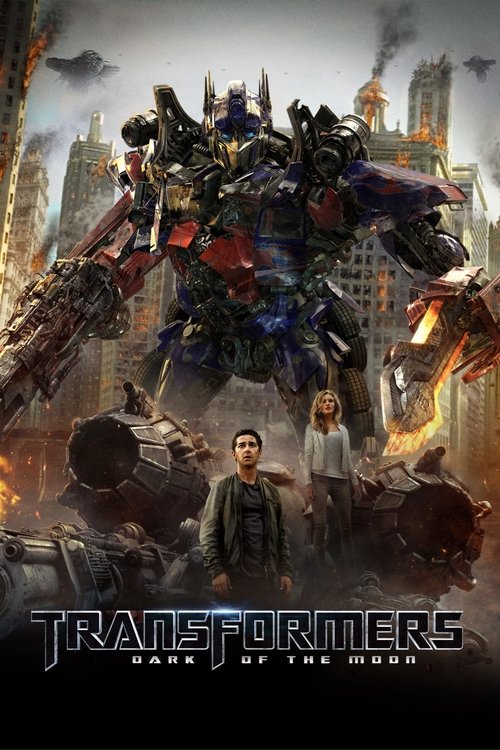
Transformers: Dark of the Moon
2011 · Directed by Michael Bay
Woke Score
CriticCritic Score
Audience
Ultra Based
Critics rated this 38 points above its woke score. Among Ultra Based films, this critic score ranks #1310 of 1469.
Representation Casting
Score: 15/100
Casting reflects typical 2011 blockbuster practices with minimal diversity considerations. Rosie Huntington-Whiteley was selected primarily for aesthetic appeal rather than acting range.
LGBTQ+ Themes
Score: 0/100
No LGBTQ+ themes, representation, or subtext. The film contains no characters or storylines engaging with sexual orientation or gender identity.
Feminist Agenda
Score: 5/100
The female lead serves primarily as romantic interest and visual object. Her agency is minimal and her character arc conventional to the point of invisibility.
Racial Consciousness
Score: 10/100
Cast includes actors of color in supporting military roles, but their presence carries no particular thematic weight or cultural commentary.
Climate Crusade
Score: 0/100
No engagement whatsoever with climate concerns. The narrative contains no environmental themes or climate-related anxieties.
Eat the Rich
Score: 0/100
The film is suffused with corporate partnerships and product placement. Its politics, where they exist, celebrate military-industrial cooperation rather than critique it.
Body Positivity
Score: 2/100
The film's treatment of bodies is purely conventional. Female characters are presented as aesthetic objects; no diversity of body types receives celebration or commentary.
Neurodivergence
Score: 0/100
No characters with neurodivergent representation or storylines engaging with neurodiversity appear in the film.
Revisionist History
Score: 5/100
The Chernobyl opening provides a minor historical setting, but the film engages in no meaningful revisionist interpretation of historical events.
Lecture Energy
Score: 0/100
The film contains no preachy messaging about social issues. Its narrative concerns itself purely with action sequences and plot mechanics.


Synopsis
The Autobots continue to work for NEST, now no longer in secret. But after discovering a strange artifact during a mission in Chernobyl, it becomes apparent to Optimus Prime that the United States government has been less than forthright with them.
Consciousness Assessment
Transformers: Dark of the Moon arrives as a pre-woke artifact, a film so thoroughly committed to the sensibilities of 2011 that it barely registers on the contemporary cultural consciousness meter. Michael Bay's third installment in the franchise is concerned with little beyond its core mandate: delivering explosions, military fetishism, and product placement with the precision of a Swiss chronometer. The female lead was chosen primarily for her appearance, a casting decision that would draw scrutiny in later years but barely registered as noteworthy in 2011. The film's politics, to the extent they exist, amount to a straightforward celebration of the military-industrial partnership, with the Autobots functioning as loyal allies to American governmental interests.
The cast composition reflects the blockbuster conventions of its era rather than any deliberate engagement with representation. Tyrese Gibson and Josh Duhamel appear as military operatives, their presence unremarkable and unadorned by any particular cultural messaging. Frances McDormand occupies a supporting role that demands little of her considerable talents. The entire enterprise operates within a framework so removed from contemporary social consciousness that analyzing it for progressive sensibilities feels like examining a stone tablet for wifi connectivity.
What emerges from this exercise is not condemnation but rather a kind of anthropological documentation. The film simply does not attempt to engage with the markers of modern progressive cultural awareness. It contains no LGBTQ+ representation, no interrogation of capitalist systems, no climate anxiety, no revisionist historical consciousness, no neurodivergent characters, and certainly no body positivity rhetoric. It is, in this sense, innocently retrograde, a pure expression of the action blockbuster form as it existed in the pre-2015 cultural moment. The score reflects not moral judgment but rather the simple fact that the film operates in a different register entirely.
Analysis generated by our Consciousness Algorithm
Critic Reviews
“As a performance-art act of juvenile Id-fulfillment, it's magnificent.”
“Dark of the Moon is hardly a fleet production, but here Bay makes his best, most flexible use yet of all the flamboyant bigness at his command: Computer-drawn characters and human actors seem to occupy the same narrative for once. ”
“Not rocket science by a moonshot but sporadically dumb fun.”
“Director Michael Bay, Hollywood's answer to the Antichrist, isn't primarily interested in your soul, though his movie does a pretty effective job of sucking that away (and sucking, in general). ”
Consciousness Markers
Casting reflects typical 2011 blockbuster practices with minimal diversity considerations. Rosie Huntington-Whiteley was selected primarily for aesthetic appeal rather than acting range.
No LGBTQ+ themes, representation, or subtext. The film contains no characters or storylines engaging with sexual orientation or gender identity.
The female lead serves primarily as romantic interest and visual object. Her agency is minimal and her character arc conventional to the point of invisibility.
Cast includes actors of color in supporting military roles, but their presence carries no particular thematic weight or cultural commentary.
No engagement whatsoever with climate concerns. The narrative contains no environmental themes or climate-related anxieties.
The film is suffused with corporate partnerships and product placement. Its politics, where they exist, celebrate military-industrial cooperation rather than critique it.
The film's treatment of bodies is purely conventional. Female characters are presented as aesthetic objects; no diversity of body types receives celebration or commentary.
No characters with neurodivergent representation or storylines engaging with neurodiversity appear in the film.
The Chernobyl opening provides a minor historical setting, but the film engages in no meaningful revisionist interpretation of historical events.
The film contains no preachy messaging about social issues. Its narrative concerns itself purely with action sequences and plot mechanics.