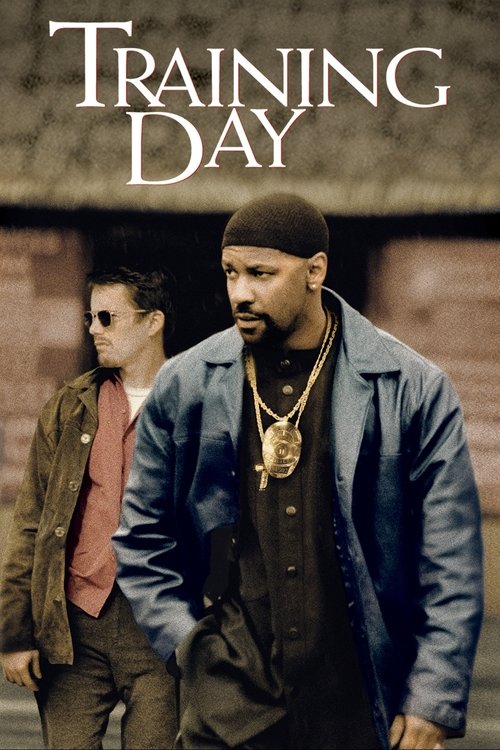
Training Day
2001 · Directed by Antoine Fuqua
Woke Score
CriticCritic Score
Audience
Ultra Based
Critics rated this 53 points above its woke score. Among Ultra Based films, this critic score ranks #595 of 1469.
Representation Casting
Score: 35/100
The film features a predominantly Black cast in lead and supporting roles, including Denzel Washington and Ethan Hawke. However, this reflects the narrative setting rather than deliberate representation politics.
LGBTQ+ Themes
Score: 0/100
No LGBTQ+ themes, characters, or subtext are present in the film.
Feminist Agenda
Score: 5/100
Female characters are largely absent or marginal to the narrative. The film is male-centered with no feminist themes or consciousness evident.
Racial Consciousness
Score: 15/100
While the film features racial minorities in central roles, it does not engage with systemic racism, police brutality as a racial issue, or commentary on institutional discrimination. Corruption is treated as individual moral failure.
Climate Crusade
Score: 0/100
No climate-related themes, messaging, or environmental consciousness appears in the film.
Eat the Rich
Score: 20/100
The film depicts corruption and moral compromise within capitalist systems, but offers no systemic critique. Corruption is presented as individual greed rather than structural economic injustice.
Body Positivity
Score: 0/100
No body positivity themes or commentary on appearance standards are present in the film.
Neurodivergence
Score: 0/100
No neurodivergent characters or themes related to neurodiversity are depicted.
Revisionist History
Score: 0/100
The film does not attempt to reframe historical narratives or present alternative historical perspectives.
Lecture Energy
Score: 10/100
The film trusts its audience to draw moral conclusions without explicit preachiness. No characters deliver speeches about social injustice or systemic problems.


Synopsis
On his first day on the job as a narcotics officer, a rookie cop works with a rogue detective who isn't what he appears.
Consciousness Assessment
Training Day presents a morality tale suffused with contemporary anxieties about institutional corruption and the urban criminal underworld, yet it remains fundamentally a character study rather than a work of social advocacy. The film features a predominantly African American cast in roles of agency and complexity, but this reflects the Los Angeles police narrative rather than a deliberate commitment to representation politics. Denzel Washington's turn as a morally compromised detective of color is presented as a character flaw and betrayal, not as commentary on systemic racism within law enforcement, and the film's moral framework remains individualist: corruption stems from one man's choices, not structural inequity.
The film's treatment of its urban setting and characters lacks the pedagogical impulse that would signal contemporary progressive sensibilities. We are not lectured about the causes of crime, the legacy of segregation, or the systemic nature of police brutality. Instead, Antoine Fuqua crafts a taut procedural thriller where the dramatic tension derives from interpersonal conflict and moral ambiguity. The rookie's crisis of conscience emerges from his personal ethics, not from a recognition of systemic injustice. This is a film that trusts its audience to understand corruption as a human phenomenon without requiring explicit ideological framing.
The supporting cast, including appearances by Dr. Dre and Snoop Dogg, adds texture to the Los Angeles underworld, but their presence functions narratively rather than representationally. Nothing in the film suggests awareness of contemporary discussions about diversity, inclusion, or the performative nature of institutional diversity. Training Day succeeds as a thriller precisely because it refuses the earnestness that would mark a more explicitly progressive work.
Analysis generated by our Consciousness Algorithm
Critic Reviews
“It’s fair to say Washington has never quite topped this performance. It’s an unparalleled treat to watch him messing with the bewildered Hoyt at their first meeting at a diner, and then to watch the two men striding out to the car, filmed from a low camera angle. It is all thrillingly ominous.”
“Trashy and opportunistic as some of it is, Training Day is the most vital police drama since "The French Connection" or "Serpico."”
“One of the finest cops-and-robbers thrillers of recent years.”
“A blandly twisting plot with no meaningful revelations or substantial themes.”
Consciousness Markers
The film features a predominantly Black cast in lead and supporting roles, including Denzel Washington and Ethan Hawke. However, this reflects the narrative setting rather than deliberate representation politics.
No LGBTQ+ themes, characters, or subtext are present in the film.
Female characters are largely absent or marginal to the narrative. The film is male-centered with no feminist themes or consciousness evident.
While the film features racial minorities in central roles, it does not engage with systemic racism, police brutality as a racial issue, or commentary on institutional discrimination. Corruption is treated as individual moral failure.
No climate-related themes, messaging, or environmental consciousness appears in the film.
The film depicts corruption and moral compromise within capitalist systems, but offers no systemic critique. Corruption is presented as individual greed rather than structural economic injustice.
No body positivity themes or commentary on appearance standards are present in the film.
No neurodivergent characters or themes related to neurodiversity are depicted.
The film does not attempt to reframe historical narratives or present alternative historical perspectives.
The film trusts its audience to draw moral conclusions without explicit preachiness. No characters deliver speeches about social injustice or systemic problems.