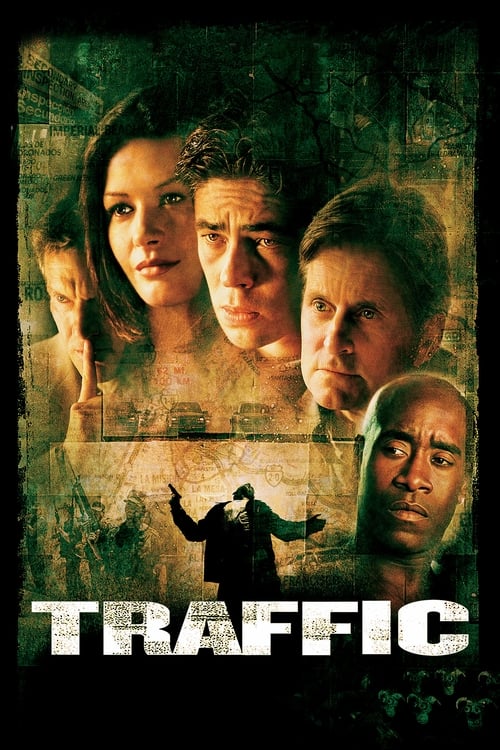
Traffic
2000 · Directed by Steven Soderbergh
Woke Score
CriticCritic Score
Audience
Ultra Based
Critics rated this 68 points above its woke score. Among Ultra Based films, this critic score ranks #220 of 1469.
Representation Casting
Score: 32/100
The ensemble cast includes substantial roles for actors of color (Benicio del Toro, Don Cheadle, Luis Guzmán) and treats their perspectives seriously, but operates within 2000-era inclusivity rather than modern identity-conscious representation.
LGBTQ+ Themes
Score: 0/100
No LGBTQ+ themes, characters, or content present in the film.
Feminist Agenda
Score: 15/100
Catherine Zeta-Jones plays an active protagonist learning to manage her husband's business, but the narrative is character-driven rather than advancing a feminist agenda or consciousness.
Racial Consciousness
Score: 38/100
The film centers Mexican perspectives and depicts racial/ethnic communities seriously, but does not foreground systemic racism or identity politics as analytical frameworks in the contemporary sense.
Climate Crusade
Score: 0/100
No climate-related themes, messaging, or consciousness present in the film.
Eat the Rich
Score: 12/100
While critical of drug cartels and their wealth, the film treats trafficking as criminal aberration rather than advancing systemic critique of capitalism itself.
Body Positivity
Score: 0/100
No body positivity themes, messaging, or representation present in the film.
Neurodivergence
Score: 0/100
No neurodivergent characters or themes present in the film.
Revisionist History
Score: 0/100
The film does not engage in historical revisionism or attempt to reframe historical narratives.
Lecture Energy
Score: 8/100
Soderbergh employs show-don't-tell narrative strategy; the film trusts viewers to draw conclusions rather than explicitly moralizing.


Synopsis
An exploration of the United States of America's war on drugs from multiple perspectives. For the new head of the Office of National Drug Control Policy, the war becomes personal when he discovers his well-educated daughter is abusing cocaine within their comfortable suburban home. In Mexico, a flawed, but noble policeman agrees to testify against a powerful general in league with a cartel, and in San Diego, a drug kingpin's sheltered trophy wife must learn her husband's ruthless business after he is arrested, endangering her luxurious lifestyle.
Consciousness Assessment
Steven Soderbergh's "Traffic" arrives as a sprawling, deliberately fragmented examination of American drug policy, employing an ensemble cast and multiple narrative threads to suggest the war on drugs' fundamental incoherence. The film's formal innovations, including its use of color grading to distinguish between locations and perspectives, were genuinely novel for 2000, and the decision to center substantial portions of the narrative on Mexican law enforcement and a trafficker's wife represents a deliberate attempt at representational breadth. Yet these choices, while progressive for their moment, do not align with the specific markers of contemporary progressive cultural consciousness.
The film's treatment of representation operates within a 2000-era framework of inclusivity rather than modern identity-centered casting. Benicio del Toro's sympathetic portrayal of a Mexican police officer fighting corruption is admirable cinema, but the narrative remains fundamentally tragic rather than celebratory of cultural specificity. Catherine Zeta-Jones's role as a wealthy wife learning the drug trade is a character study, not a feminist project. Don Cheadle appears in the ensemble, but his presence serves the narrative architecture rather than any conscious effort at representation-as-statement. The film shows us different people experiencing the drug war; it does not interrogate why those specific people occupy those specific positions in the first place.
Absent entirely are LGBTQ+ themes, climate consciousness, body positivity work, neurodivergent representation, or any historical revisionism. The anti-capitalist energy, while present in the film's criticism of drug cartels, extends no further; we are meant to view trafficking as a criminal aberration, not as symptomatic of broader structural inequality. The lecture energy remains mercifully low. Soderbergh trusts his audience to draw conclusions. What emerges from the film's multiple perspectives is less a unified thesis than a portrait of systemic dysfunction treated as tragedy rather than as a problem requiring ideological solutions. This restraint, whatever its merits as filmmaking, positions "Traffic" outside the bounds of contemporary progressive cultural marking.
Analysis generated by our Consciousness Algorithm
Critic Reviews
“Enormously ambitious and masterfully made, Traffic represents docudrama-style storytelling at a very high level.”
“It is a remarkable achievement in filmmaking, a beautiful and brutal work.”
“You could get high on this movie's technique, dizzy on its storytelling. Yet it's one of the most lucid bad trips ever made.”
Consciousness Markers
The ensemble cast includes substantial roles for actors of color (Benicio del Toro, Don Cheadle, Luis Guzmán) and treats their perspectives seriously, but operates within 2000-era inclusivity rather than modern identity-conscious representation.
No LGBTQ+ themes, characters, or content present in the film.
Catherine Zeta-Jones plays an active protagonist learning to manage her husband's business, but the narrative is character-driven rather than advancing a feminist agenda or consciousness.
The film centers Mexican perspectives and depicts racial/ethnic communities seriously, but does not foreground systemic racism or identity politics as analytical frameworks in the contemporary sense.
No climate-related themes, messaging, or consciousness present in the film.
While critical of drug cartels and their wealth, the film treats trafficking as criminal aberration rather than advancing systemic critique of capitalism itself.
No body positivity themes, messaging, or representation present in the film.
No neurodivergent characters or themes present in the film.
The film does not engage in historical revisionism or attempt to reframe historical narratives.
Soderbergh employs show-don't-tell narrative strategy; the film trusts viewers to draw conclusions rather than explicitly moralizing.