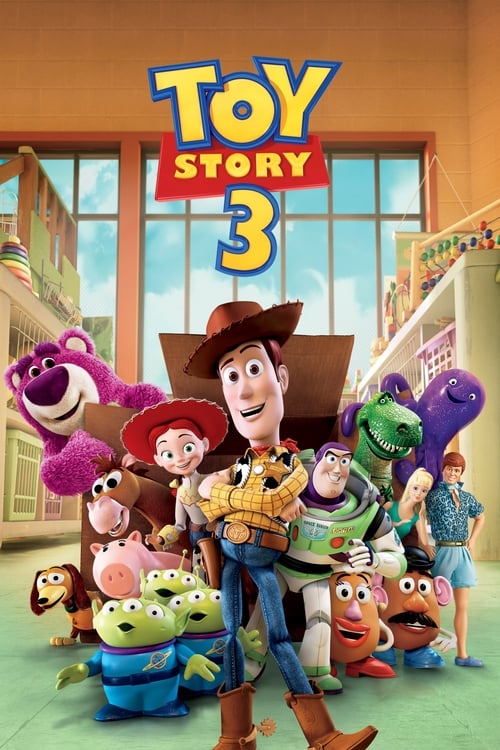
Toy Story 3
2010 · Directed by Lee Unkrich
Woke Score
CriticCritic Score
Audience
Ultra Based
Critics rated this 88 points above its woke score. Among Ultra Based films, this critic score ranks #92 of 1469.
Representation Casting
Score: 5/100
The cast is predominantly white and male. While this reflects the toy characters themselves rather than deliberate casting, the film contains no characters of color in significant roles.
LGBTQ+ Themes
Score: 0/100
No LGBTQ+ themes or representation. Ken and Barbie are presented in traditional heterosexual pairing, though Ken's character could invite subtext that is not explicitly present.
Feminist Agenda
Score: 5/100
Barbie appears as a character but is largely passive in the narrative. Ken receives gentle satire for his vanity, but this does not constitute sustained feminist critique.
Racial Consciousness
Score: 2/100
The film contains no exploration of race or racial dynamics. Characters are toys without racial identity markers, and the film makes no attempt to address this absence.
Climate Crusade
Score: 0/100
Climate themes are entirely absent. The film contains no environmental consciousness or references to ecological concerns.
Eat the Rich
Score: 8/100
Lotso's authoritarian control of the daycare through surveillance and punishment could be read as institutional critique, though the film presents this as simple villainy rather than systemic analysis.
Body Positivity
Score: 3/100
The toys have varied physical forms, but the film makes no explicit commentary on body diversity or acceptance. This is incidental rather than intentional.
Neurodivergence
Score: 0/100
No representation of neurodivergent characters or themes related to cognitive difference or disability acceptance.
Revisionist History
Score: 0/100
The film contains no historical revisionism or reframing of past events through contemporary social justice lenses.
Lecture Energy
Score: 2/100
The film is narrative-driven and character-focused. It does not pause to deliver explicit moral instruction about social issues.


Synopsis
Woody, Buzz, and the rest of Andy's toys haven't been played with in years. With Andy about to go to college, the gang find themselves accidentally left at a nefarious day care center. The toys must band together to escape and return home to Andy.
Consciousness Assessment
Toy Story 3 remains a masterwork of animation and emotional resonance, but it is a product of 2010, a time when the modern lexicon of social consciousness had not yet calcified into its current form. The film concerns itself with themes of abandonment, mortality, and the passage into adulthood. These are serious subjects, but they are not the subjects that have come to define contemporary progressive cultural markers. The cast is almost entirely white and male, a fact that seems unremarkable for a film about plastic toys but would certainly be remarked upon were the film released today.
There exists one sequence of minor cultural interest: the introduction of Ken, Barbie's companion, who is portrayed as vain and fashion-obsessed in ways that could be read as gently satirical commentary on gender performance. However, this reading requires considerable interpretive charity. The sequence functions primarily as comedy rather than as social critique. Ken is played for laughs, not for consciousness-raising. Similarly, the film's villain, Lotso (a strawberry-scented bear), runs an authoritarian daycare through force and manipulation, which might be construed as anti-capitalist commentary on institutional control, but the film presents this as simple villainy rather than systemic critique.
The film's treatment of representation, climate concerns, neurodivergence, and revisionist history is essentially nonexistent. It is a film about toys and belonging, not about social structures. We are left with a work that is humanistically sophisticated but culturally innocent of the markers that define modern progressive sensibility. It is, in the most literal sense, not trying.
Analysis generated by our Consciousness Algorithm
Critic Reviews
“What MORE could audiences want from a movie than this hilarious, heartwarming entertainment for all ages?”
“Toy Story 3 is a salute to the magic of making believe.”
“While the vocal performances of Hanks, Allen and company make up a perfect ensemble, and its visual leaps astound, TS3's real power sneaks up on you.”
“This tertiary adventure delivers welcome yet nonessential fun, landing well after its creators have grown up and succeeded toying with more sophisticated stories.”
Consciousness Markers
The cast is predominantly white and male. While this reflects the toy characters themselves rather than deliberate casting, the film contains no characters of color in significant roles.
No LGBTQ+ themes or representation. Ken and Barbie are presented in traditional heterosexual pairing, though Ken's character could invite subtext that is not explicitly present.
Barbie appears as a character but is largely passive in the narrative. Ken receives gentle satire for his vanity, but this does not constitute sustained feminist critique.
The film contains no exploration of race or racial dynamics. Characters are toys without racial identity markers, and the film makes no attempt to address this absence.
Climate themes are entirely absent. The film contains no environmental consciousness or references to ecological concerns.
Lotso's authoritarian control of the daycare through surveillance and punishment could be read as institutional critique, though the film presents this as simple villainy rather than systemic analysis.
The toys have varied physical forms, but the film makes no explicit commentary on body diversity or acceptance. This is incidental rather than intentional.
No representation of neurodivergent characters or themes related to cognitive difference or disability acceptance.
The film contains no historical revisionism or reframing of past events through contemporary social justice lenses.
The film is narrative-driven and character-focused. It does not pause to deliver explicit moral instruction about social issues.