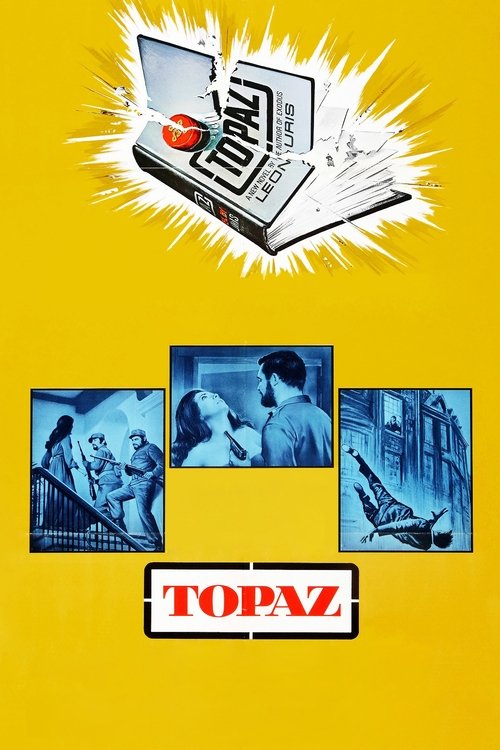
Topaz
1969 · Directed by Alfred Hitchcock
Woke Score
CriticCritic Score
Ultra Based
Critics rated this 61 points above its woke score. Among Ultra Based films, this critic score ranks #885 of 1469.
Representation Casting
Score: 0/100
The cast is entirely European, with no apparent effort toward diverse representation. Characters are cast according to their national roles in the spy narrative.
LGBTQ+ Themes
Score: 0/100
No LGBTQ themes, characters, or representation of any kind are evident in this Cold War spy thriller.
Feminist Agenda
Score: 0/100
Female characters serve primarily as romantic interests and plot devices. No feminist themes or critique of gender dynamics are present.
Racial Consciousness
Score: 0/100
The film demonstrates no racial consciousness or engagement with race-related themes. All characters are white Europeans.
Climate Crusade
Score: 0/100
There is no engagement with climate change, environmental consciousness, or ecological themes in this geopolitical spy thriller.
Eat the Rich
Score: 0/100
The film takes no stance against capitalism or corporate power structures. It is concerned only with Cold War espionage.
Body Positivity
Score: 0/100
No body positivity themes are present. The film contains conventional Hollywood casting with no commentary on body diversity.
Neurodivergence
Score: 0/100
No characters with neurodivergence are portrayed, nor are there any themes engaging with neurodiversity or disability representation.
Revisionist History
Score: 0/100
The film deals with Cold War geopolitics in a straightforward manner without revisionist historical claims or reinterpretations.
Lecture Energy
Score: 0/100
The film contains no preachy lectures about social issues or progressive values. It pursues espionage plot mechanics throughout.


Synopsis
Copenhagen, Denmark, 1962. When a high-ranking Soviet official decides to change sides, a French intelligence agent is caught up in a cold, silent and bloody spy war in which his own family will play a decisive role.
Consciousness Assessment
Topaz is a spy thriller from 1969 that concerns itself entirely with Cold War intrigue and espionage mechanics. It asks no questions about representation, identity, or systemic inequality because such questions simply did not occur to the filmmakers as relevant to the genre. The film features a heterosexual male protagonist and his family caught in international espionage, with female characters existing primarily as romantic interests and plot devices. There is no evident engagement with feminist principles, no LGBTQ representation, no consideration of racial consciousness beyond the casting of European actors in European roles.
The film is a product of its moment: a Hitchcock thriller content to pursue suspense through plot rather than through any examination of power structures or social systems. Hitchcock's later work occasionally flirted with darker explorations of masculine psychology, but Topaz remains straightforward in its narrative ambitions. The politics are strictly geopolitical, concerned with Cold War tensions between France and the Soviet Union, not with any contemporary discourse about social justice or progressive values.
This is not a failure of the film on its own terms. It simply exists in a different era, before the cultural markers we are measuring became relevant considerations for mainstream cinema. Measured against 2020s sensibilities, it scores exceptionally low, which is to say it scores honestly.
Analysis generated by our Consciousness Algorithm
Critic Reviews
“Topaz is not only most entertaining. It is, like so many Hitchcock films, a cautionary fable by one of the most moral cynics of our time.”
“Hitch's most plausible, least suspenseful spy thriller, based on Leon Uris' reality-inspired novel of intrigue in Cuba and France. [23 Jun 2006, p.C2]”
“Topaz tends to move more solidly and less infectiously than many of Alfred Hitchcock's best remembered pix. Yet Hitchcock brings in a full quota of twists and tingling moments.”
“A larger, slower, duller version of the spy thrillers [Hitchcock] made in the 30s.”
Consciousness Markers
The cast is entirely European, with no apparent effort toward diverse representation. Characters are cast according to their national roles in the spy narrative.
No LGBTQ themes, characters, or representation of any kind are evident in this Cold War spy thriller.
Female characters serve primarily as romantic interests and plot devices. No feminist themes or critique of gender dynamics are present.
The film demonstrates no racial consciousness or engagement with race-related themes. All characters are white Europeans.
There is no engagement with climate change, environmental consciousness, or ecological themes in this geopolitical spy thriller.
The film takes no stance against capitalism or corporate power structures. It is concerned only with Cold War espionage.
No body positivity themes are present. The film contains conventional Hollywood casting with no commentary on body diversity.
No characters with neurodivergence are portrayed, nor are there any themes engaging with neurodiversity or disability representation.
The film deals with Cold War geopolitics in a straightforward manner without revisionist historical claims or reinterpretations.
The film contains no preachy lectures about social issues or progressive values. It pursues espionage plot mechanics throughout.