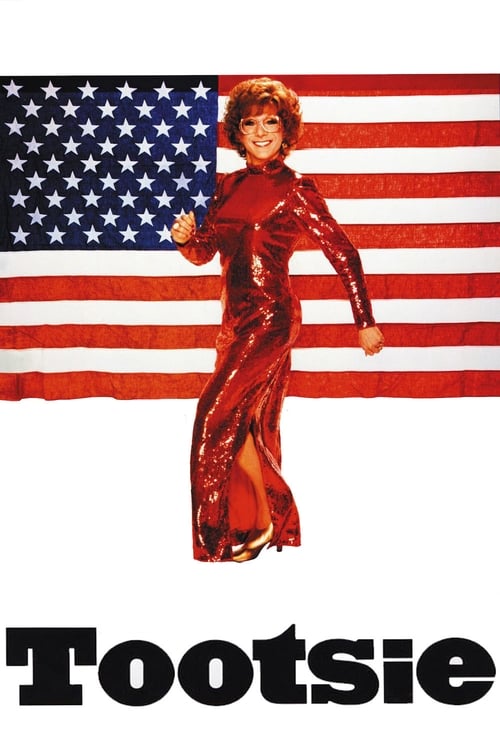
Tootsie
1982 · Directed by Sydney Pollack
Woke Score
CriticCritic Score
Audience
Ultra Based
Critics rated this 70 points above its woke score. Among Ultra Based films, this critic score ranks #181 of 1469.
Representation Casting
Score: 5/100
The cast is entirely white and heterosexual in presentation. No meaningful diversity in representation or intentional casting for inclusion.
LGBTQ+ Themes
Score: 15/100
The film involves drag and gender presentation, but lacks any substantive LGBTQ+ themes or characters. Gender play is treated as comedic masquerade rather than queer exploration.
Feminist Agenda
Score: 35/100
Gender dynamics are central to the plot, with moments depicting workplace discrimination and harassment. However, these insights function as narrative mechanics and comedy rather than systematic critique.
Racial Consciousness
Score: 0/100
No meaningful engagement with race or racial dynamics. The film operates in a racially unmarked, implicitly white space typical of 1982 mainstream comedy.
Climate Crusade
Score: 0/100
No climate-related content or environmental consciousness present in the film.
Eat the Rich
Score: 5/100
The film centers on show business ambition and does not critique capitalism or wealth accumulation. Success within the system is the goal.
Body Positivity
Score: 0/100
No body positivity messaging or celebration of diverse body types. The film operates within conventional Hollywood standards of attractiveness.
Neurodivergence
Score: 0/100
No representation of neurodivergent characters or themes. The film shows no awareness of neurodiversity as a category.
Revisionist History
Score: 0/100
A contemporary comedy with no historical revisionism. The film does not reframe historical events or narratives.
Lecture Energy
Score: 10/100
The film relies on narrative and comedy to convey its insights rather than explicit moralizing. Minimal preachy energy, though some moments approach speechifying about gender.


Synopsis
When struggling, out of work actor Michael Dorsey secretly adopts a female alter ego – Dorothy Michaels – in order to land a part in a daytime drama, he unwittingly becomes a feminist icon and ends up in a romantic pickle.
Consciousness Assessment
Tootsie is a film that engages with gender dynamics largely by accident of its central premise rather than by design. Michael Dorsey's transformation into Dorothy Michaels does create genuine moments where the audience observes workplace discrimination and sexual harassment through a male actor's eyes, generating a certain empathetic recognition of women's daily experiences. Yet the film's architecture remains fundamentally comedic. The insights about patriarchal structures are punchlines and plot mechanics, not the serious subject of social critique. The humor derives from the masquerade itself, the absurdity of the deception, the romantic complications that ensue.
The film is a product of 1982, and this fact matters considerably. It predates the contemporary constellation of progressive sensibilities we associate with modern cultural awareness by decades. While the ensemble is sympathetic and well-acted, it is uniformly white and heterosexual in presentation. There are no LGBTQ+ themes of substance, no climate content, no anti-capitalist messaging, no neurodivergent representation, and no body positivity agenda. The cast reflects the typical homogeneity of early 1980s Hollywood without apparent interrogation or intention toward diversity.
What results is a well-crafted, entertaining film that happens to contain gender commentary because its plot requires it. This should not be confused with intentional progressive advocacy or systematic social consciousness. The film trusts narrative experience to generate its insights rather than mounting any explicit moralizing, which at least spares us from lecture energy. It remains a product of its era, sympathetic but not woke.
Analysis generated by our Consciousness Algorithm
Critic Reviews
“Tootsie, the story of a man who liberates himself by masquerading as a woman, is the funniest, most revealing comedy since "Annie Hall." [17 Dec 1982]”
“This year's miracle is called Tootsie. It is not just the best comedy of the year; it is popular art on the way to becoming cultural artifact.”
“One of the funniest things I have ever seen was Dustin Hoffman weeping uncontrollably as he recounted how he never truly understood the inner pain and torment of what it felt like to be an ugly woman until he made “Tootsie.” I wouldn’t trade that thirty seconds for the entire film. Tootsie is funny enough and Hoffman truly does make an scary awe inspiring wreck of a woman, but people would have you believe this film was the Rosetta Stone of comedy, whereas it’s really just an ok film dominated by television actors and desperately lucky to have caught Bill Murray on a free afternoon.”
Consciousness Markers
The cast is entirely white and heterosexual in presentation. No meaningful diversity in representation or intentional casting for inclusion.
The film involves drag and gender presentation, but lacks any substantive LGBTQ+ themes or characters. Gender play is treated as comedic masquerade rather than queer exploration.
Gender dynamics are central to the plot, with moments depicting workplace discrimination and harassment. However, these insights function as narrative mechanics and comedy rather than systematic critique.
No meaningful engagement with race or racial dynamics. The film operates in a racially unmarked, implicitly white space typical of 1982 mainstream comedy.
No climate-related content or environmental consciousness present in the film.
The film centers on show business ambition and does not critique capitalism or wealth accumulation. Success within the system is the goal.
No body positivity messaging or celebration of diverse body types. The film operates within conventional Hollywood standards of attractiveness.
No representation of neurodivergent characters or themes. The film shows no awareness of neurodiversity as a category.
A contemporary comedy with no historical revisionism. The film does not reframe historical events or narratives.
The film relies on narrative and comedy to convey its insights rather than explicit moralizing. Minimal preachy energy, though some moments approach speechifying about gender.