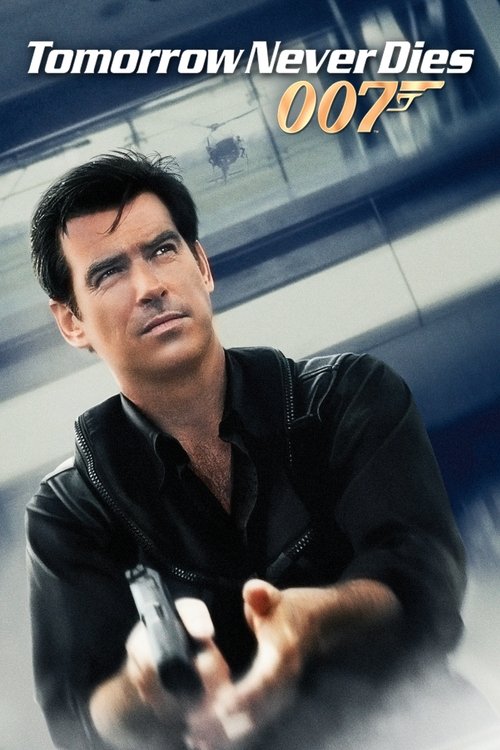
Tomorrow Never Dies
1997 · Directed by Roger Spottiswoode
Woke Score
CriticCritic Score
Audience
Based
Critics rated this 30 points above its woke score. Among Based films, this critic score ranks #286 of 345.
Representation Casting
Score: 35/100
Michelle Yeoh as a capable Asian female co-lead was progressive for 1997, though the film presents her competence without commentary on representation or diversity as a thematic concern.
LGBTQ+ Themes
Score: 0/100
No LGBTQ+ themes or characters present in the film.
Feminist Agenda
Score: 15/100
Wai Lin is a capable female character who fights alongside Bond, but the film does not center feminist themes or critique patriarchal structures.
Racial Consciousness
Score: 10/100
The film features international characters and settings but does not engage with racial justice, systemic racism, or colonialism as thematic concerns.
Climate Crusade
Score: 0/100
No climate-related themes or environmental consciousness present in the film.
Eat the Rich
Score: 40/100
The villain is a media mogul whose evil stems from corporate manipulation and the pursuit of profit, offering light satire of unchecked corporate power.
Body Positivity
Score: 0/100
Standard action film with conventional action hero bodies. No body positivity themes present.
Neurodivergence
Score: 0/100
No representation or themes related to neurodivergence.
Revisionist History
Score: 0/100
The film engages with contemporary geopolitics but does not reinterpret or revise historical narratives.
Lecture Energy
Score: 5/100
The film is straightforward action entertainment with minimal preachy or preachy messaging about social issues.


Synopsis
A deranged media mogul is staging international incidents to pit the world's superpowers against each other. Now James Bond must take on this evil mastermind in an adrenaline-charged battle to end his reign of terror and prevent global pandemonium.
Consciousness Assessment
Tomorrow Never Dies arrives as a curious artifact of the late 1990s, a Bond picture that happened to include a capable female co-lead and a villain whose crimes stem from media manipulation rather than geopolitical scheming. These elements read as progressive for their time, yet they lack the self-conscious interrogation of power structures that defines contemporary progressive cinema. Michelle Yeoh's Wai Lin is a competent intelligence officer who fights alongside Bond, but the film makes no particular point of her competence as a statement on gender relations. She simply exists as an equal within the action formula, which is admirable in its refusal to make her gender the subject of commentary, but utterly absent the reflexive consciousness that modern progressive sensibilities demand.
The film's satire of media mogul Elliot Carver amounts to a straightforward critique of corporate greed and the corrupting influence of news organizations willing to manufacture conflict for profit. This constitutes a mildly anti-capitalist current, though one presented as entertainment rather than as preachy social commentary. The geopolitical backdrop involving China and the United Kingdom gestures toward international cooperation, but offers no examination of colonialism, imperialism, or systemic inequity. The film is, fundamentally, a spy thriller that happens to feature a diverse cast and a villain whose evil is corporate in nature.
In assessing this film through the specific lens of 2020s progressive cultural consciousness, one finds it to be largely innocent of the markers that would elevate its score. It predates the era when representation became a self-conscious project, when every film felt obligated to demonstrate its awareness of marginalization and systemic oppression. Tomorrow Never Dies is simply a Bond film that cast well and included a topical villain. For that, it earns a modest score.
Analysis generated by our Consciousness Algorithm
Critic Reviews
“From its explosive opening sequence at a terrorist arms bazaar on the Russian border to a knockout climax on a stealth ship on the South China seas, Tomorrow Never Dies delivers what 007 aficionados demand: dynamite action, sharp one-liners and edgy style. [19 Dec 1997, p.4G]”
“Fast, funny, very British and less militaristic than, say, The Peacemaker. On this evidence, we may be forced to say, Carry on, Bond. ”
“Tomorrow Never Dies isn't one of the great Bonds, by any means. But it's familiar, flashy and enjoyable in all the right places. ”
“You can see most of the plugs in the trailer. As most fans of the early, better Bond films know, the only life left in the series is in the gadgets....As for humor, Brosnan can deaden a double-entendre faster than he can change outfits.”
Consciousness Markers
Michelle Yeoh as a capable Asian female co-lead was progressive for 1997, though the film presents her competence without commentary on representation or diversity as a thematic concern.
No LGBTQ+ themes or characters present in the film.
Wai Lin is a capable female character who fights alongside Bond, but the film does not center feminist themes or critique patriarchal structures.
The film features international characters and settings but does not engage with racial justice, systemic racism, or colonialism as thematic concerns.
No climate-related themes or environmental consciousness present in the film.
The villain is a media mogul whose evil stems from corporate manipulation and the pursuit of profit, offering light satire of unchecked corporate power.
Standard action film with conventional action hero bodies. No body positivity themes present.
No representation or themes related to neurodivergence.
The film engages with contemporary geopolitics but does not reinterpret or revise historical narratives.
The film is straightforward action entertainment with minimal preachy or preachy messaging about social issues.