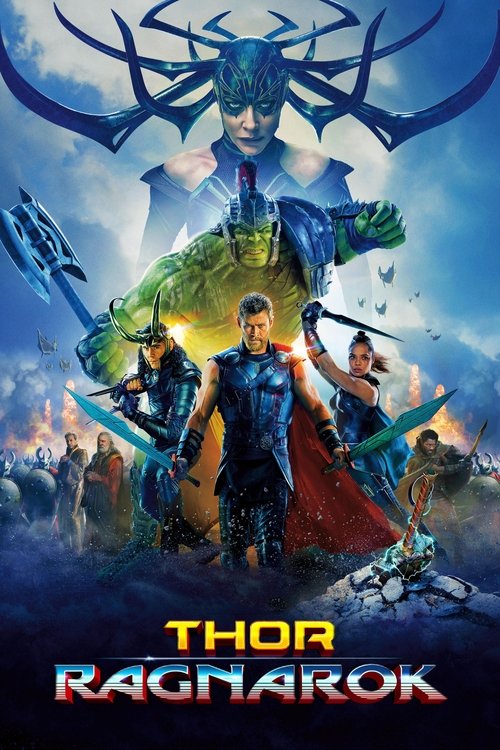
Thor: Ragnarok
2017 · Directed by Taika Waititi
Woke Score
CriticCritic Score
Audience
Woke-Adjacent
Critics rated this 26 points above its woke score. Among Woke-Adjacent films, this critic score ranks #62 of 151.
Representation Casting
Score: 78/100
Strong diverse casting with Idris Elba, Tessa Thompson, and Jeff Goldblum in prominent roles. The film treats this diversity as unremarkable, which is both progressive and potentially evasive of deeper engagement.
LGBTQ+ Themes
Score: 15/100
Minimal LGBTQ representation. Valkyrie's character has some subtext regarding her past relationships, but this remains largely unexplored and coded rather than explicit.
Feminist Agenda
Score: 45/100
Cate Blanchett's Hela is a powerful female villain, and Tessa Thompson's Valkyrie is competent and autonomous. However, neither character receives narrative depth that would constitute genuine feminist engagement.
Racial Consciousness
Score: 30/100
While the film features actors of color in significant roles, it demonstrates no explicit racial consciousness or commentary. Diversity is present but unexamined.
Climate Crusade
Score: 0/100
The film depicts apocalyptic planetary destruction but treats it as comedic spectacle rather than environmental commentary. No climate crusade present.
Eat the Rich
Score: 5/100
No anti-capitalist themes or 'eat the rich' messaging. The film operates within entirely conventional power structures and accepts them without question.
Body Positivity
Score: 10/100
Standard superhero body presentation. No meaningful engagement with body positivity or disability representation.
Neurodivergence
Score: 5/100
Jeff Goldblum's character exhibits eccentric behavior, but this functions as comedic quirk rather than genuine neurodivergence representation.
Revisionist History
Score: 20/100
The film reimagines Norse mythology with a comedic and diverse spin, but this constitutes creative adaptation rather than revisionist history in the modern social justice sense.
Lecture Energy
Score: 8/100
The film maintains comedic lightness throughout and avoids preachy messaging or moralizing. It prefers humor to lectures, which is both a strength and a limitation.


Synopsis
Thor is imprisoned on the other side of the universe and finds himself in a race against time to get back to Asgard to stop Ragnarok, the destruction of his home-world and the end of Asgardian civilization, at the hands of a powerful new threat, the ruthless Hela.
Consciousness Assessment
Thor: Ragnarok presents itself as a progressive blockbuster, one that treats its social consciousness with the same comedic levity it applies to Norse mythology. Taika Waititi's directorial stamp ensures that diversity appears not as heavy-handed messaging but as casual visual fact: Idris Elba presides as Heimdall, Tessa Thompson commands the screen as Valkyrie, and Cate Blanchett steals scenes as the delightfully unhinged Hela. The film's gender dynamics deserve note, though the critique that emerges is one of genuine ambivalence. Valkyrie operates as a competent warrior without her character arc centering on her femininity or victimhood, yet the film cannot quite commit to the more daring storytelling that would accompany such choices. She remains capable decoration in a narrative that belongs primarily to the men.
The film's cultural awareness extends primarily to its casting and representation choices, which function as markers of modern sensibility without necessarily interrogating the systems they inhabit. Thor: Ragnarok demolishes a civilization and treats the apocalypse as comedic backdrop, suggesting that neither the destruction nor its victims warrant sustained emotional engagement. There is no climate anxiety here, no anti-capitalist fervor, no interrogation of power structures. Waititi's comedy deflects rather than illuminates. The film achieves a certain level of progressive casting while remaining indifferent to what such casting might mean or challenge.
What the film accomplishes is something like progressive aesthetics without progressive substance. We can point to specific casting decisions and say, yes, this reflects contemporary values. But the substance beneath remains largely untouched by any genuine cultural reckoning. It is a film that looks modern while thinking like a traditional blockbuster, comfortable in its contradictions.
Analysis generated by our Consciousness Algorithm
Critic Reviews
“It’s a movie that, to put it in terms that the film’s screenwriters might appreciate, is Thor-ly needed. ”
“It’s an enthusiastic, hilarious reboot of the idea of what a Marvel movie can actually be, resulting in an effervescent, delightfully self-aware ride that was the most fun I’d had in a superhero movie in years.”
“This is a Marvel movie that knows when to embrace the ridiculous and when to puncture any pomposity, and it's a delight from start to big finish. And yes, you do need to stay to the very very end of the credits. ”
“Directed by the enormously talented New Zealand filmmaker Taika Waititi, it’s well intentioned but ultimately numbing, an instance of fun overkill whose ultimate goal seems to be to put us into a special-effects coma.”
Consciousness Markers
Strong diverse casting with Idris Elba, Tessa Thompson, and Jeff Goldblum in prominent roles. The film treats this diversity as unremarkable, which is both progressive and potentially evasive of deeper engagement.
Minimal LGBTQ representation. Valkyrie's character has some subtext regarding her past relationships, but this remains largely unexplored and coded rather than explicit.
Cate Blanchett's Hela is a powerful female villain, and Tessa Thompson's Valkyrie is competent and autonomous. However, neither character receives narrative depth that would constitute genuine feminist engagement.
While the film features actors of color in significant roles, it demonstrates no explicit racial consciousness or commentary. Diversity is present but unexamined.
The film depicts apocalyptic planetary destruction but treats it as comedic spectacle rather than environmental commentary. No climate crusade present.
No anti-capitalist themes or 'eat the rich' messaging. The film operates within entirely conventional power structures and accepts them without question.
Standard superhero body presentation. No meaningful engagement with body positivity or disability representation.
Jeff Goldblum's character exhibits eccentric behavior, but this functions as comedic quirk rather than genuine neurodivergence representation.
The film reimagines Norse mythology with a comedic and diverse spin, but this constitutes creative adaptation rather than revisionist history in the modern social justice sense.
The film maintains comedic lightness throughout and avoids preachy messaging or moralizing. It prefers humor to lectures, which is both a strength and a limitation.