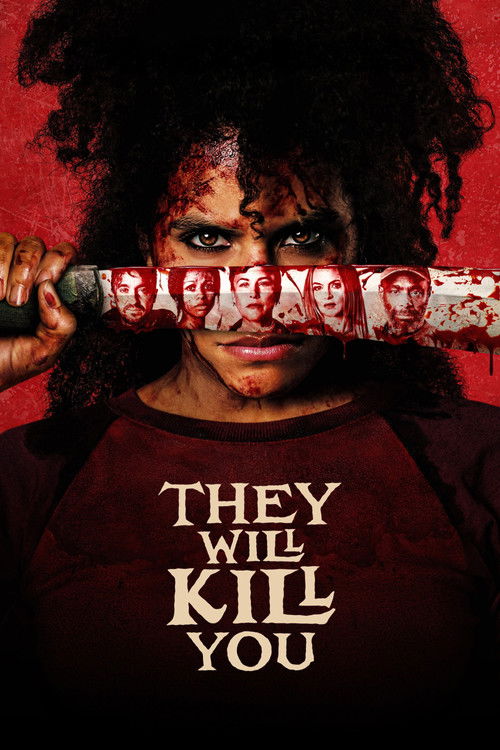
They Will Kill You
2026 · Directed by Kirill Sokolov · $8.8M domestic
Woke-Adjacent
Consciousness Score: 42%
Representation Casting
Score: 65/100
The film leads with two Black women, Zazie Beetz and Myha'la, as its central heroines in a genre that has historically defaulted to white protagonists. Their casting is foregrounded in the marketing, and critics have specifically noted audiences rooting for them to 'eliminate the one percent.'
LGBTQ+ Themes
Score: 0/100
No LGBTQ+ themes, characters, or storylines are present in available research or critical coverage of the film.
Feminist Agenda
Score: 45/100
The narrative engine is a sister-sister dynamic between two women who fight back against a predatory male-dominated cult, and the film frames their survival and agency as its central emotional throughline. The feminist framing is functional to the genre rather than explicitly rhetorical.
Racial Consciousness
Score: 20/100
The cult's victims are described as 'mostly poor and marginalized staff,' which maps loosely onto racial lines given the casting, but critics uniformly note the social commentary is 'barely-there' and the film does not foreground race as a conscious theme.
Climate Crusade
Score: 0/100
There is no climate or environmental messaging anywhere in the film's premise, plot, or critical reception.
Eat the Rich
Score: 40/100
The premise explicitly pits wealthy Satan-worshipping Manhattan luxury-building tenants against their poor and marginalized service staff, and critics describe the film as staging a 'rich against the poor' conflict. However, The Hollywood Reporter notes this is about the extent of the social commentary on offer, meaning the anti-capitalist framing is decorative rather than sustained.
Body Positivity
Score: 0/100
No body positivity themes or messaging are evident in any available coverage of the film.
Neurodivergence
Score: 0/100
No neurodivergent characters or related themes are present in the film's premise or critical discussion.
Revisionist History
Score: 0/100
The film is an original horror-comedy set in contemporary New York and makes no engagement with historical revision of any kind.
Lecture Energy
Score: 15/100
The class commentary is present but, by critical consensus, underdeveloped to the point of near-invisibility. The film appears to prefer gore and jokes to sermonizing, which keeps the lecture energy low despite the loaded premise.
Synopsis
A woman answers a help wanted ad to be a housekeeper in a mysterious high-rise in New York City, not realizing she is entering a community that has seen a number of disappearances over the years and may be under the grip of a Satanic cult.
Consciousness Assessment
Kirill Sokolov's "They Will Kill You" arrives bearing one of the most promising premises in recent genre cinema: Manhattan's ultra-wealthy, it turns out, are Satanists who murder their service staff in ritualistic fashion. Critics have noted the class commentary is "barely-there." This is, depending on your tolerance for squandered allegorical potential, either a relief or a tragedy. Sokolov, whose influences run toward Tarantino and Raimi rather than Ken Loach, is clearly more interested in crash zooms and practical blood effects than in delivering a TED Talk about income inequality, and the film is more entertaining for it.
The casting of Zazie Beetz and Myha'la as the film's central heroines is the element most legible as a contemporary cultural gesture. Two Black women as the genre's designated survivors and avengers in a story about the wealthy consuming the poor is a configuration that would not have emerged from a Hollywood pitch room circa 2005. The film is aware of this geometry, even if it declines to belabor it. Their sister dynamic is the emotional core the plot is built around, and both performers apparently acquit themselves well enough that critics have coined them "Scream Queens," a title that carries its own genre history worth acknowledging.
The result is a film that wears its progressive casting and its class-war premise the way a person wears a political t-shirt to a party: the statement is made, acknowledged, and then everyone moves on to having a good time. The one percent are dispatched with practical effects and bad jokes. The social architecture is established in the first act and thereafter treated as mere scaffolding for the action sequences. For a film that could have been "Parasite" with more arterial spray, this is a notable act of restraint. We should probably be grateful. The world has enough sermons. Sometimes the rich just need to die on screen, efficiently and with good stunt work.
Analysis generated by our Consciousness Algorithm
Consciousness Markers
The film leads with two Black women, Zazie Beetz and Myha'la, as its central heroines in a genre that has historically defaulted to white protagonists. Their casting is foregrounded in the marketing, and critics have specifically noted audiences rooting for them to 'eliminate the one percent.'
No LGBTQ+ themes, characters, or storylines are present in available research or critical coverage of the film.
The narrative engine is a sister-sister dynamic between two women who fight back against a predatory male-dominated cult, and the film frames their survival and agency as its central emotional throughline. The feminist framing is functional to the genre rather than explicitly rhetorical.
The cult's victims are described as 'mostly poor and marginalized staff,' which maps loosely onto racial lines given the casting, but critics uniformly note the social commentary is 'barely-there' and the film does not foreground race as a conscious theme.
There is no climate or environmental messaging anywhere in the film's premise, plot, or critical reception.
The premise explicitly pits wealthy Satan-worshipping Manhattan luxury-building tenants against their poor and marginalized service staff, and critics describe the film as staging a 'rich against the poor' conflict. However, The Hollywood Reporter notes this is about the extent of the social commentary on offer, meaning the anti-capitalist framing is decorative rather than sustained.
No body positivity themes or messaging are evident in any available coverage of the film.
No neurodivergent characters or related themes are present in the film's premise or critical discussion.
The film is an original horror-comedy set in contemporary New York and makes no engagement with historical revision of any kind.
The class commentary is present but, by critical consensus, underdeveloped to the point of near-invisibility. The film appears to prefer gore and jokes to sermonizing, which keeps the lecture energy low despite the loaded premise.