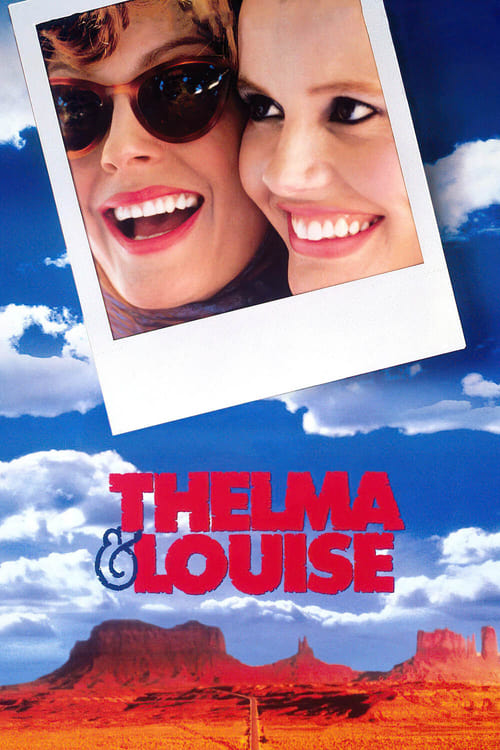
Thelma & Louise
1991 · Directed by Ridley Scott
Woke Score
CriticCritic Score
Audience
Ultra Based
Critics rated this 85 points above its woke score. Among Ultra Based films, this critic score ranks #157 of 1469.
Representation Casting
Score: 0/100
While the film features women in leading roles, this reflects gender representation rather than contemporary diversity consciousness. No effort toward racial, ethnic, or other forms of modern representation casting.
LGBTQ+ Themes
Score: 0/100
No LGBTQ+ characters, themes, or representation present in the film.
Feminist Agenda
Score: 45/100
The film contains strong proto-feminist themes about female autonomy, male violence, and self-determination, but this represents 1991-era feminism rather than contemporary woke feminism with its specific modern markers and rhetoric.
Racial Consciousness
Score: 0/100
No racial consciousness, commentary on race, or engagement with racial themes. The narrative exists in a predominantly white context without acknowledging or addressing this.
Climate Crusade
Score: 0/100
No environmental messaging, climate consciousness, or ecological themes present in the film.
Eat the Rich
Score: 0/100
No explicit critique of capitalism, systemic economic injustice, or class struggle. Economic concerns remain peripheral to the narrative.
Body Positivity
Score: 0/100
No body positivity messaging or discourse. The protagonists conform to conventional beauty standards without interrogation or commentary.
Neurodivergence
Score: 0/100
No representation, portrayal, or discussion of neurodivergent characters or experiences.
Revisionist History
Score: 0/100
The film is contemporary fiction set in its present day, not a historical narrative or revisionist reinterpretation of historical events.
Lecture Energy
Score: 0/100
The film employs visual and narrative storytelling that trusts audiences to draw conclusions rather than explicit preachy messaging or preachy exposition about social issues.


Synopsis
Taking a break from their dreary lives, close friends Thelma and Louise embark on a short weekend trip that ends in unforeseen incriminating circumstances. As fugitives, both women rediscover the strength of their bond and their newfound resilience.
Consciousness Assessment
Thelma & Louise presents a case of temporal misalignment that vexes the conscientious classifier. Released in 1991, the film was genuinely transgressive for mainstream cinema, offering two female protagonists who reject societal constraints and forge their own path through violence, lawlessness, and ultimately self-determination. Critics and audiences of the era recognized it as a watershed moment for female representation in action-oriented narratives. Yet when measured against the specific constellation of progressive cultural markers that coalesced in the 2020s, the film reveals itself as a product of an earlier, distinct political moment. Its feminism is real but pre-woke, concerned with individual liberation and male violence rather than systemic analysis or contemporary social justice frameworks.
The film contains no racial consciousness, no LGBTQ+ representation, no climate messaging, no body positivity discourse, and no neurodivergent characterization. Its treatment of class remains incidental to the narrative. Most crucially, it lacks the preachy quality characteristic of modern progressive cinema, the sense that the audience is being instructed in proper social consciousness. Ridley Scott's direction privileges visual storytelling and character interiority over sermonic exposition. The film trusts viewers to draw their own conclusions about patriarchal violence and female agency without spelling out the ideological implications in explicit terms.
This is not to diminish Thelma & Louise as a work of cinema or cultural importance. Rather, it reflects the fundamental distinction between films that are politically progressive within their historical moment and films that exhibit the specific markers of 2020s progressive cultural sensibility. The film remains powerful precisely because it operates through narrative and character rather than preachy messaging. Its low score reflects this temporal specificity, not any judgment about its artistic merit or social significance.
Analysis generated by our Consciousness Algorithm
Critic Reviews
“It reimagines the buddy film with such freshness and vigor that the genre seems positively new.”
“This is a movie to love, that touches you in places you never suspected, that shows you that the road less traveled is the road to your dreams.”
“Classic genre movies may be a scarce commodity, but this gutsy crime thriller and female buddy movie qualifies in spades.”
“It's a pretty shameless outlaw fantasy; the feminist justification that the script provides for the heroines' behavior doesn't make their actions any less preposterous.”
Consciousness Markers
While the film features women in leading roles, this reflects gender representation rather than contemporary diversity consciousness. No effort toward racial, ethnic, or other forms of modern representation casting.
No LGBTQ+ characters, themes, or representation present in the film.
The film contains strong proto-feminist themes about female autonomy, male violence, and self-determination, but this represents 1991-era feminism rather than contemporary woke feminism with its specific modern markers and rhetoric.
No racial consciousness, commentary on race, or engagement with racial themes. The narrative exists in a predominantly white context without acknowledging or addressing this.
No environmental messaging, climate consciousness, or ecological themes present in the film.
No explicit critique of capitalism, systemic economic injustice, or class struggle. Economic concerns remain peripheral to the narrative.
No body positivity messaging or discourse. The protagonists conform to conventional beauty standards without interrogation or commentary.
No representation, portrayal, or discussion of neurodivergent characters or experiences.
The film is contemporary fiction set in its present day, not a historical narrative or revisionist reinterpretation of historical events.
The film employs visual and narrative storytelling that trusts audiences to draw conclusions rather than explicit preachy messaging or preachy exposition about social issues.