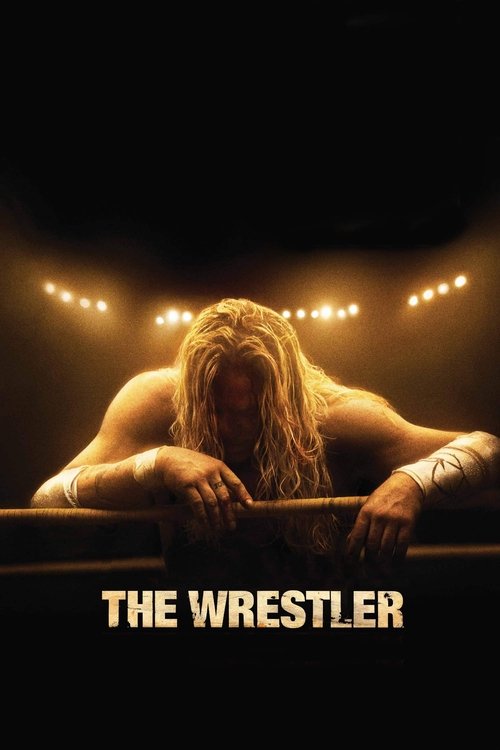
The Wrestler
2008 · Directed by Darren Aronofsky
Woke Score
CriticCritic Score
Audience
Ultra Based
Critics rated this 76 points above its woke score. Among Ultra Based films, this critic score ranks #364 of 1469.
Representation Casting
Score: 0/100
Casting is naturalistic and story-driven with no evidence of conscious representation initiatives or diversity politics.
LGBTQ+ Themes
Score: 0/100
No LGBTQ+ characters, themes, or representation present in the film.
Feminist Agenda
Score: 0/100
While female characters are treated with dignity, there is no contemporary feminist consciousness or messaging.
Racial Consciousness
Score: 0/100
No racial themes, awareness, or consciousness evident in the narrative.
Climate Crusade
Score: 0/100
No environmental or climate-related themes present.
Eat the Rich
Score: 30/100
The film depicts economic precarity and deindustrialization, but presents these as human tragedy rather than explicit critique or systemic messaging.
Body Positivity
Score: 0/100
Physical decline is portrayed as pathos and deterioration, not as body positivity messaging.
Neurodivergence
Score: 0/100
No representation or thematic engagement with neurodivergence.
Revisionist History
Score: 0/100
No reinterpretation or revision of historical events or narratives.
Lecture Energy
Score: 0/100
The film shows rather than tells, trusting the audience to draw conclusions without preachy messaging.


Synopsis
Aging wrestler Randy "The Ram" Robinson is long past his prime but still ready and rarin' to go on the pro-wrestling circuit. After a particularly brutal beating, however, Randy hangs up his tights, pursues a serious relationship with a long-in-the-tooth stripper, and tries to reconnect with his estranged daughter. But he can't resist the lure of the ring and readies himself for a comeback.
Consciousness Assessment
Darren Aronofsky's portrait of Randy "The Ram" Robinson is a film fundamentally concerned with economic devastation and the masculine crisis of obsolescence. The narrative unfolds without moral instruction, trusting its audience to recognize the tragedy of a man whose only skill set has become worthless. Marisa Tomei's stripper character receives genuine humanization, not as a vehicle for progressive messaging but as a woman navigating her own economic precarity with pragmatism and wounded dignity.
The film's engagement with deindustrialization and the collapse of the American social safety net carries implicit critique, yet it remains a character study rather than a polemic. Randy's physical decay and his desperate attempt to reclaim identity through violence and spectacle is presented as human deterioration, not as commentary on body image or masculine toxicity. We are simply watching a man unable to adapt to a world that no longer needs him.
This is a pre-2015 work in sensibility. It examines serious social and economic themes with the gravity they deserve, but it does so through empathy and narrative rather than through the vocabulary of contemporary cultural consciousness. The film earned the Golden Lion at Venice and an Oscar nomination for Rourke, testament to its artistic merit. Yet it remains almost entirely free of the progressive social markers that would later become standard in prestige cinema.
Analysis generated by our Consciousness Algorithm
Critic Reviews
“The Wrestler is like "Rocky" made by the Scorsese of "Mean Streets." It's the rare movie fairy tale that's also a bravura work of art.”
“Rourke creates a galvanizing, humorous, deeply moving portrait that instantly takes its place among the great, iconic screen performances. An elemental story simply and brilliantly told, Darren Aronofsky's fourth feature is a winner from every possible angle.”
“Rourke is getting tons of press and award nominations, but Marisa Tomei kicks ass too. Not only does the one-time Oscar winner look amazing and perform her own pole tricks, but she effectively humanizes what could be just another naked chick in a movie.”
“The Wrestler doesn't add up. It's constructed with great care around a lead performance that is everything it could possibly be, but the picture itself is off-putting and disappointing.”
Consciousness Markers
Casting is naturalistic and story-driven with no evidence of conscious representation initiatives or diversity politics.
No LGBTQ+ characters, themes, or representation present in the film.
While female characters are treated with dignity, there is no contemporary feminist consciousness or messaging.
No racial themes, awareness, or consciousness evident in the narrative.
No environmental or climate-related themes present.
The film depicts economic precarity and deindustrialization, but presents these as human tragedy rather than explicit critique or systemic messaging.
Physical decline is portrayed as pathos and deterioration, not as body positivity messaging.
No representation or thematic engagement with neurodivergence.
No reinterpretation or revision of historical events or narratives.
The film shows rather than tells, trusting the audience to draw conclusions without preachy messaging.