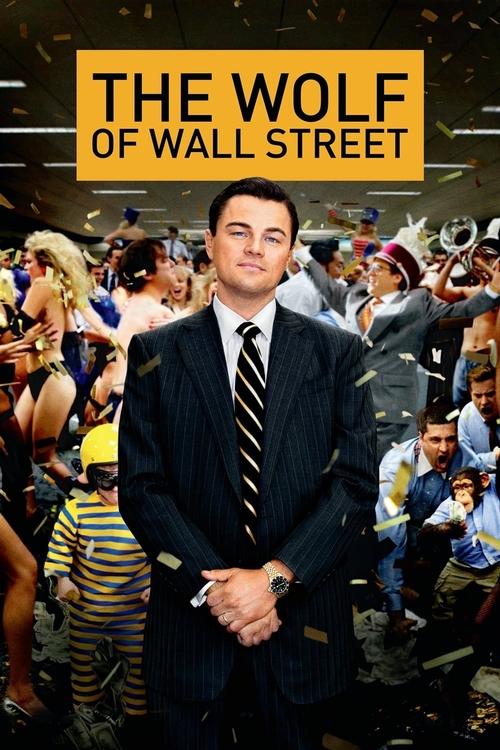
The Wolf of Wall Street
2013 · Directed by Martin Scorsese
Woke Score
CriticCritic Score
Audience
Ultra Based
Critics rated this 57 points above its woke score. Among Ultra Based films, this critic score ranks #474 of 1469.
Representation Casting
Score: 15/100
Margot Robbie appears in the cast, but women are overwhelmingly portrayed as sex objects and commodities within the narrative, reflecting the era's misogyny without critical examination.
LGBTQ+ Themes
Score: 0/100
No LGBTQ+ themes, characters, or representation present in the film.
Feminist Agenda
Score: 25/100
The film depicts rampant misogyny and the objectification of women, but presents this as documentary observation rather than feminist critique or awareness.
Racial Consciousness
Score: 5/100
The cast includes racially diverse actors, but the film does not meaningfully explore or interrogate racial dynamics in the narrative.
Climate Crusade
Score: 0/100
No climate themes, environmental consciousness, or climate-related content present in the film.
Eat the Rich
Score: 35/100
The film depicts capitalist excess and fraud, and the protagonist faces legal consequences, but the cinematic presentation luxuriates in wealth and excess rather than offering genuine critique.
Body Positivity
Score: 0/100
No body positivity themes or representation present in the film.
Neurodivergence
Score: 0/100
No representation of neurodivergent characters or themes in the film.
Revisionist History
Score: 0/100
The film is a straightforward adaptation of a true story without historical revisionism or reframing.
Lecture Energy
Score: 10/100
The film presents its subject matter without explicit moral lectures, though the ending suggests some moral reckoning about the protagonist's actions.


Synopsis
A New York stockbroker refuses to cooperate in a large securities fraud case involving corruption on Wall Street, corporate banking world and mob infiltration. Based on Jordan Belfort's autobiography.
Consciousness Assessment
The Wolf of Wall Street stands as a monument to a pre-woke era of American cinema, a film so thoroughly committed to depicting excess that it remains fundamentally indifferent to contemporary progressive sensibilities. Scorsese's adaptation of Jordan Belfort's memoir luxuriates in the visual and visceral pleasures of fraud, narcotics, and debauchery with a three-hour runtime that refuses to apologize. The women in this film exist as accessories to male hedonism, a choice that has aged poorly and sparked considerable debate about whether the film critiques or celebrates the misogyny it depicts.
The film's moral ambiguity is its defining feature and its critical vulnerability. While some have argued that Scorsese presents the lifestyle as ultimately hollow and self-destructive, the cinematic language of the film betrays a love affair with the very excess it purports to condemn. Belfort ends up in prison, yes, but the journey there is rendered with such visual flair and kinetic energy that the punishment feels almost secondary to the spectacle. The film does not lecture. It does not pause to examine power structures or systemic injustice. It simply observes a man and his colleagues behaving badly with nearly perfect aesthetic precision.
From the perspective of modern progressive cultural markers, The Wolf of Wall Street registers as a historical document of a different era in filmmaking. It contains no meaningful representation beyond surface-level diversity, no interrogation of gender dynamics that might satisfy contemporary viewers, and no climate or neurodivergence considerations whatsoever. Its anti-capitalist content amounts to a depiction of capitalism without a critique, a portrait without judgment. The film remains technically masterful and culturally significant, but it exists in a moral and social universe that predates the frameworks we now use to evaluate cinema's relationship to social consciousness.
Analysis generated by our Consciousness Algorithm
Critic Reviews
“A touch too long, yet never slack, at three hours, TWOWS benefits from independent funding, Scorsese’s brass balls and an A-grade cast’s turbulent improvisations to emerge as an epic, boldly broad screwball comedy about the state of America, then and now.”
“As hot and wet as freshly butchered meat: every second, every frame of its three-hour running time is virile with a lifetime’s accumulated genius.”
“Sensational entertainment. This $100 million extravaganza is — let’s face it — rampantly over the top. Hell, it’s by Martin Scorsese, who is always over the top. ”
“Here’s something I never expected to say, something I doubt I’d have believed if someone else had said it to me: Martin Scorsese can make a three-hour movie without one fresh perspective or compelling character from end to end. The proof, for three agonizing hours, can be found in The Wolf of Wall Street. ”
Consciousness Markers
Margot Robbie appears in the cast, but women are overwhelmingly portrayed as sex objects and commodities within the narrative, reflecting the era's misogyny without critical examination.
No LGBTQ+ themes, characters, or representation present in the film.
The film depicts rampant misogyny and the objectification of women, but presents this as documentary observation rather than feminist critique or awareness.
The cast includes racially diverse actors, but the film does not meaningfully explore or interrogate racial dynamics in the narrative.
No climate themes, environmental consciousness, or climate-related content present in the film.
The film depicts capitalist excess and fraud, and the protagonist faces legal consequences, but the cinematic presentation luxuriates in wealth and excess rather than offering genuine critique.
No body positivity themes or representation present in the film.
No representation of neurodivergent characters or themes in the film.
The film is a straightforward adaptation of a true story without historical revisionism or reframing.
The film presents its subject matter without explicit moral lectures, though the ending suggests some moral reckoning about the protagonist's actions.