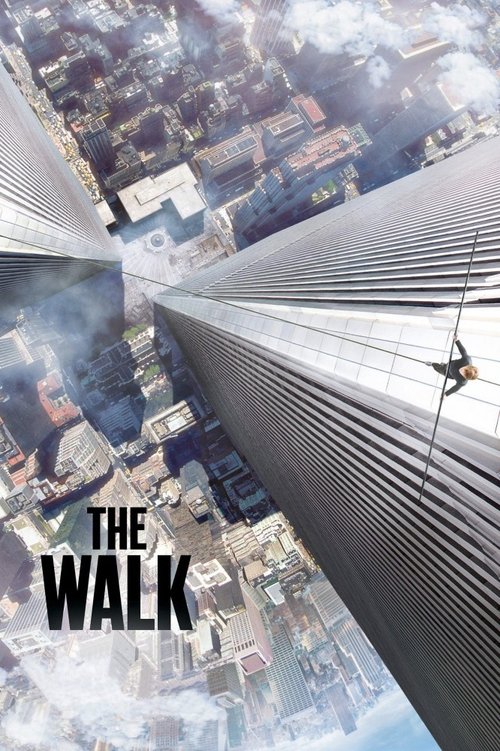
The Walk
2015 · Directed by Robert Zemeckis
Woke Score
CriticCritic Score
Audience
Ultra Based
Critics rated this 66 points above its woke score. Among Ultra Based films, this critic score ranks #625 of 1469.
Representation Casting
Score: 15/100
The film features predominantly white European characters reflecting the historical reality of Petit's immediate circle, with minimal representation of other groups. Supporting roles are small and underdeveloped.
LGBTQ+ Themes
Score: 0/100
No LGBTQ themes, characters, or subtext are present in the film. The narrative is entirely heterosexual in orientation.
Feminist Agenda
Score: 5/100
Charlotte Le Bon's character serves primarily as a romantic interest and emotional anchor for the male protagonist, with limited agency or narrative importance of her own.
Racial Consciousness
Score: 0/100
The film contains no engagement with racial themes, racial identity, or racial consciousness. Race is not addressed as a thematic concern.
Climate Crusade
Score: 0/100
There is no climate-related content or environmental consciousness present in the film.
Eat the Rich
Score: 10/100
The film portrays Petit's defiance of authority and rejection of safety regulations as heroic, though this is framed as individual artistic expression rather than systemic critique of capitalism.
Body Positivity
Score: 0/100
Body positivity or diverse body representation is not a thematic concern in this physically demanding sports narrative.
Neurodivergence
Score: 0/100
No neurodivergent characters, representation, or thematic engagement with neurodivergence appears in the film.
Revisionist History
Score: 0/100
The film presents a straightforward historical account without progressive reinterpretation or revisionist elements.
Lecture Energy
Score: 5/100
While primarily a narrative film, Zemeckis occasionally employs a documentary-style framing device that borders on preachy presentation of historical facts.


Synopsis
The story of French high-wire artist Philippe Petit's attempt to cross the Twin Towers of the World Trade Center in 1974.
Consciousness Assessment
The Walk presents itself as a straightforward historical adventure, the story of a French tightrope walker's audacious 1974 stunt atop the Twin Towers. Zemeckis directs with his characteristic technical polish, delivering a film that prioritizes spectacle and biographical narrative over social commentary. Joseph Gordon-Levitt inhabits Petit with sufficient charm, executing the role as written: a charismatic, eccentric artist whose ambitions transcend ordinary concerns. The film is fundamentally an ode to individual achievement, artistic vision, and the romance of transgression against institutional authority.
From a contemporary cultural sensibility standpoint, the film remains largely indifferent to the markers that define modern progressive filmmaking. The cast is predominantly white, with minimal meaningful representation beyond the European characters central to Petit's actual historical circle. The narrative centers entirely on Petit's male ambition and masculine daring, with Charlotte Le Bon relegated to a supporting romantic interest whose agency exists primarily in relation to the protagonist. There are no LGBTQ themes, no racial consciousness, no interrogation of capitalism or labor, no body positivity concerns, and no engagement with neurodivergence as a thematic element. The film does not revise history in a progressive direction, nor does it employ the pedagogical tone characteristic of socially conscious cinema.
What remains is a competent historical film that treats its subject matter with respect but maintains the cultural assumptions of mid-2010s mainstream filmmaking. The Walk asks us to be impressed by Petit's individual will and his rejection of safety regulations. It does not ask us to consider who benefited from the Twin Towers, what their construction displaced, or what systems enabled or constrained Petit's freedom. In this sense, the film succeeds entirely on its own narrow terms, which happen to involve no particular engagement with the social consciousness that has come to define prestige cinema in the subsequent decade.
Analysis generated by our Consciousness Algorithm
Critic Reviews
“Zemeckis turns the event into a kind of blockbuster Cinéma Pur – an almost avant-garde game of composition, movement and perspective, exhilaratingly attuned to form and space. ("Mad Max": Fury Road did the same.) The camerawork is subtle and meticulous, the 3D head-spinningly well-applied. ”
“Working from a script co-written with Christopher Browne, director Robert Zemeckis (“Forrest Gump”) pulls off a fabulous trick of his own: delivering a mainstream entertainment that has, at its heart, a poetic sensibility.”
“The story The Walk tells is, admittedly, an unbelievable one, so it’s understandable Zemeckis should choose to leave subtlety at the door. Sadly, such an approach strips the film of tension, especially at the crucial moment.”
Consciousness Markers
The film features predominantly white European characters reflecting the historical reality of Petit's immediate circle, with minimal representation of other groups. Supporting roles are small and underdeveloped.
No LGBTQ themes, characters, or subtext are present in the film. The narrative is entirely heterosexual in orientation.
Charlotte Le Bon's character serves primarily as a romantic interest and emotional anchor for the male protagonist, with limited agency or narrative importance of her own.
The film contains no engagement with racial themes, racial identity, or racial consciousness. Race is not addressed as a thematic concern.
There is no climate-related content or environmental consciousness present in the film.
The film portrays Petit's defiance of authority and rejection of safety regulations as heroic, though this is framed as individual artistic expression rather than systemic critique of capitalism.
Body positivity or diverse body representation is not a thematic concern in this physically demanding sports narrative.
No neurodivergent characters, representation, or thematic engagement with neurodivergence appears in the film.
The film presents a straightforward historical account without progressive reinterpretation or revisionist elements.
While primarily a narrative film, Zemeckis occasionally employs a documentary-style framing device that borders on preachy presentation of historical facts.