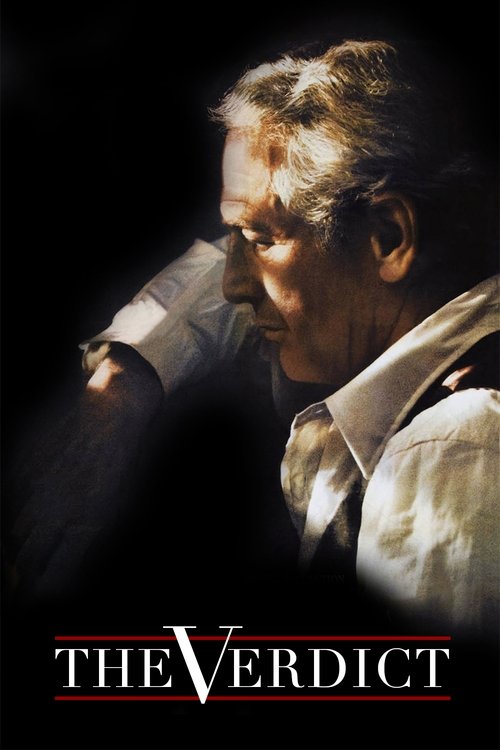
The Verdict
1982 · Directed by Sidney Lumet
Woke Score
CriticCritic Score
Audience
Ultra Based
Critics rated this 69 points above its woke score. Among Ultra Based films, this critic score ranks #442 of 1469.
Representation Casting
Score: 15/100
The cast is predominantly white and male with minimal diversity. Female characters are present but serve secondary roles in the narrative.
LGBTQ+ Themes
Score: 0/100
No LGBTQ+ themes, characters, or representation are present in the film.
Feminist Agenda
Score: 10/100
While the film includes female characters, there is no explicit feminist agenda or commentary on gender politics. Women exist in supporting roles without thematic focus on gender justice.
Racial Consciousness
Score: 5/100
The film does not engage with racial themes or demonstrate racial consciousness. The lack of diversity suggests an absence of intentional racial representation rather than any explicit racial analysis.
Climate Crusade
Score: 0/100
No climate themes or environmental consciousness appear in this legal drama set in a Boston courtroom.
Eat the Rich
Score: 20/100
The film critiques institutional corruption and corporate malfeasance through the hospital's negligence, but this critique operates within a framework of legal accountability rather than systematic anti-capitalist ideology.
Body Positivity
Score: 0/100
No body positivity themes or commentary appear in the film. The narrative does not engage with body image or body acceptance discourse.
Neurodivergence
Score: 0/100
While the protagonist struggles with alcoholism, this is presented as a personal moral failing rather than as neurodivergence representation or disability consciousness.
Revisionist History
Score: 0/100
The film does not attempt to revise historical narratives or reframe historical events. It is a contemporary legal drama with no historical revisionism.
Lecture Energy
Score: 10/100
The film contains some courtroom speeches and moral pronouncements, but these emerge organically from the narrative rather than functioning as preachy lectures about social consciousness.


Synopsis
Frank Galvin is a down-on-his-luck lawyer and reduced to drinking and ambulance chasing, when a former associate reminds him of his obligations in a medical malpractice suit by serving it to Galvin on a silver platter—all parties are willing to settle out of court. Blundering his way through the preliminaries, Galvin suddenly realizes that the case should actually go to court—to punish the guilty, to get a decent settlement for his clients... and to restore his standing as a lawyer.
Consciousness Assessment
Sidney Lumet's "The Verdict" is a triumph of institutional critique dressed in the respectable garments of 1980s liberalism. Paul Newman's Frank Galvin takes on a corrupt medical establishment and discovers that personal redemption can be achieved through moral action and legal accountability. The film's social consciousness flows from a classical humanist wellspring, the sort of thing that would have played well at a Democratic fundraiser in 1982, and it remains a masterwork of its kind. Yet it bears the unmistakable marks of its era, and its era was not one that concerned itself with the granular cataloging of identity and representation that has become the primary language of progressive cinema.
The cast is predominantly white and male, with female characters serving largely as supporting functions within Galvin's personal and professional orbit. Charlotte Rampling provides the film's most substantial female presence, but her character exists primarily in relation to the male protagonist's journey. There is no consciousness of racial diversity, gender parity, or the other contemporary markers that define progressive cultural production. The film's villain is institutional corruption itself, a comfortable target that allows the narrative to champion individual moral courage without engaging in any of the specific identity-focused critique that would emerge in subsequent decades.
This is not to say "The Verdict" lacks merit. It is a superb legal drama that examines systemic failure and the possibility of redemption through principled action. But it operates in an idiom that predates the particular constellation of progressive sensibilities that characterize modern cultural discourse. Lumet and Mamet offer us a vision of justice rooted in universal human dignity rather than in the careful accounting of representation and historical grievance that defines contemporary progressive cinema. The film's intellectual inheritance belongs to a different era, and scoring it by contemporary standards would be a category error of the highest order.
Analysis generated by our Consciousness Algorithm
Critic Reviews
“The screenplay by David Mamet is a wonder of good dialogue, strongly seen characters and a structure that pays off in the big courtroom scene - as the genre requires.”
“Admittedly this is a legal "Rocky, convincing rather than realistic, witty rather than analytical, but it amounts to a far more effective indictment of the US legal system than ...and justice for all, and is the first courtroom drama in years to recapture the brilliance of the form. ”
“A solidly old-fashioned courtroom drama such as The Verdict could have gotten by with a serious, measured performance from its leading man, or it could have worked well with a dazzling movie-star turn. The fact that Paul Newman delivers both makes a clever, suspenseful, entertaining movie even better.”
“As Frank Galvin, the misbegotten inspirational hero of Sidney Lumet's imbecilic courtroom melodrama The Verdict, Paul Newman takes sanctimonious satisfaction in impersonating the sorriest excuse for a crusading attorney since Anne Bancroft misrepresented Margaux Hemingway in "Lipstick." [17 Dec 1982, p.F12]”
Consciousness Markers
The cast is predominantly white and male with minimal diversity. Female characters are present but serve secondary roles in the narrative.
No LGBTQ+ themes, characters, or representation are present in the film.
While the film includes female characters, there is no explicit feminist agenda or commentary on gender politics. Women exist in supporting roles without thematic focus on gender justice.
The film does not engage with racial themes or demonstrate racial consciousness. The lack of diversity suggests an absence of intentional racial representation rather than any explicit racial analysis.
No climate themes or environmental consciousness appear in this legal drama set in a Boston courtroom.
The film critiques institutional corruption and corporate malfeasance through the hospital's negligence, but this critique operates within a framework of legal accountability rather than systematic anti-capitalist ideology.
No body positivity themes or commentary appear in the film. The narrative does not engage with body image or body acceptance discourse.
While the protagonist struggles with alcoholism, this is presented as a personal moral failing rather than as neurodivergence representation or disability consciousness.
The film does not attempt to revise historical narratives or reframe historical events. It is a contemporary legal drama with no historical revisionism.
The film contains some courtroom speeches and moral pronouncements, but these emerge organically from the narrative rather than functioning as preachy lectures about social consciousness.