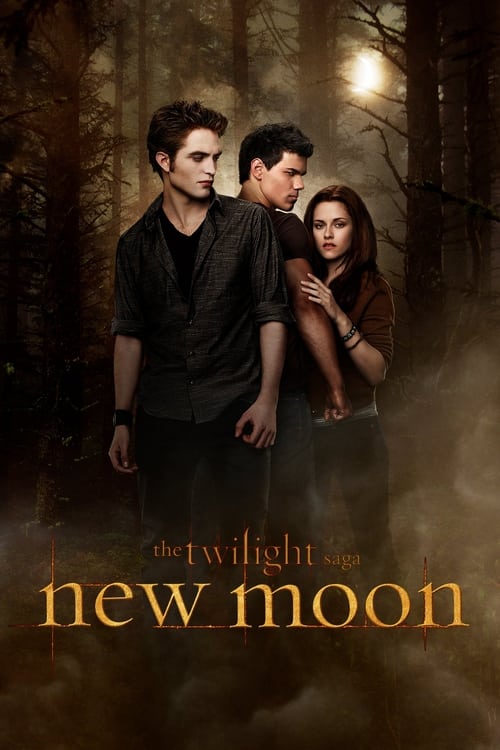
The Twilight Saga: New Moon
2009 · Directed by Chris Weitz
Woke Score
CriticCritic Score
Audience
Ultra Based
Critics rated this 36 points above its woke score. Among Ultra Based films, this critic score ranks #1285 of 1469.
Representation Casting
Score: 25/100
The cast includes actors of color, including Taylor Lautner as Jacob Black, but their roles remain subordinate and stereotypically defined. Female characters are present but lack meaningful agency.
LGBTQ+ Themes
Score: 0/100
No LGBTQ+ themes or characters appear in the narrative. The film operates entirely within heteronormative romance structures.
Feminist Agenda
Score: 5/100
The film is actively hostile to feminist sensibilities. Bella's characterization as a passive, self-destructive protagonist dependent on male validation represents a nadir of early 2000s female representation.
Racial Consciousness
Score: 15/100
Jacob Black and the Quileute tribe are present but portrayed through a lens of mysticism and supernatural otherness rather than genuine cultural representation. Indigenous traditions become plot devices.
Climate Crusade
Score: 0/100
Climate concerns do not factor into the narrative whatsoever. The film is set in rainy Forks, but environmental themes are entirely absent.
Eat the Rich
Score: 0/100
The film contains no anti-capitalist messaging or critique. Economic systems are not interrogated in any meaningful way.
Body Positivity
Score: 5/100
Bella's body exists primarily as an object of desire for male characters. The film does not engage with body positivity concepts and reinforces conventional beauty standards.
Neurodivergence
Score: 0/100
No neurodivergent characters or themes appear in the film. Mental health is not meaningfully addressed beyond Bella's depression, which is romanticized rather than explored.
Revisionist History
Score: 10/100
The film incorporates indigenous mythology but primarily to serve fantasy narrative purposes rather than to engage in historical revision or accountability.
Lecture Energy
Score: 15/100
The film occasionally pauses for exposition regarding vampire and werewolf mythology, but these moments function as plot mechanics rather than ideological lectures.


Synopsis
Forks, Washington resident Bella Swan is reeling from the departure of her vampire love, Edward Cullen, and finds comfort in her friendship with Jacob Black, a werewolf. But before she knows it, she's thrust into a centuries-old conflict, and her desire to be with Edward at any cost leads her to take greater and greater risks.
Consciousness Assessment
New Moon arrives as a curious artifact from 2009, a moment before the cultural vocabulary we now apply to such matters had fully crystallized. The film concerns itself with a heroine whose primary narrative function is to be wanted by two men, both of whom possess supernatural abilities she does not. Bella Swan's agency consists largely of gravitating toward whichever romantic interest requires her presence most urgently. The film documents her descent into depression with the solemnity of a Greek tragedy, when what we are actually witnessing is a teenager's response to a breakup. She hurls herself off a cliff for entertainment.
The film does feature Jacob Black, a member of the Quileute tribe, though the representation operates in a register best described as folkloric rather than genuine. The Quileute exist primarily to provide shapeshifting exposition and romantic competition. The werewolf mythology, derived from indigenous spiritual traditions, becomes a vehicle for supernatural spectacle rather than cultural engagement. Female characters populate the screen in supporting roles, though they exercise little narrative influence. The film's universe remains fundamentally a patriarchal one, structured around Bella's oscillation between two male protectors who battle over her allegiance.
What emerges from this exercise is a film almost entirely indifferent to the progressive sensibilities that would come to dominate cultural discourse in the years following its release. New Moon operates in a pre-conscious state regarding gender dynamics, racial representation, and the troubling implications of its central romantic premise. It is a film content to exist as pure melodrama, unburdened by any desire to interrogate or challenge the systems it depicts. In this sense, it possesses an innocence, albeit one born from genuine blindness rather than intentional restraint.
Analysis generated by our Consciousness Algorithm
Critic Reviews
“Mopey, draggy, and absurdly self-important, the movie nonetheless twangs at some resonant affective chord. This viewer, at least, was catapulted back to that moment of adolescence when being mopey, draggy, and absurdly self-important felt like a passionate act of liberation.”
“Why does “New Moon” basically work, even with its grave self-seriousness? A few reasons. Weitz lets the material breathe, and his actors interact. The film does not try to eat you alive.”
“It’s intellectually and socially detrimental to both literature and cinema, simultaneously.”
Consciousness Markers
The cast includes actors of color, including Taylor Lautner as Jacob Black, but their roles remain subordinate and stereotypically defined. Female characters are present but lack meaningful agency.
No LGBTQ+ themes or characters appear in the narrative. The film operates entirely within heteronormative romance structures.
The film is actively hostile to feminist sensibilities. Bella's characterization as a passive, self-destructive protagonist dependent on male validation represents a nadir of early 2000s female representation.
Jacob Black and the Quileute tribe are present but portrayed through a lens of mysticism and supernatural otherness rather than genuine cultural representation. Indigenous traditions become plot devices.
Climate concerns do not factor into the narrative whatsoever. The film is set in rainy Forks, but environmental themes are entirely absent.
The film contains no anti-capitalist messaging or critique. Economic systems are not interrogated in any meaningful way.
Bella's body exists primarily as an object of desire for male characters. The film does not engage with body positivity concepts and reinforces conventional beauty standards.
No neurodivergent characters or themes appear in the film. Mental health is not meaningfully addressed beyond Bella's depression, which is romanticized rather than explored.
The film incorporates indigenous mythology but primarily to serve fantasy narrative purposes rather than to engage in historical revision or accountability.
The film occasionally pauses for exposition regarding vampire and werewolf mythology, but these moments function as plot mechanics rather than ideological lectures.