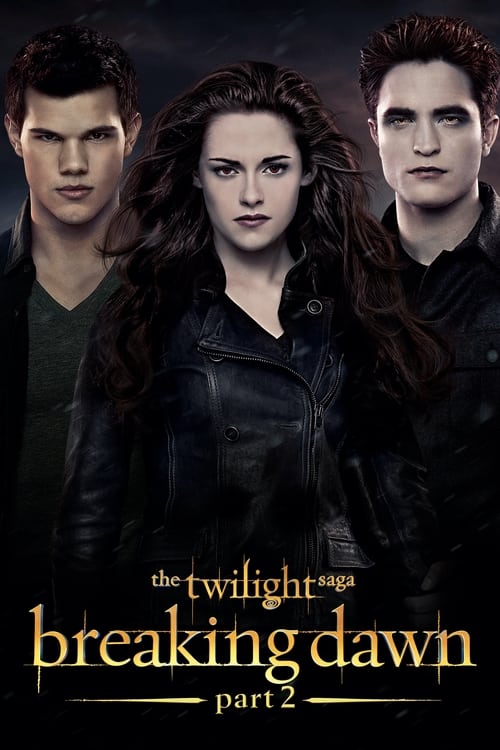
The Twilight Saga: Breaking Dawn - Part 2
2012 · Directed by Bill Condon
Woke Score
CriticCritic Score
Audience
Ultra Based
Critics rated this 48 points above its woke score. Among Ultra Based films, this critic score ranks #1106 of 1469.
Representation Casting
Score: 10/100
The cast is predominantly white with minimal representation of other ethnicities. The few supporting characters of color occupy secondary roles with little narrative weight.
LGBTQ+ Themes
Score: 0/100
No meaningful LGBTQ+ representation or themes present in the film. The narrative is entirely heteronormative.
Feminist Agenda
Score: 5/100
Bella's arc culminates in motherhood and domestic fulfillment, reinforcing traditional gender roles. Her agency is subsumed into family protection and biological destiny.
Racial Consciousness
Score: 0/100
No explicit racial consciousness or examination of systemic issues. The narrative treats all characters as existing in a post-racial fantasy setting without acknowledgment.
Climate Crusade
Score: 0/100
No climate themes, environmental consciousness, or ecological messaging of any kind appears in the film.
Eat the Rich
Score: 0/100
The Cullen family's wealth and privilege go unexamined. The narrative celebrates affluent vampire society without critique.
Body Positivity
Score: 5/100
Bella's transformation into a vampire grants her the idealized body she desired, reinforcing conventional beauty standards rather than challenging them.
Neurodivergence
Score: 0/100
No representation of neurodivergent characters or exploration of neurodiversity in the narrative.
Revisionist History
Score: 0/100
The film contains no historical revisionism or reexamination of historical narratives.
Lecture Energy
Score: 0/100
The film avoids any preachy messaging or lectures about social issues. It remains a pure fantasy romance without progressive sermon.


Synopsis
After the birth of Renesmee, the Cullens gather other vampire clans in order to protect the child from a false allegation that puts the family in front of the Volturi.
Consciousness Assessment
The Twilight Saga: Breaking Dawn - Part 2 represents a crystalline example of contemporary entertainment entirely unburdened by the weight of progressive consciousness. Bill Condon's film concerns itself with the most fundamental of fantasy narratives: the protection of family property and the validation of romantic love as life's supreme achievement. Bella Swan's journey concludes not in expanded horizons but in the comfortable suffocation of domestic destiny, her transformation into a vampire serving as the ultimate metaphor for the surrender of selfhood to biological imperative and spousal devotion.
The film's approach to representation can only be described as incurious. A cast of vampiric clans assembles to defend the Cullens' position, yet the narrative shows no interest in interrogating the whiteness of its power structure or the marginality of its supporting players of color. The setting exists in a fantasy bubble where wealth is infinite, consequence is nonexistent, and the only meaningful drama concerns whether one's hybrid child will be protected. There is no examination of systemic anything, no acknowledgment that the world operates according to anything resembling real social structures.
What emerges from this final installment is a film entirely at peace with its own political inertia. It traffics in no lectures, champions no causes, and extends no invitation to the viewer to reconsider their relationship with systems of power or identity. This is not condemnation. It is simply observation. The film knows what it is: a love story for people who believe love, properly understood, requires the complete sublimation of the self to another. In that knowledge, it achieves a kind of purity.
Analysis generated by our Consciousness Algorithm
Critic Reviews
“Every frame of silent, lip-biting, pent-up tension in the series has been holding its breath for this -- a 600-minute soap opera suddenly exploding into a Grindhouse slasher. ”
“The final installment of the immortal Bella/Edward romance will give its breathlessly awaiting international audience just what it wants.”
“Part 2 has the bonus of a livelier Stewart performance than fans have been accustomed to. No longer a mopey, lower-lip-biting emo girl, this Bella is twitchy, feral, formidable and fully energized, a goddess even among her exalted bloodsucker brethren.”
“If anything, this series has gotten dumber and more inert as it has progressed, with this last one finally reaching over into an extended wallow in camp. ”
Consciousness Markers
The cast is predominantly white with minimal representation of other ethnicities. The few supporting characters of color occupy secondary roles with little narrative weight.
No meaningful LGBTQ+ representation or themes present in the film. The narrative is entirely heteronormative.
Bella's arc culminates in motherhood and domestic fulfillment, reinforcing traditional gender roles. Her agency is subsumed into family protection and biological destiny.
No explicit racial consciousness or examination of systemic issues. The narrative treats all characters as existing in a post-racial fantasy setting without acknowledgment.
No climate themes, environmental consciousness, or ecological messaging of any kind appears in the film.
The Cullen family's wealth and privilege go unexamined. The narrative celebrates affluent vampire society without critique.
Bella's transformation into a vampire grants her the idealized body she desired, reinforcing conventional beauty standards rather than challenging them.
No representation of neurodivergent characters or exploration of neurodiversity in the narrative.
The film contains no historical revisionism or reexamination of historical narratives.
The film avoids any preachy messaging or lectures about social issues. It remains a pure fantasy romance without progressive sermon.