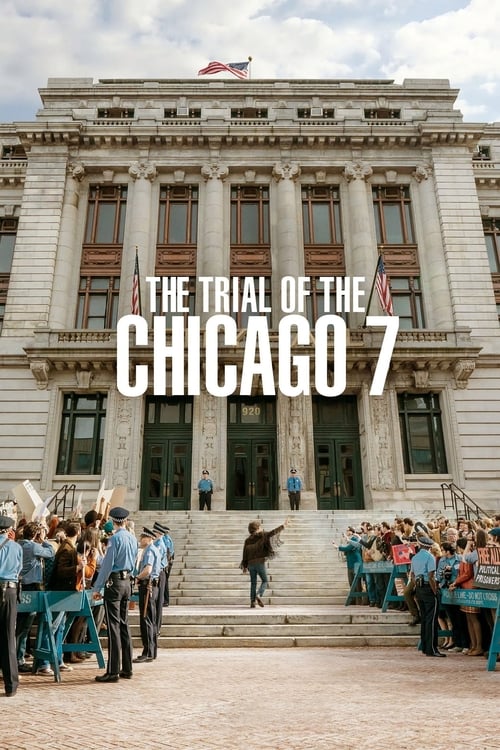
The Trial of the Chicago 7
2020 · Directed by Aaron Sorkin
Woke Score
CriticCritic Score
Audience
Based
Critics rated this 48 points above its woke score. Among Based films, this critic score ranks #104 of 345.
Representation Casting
Score: 28/100
Cast includes Yahya Abdul-Mateen II and one South Asian performer among ten credited actors, representing modest diversity without substantive narrative centering of non-white experiences.
LGBTQ+ Themes
Score: 0/100
No LGBTQ+ themes, characters, or representation evident in the film.
Feminist Agenda
Score: 12/100
Female characters exist in supporting roles (judge, reporters) but the narrative centers male activists and male leadership; no feminist framework or gender analysis structures the story.
Racial Consciousness
Score: 18/100
While set during a period of racial tension and features a Black character, the film does not meaningfully explore racial justice, police brutality against Black communities, or systemic racism through a contemporary lens.
Climate Crusade
Score: 0/100
No climate change or environmental themes present in this 1960s legal drama.
Eat the Rich
Score: 32/100
The film portrays anti-war and anti-establishment activism sympathetically, with rhetoric critical of government power, though it stops short of systemic critique of capitalism or wealth inequality.
Body Positivity
Score: 0/100
No body positivity themes, disability representation, or commentary on physical appearance and worth evident in the film.
Neurodivergence
Score: 0/100
No representation of neurodivergent characters or themes related to autism, ADHD, or other neurological differences.
Revisionist History
Score: 15/100
The film dramatizes historical events but does not substantially reinterpret them through contemporary progressive frameworks; it largely accepts conventional historical narratives.
Lecture Energy
Score: 35/100
Sorkin's characteristic style includes courtroom speeches and procedural exposition, though these function as dramatic monologues rather than preachy lectures about social justice.


Synopsis
What was supposed to be a peaceful protest turned into a violent clash with the police. What followed was one of the most notorious trials in history.
Consciousness Assessment
Aaron Sorkin's "The Trial of the Chicago 7" arrives as a conscientious period drama about the 1969 trial following the 1968 Democratic National Convention protests, a film that treats its historical material with the solemnity of a law review article. The film centers the narratives of white male activists (Eddie Redmayne's Tom Hayden, Sacha Baron Cohen's Abbie Hoffman) while relegating Black activism and the broader context of racial justice to the margins of its courtroom drama. Yahya Abdul-Mateen II appears in the ensemble, though the film does not excavate the complexities of how Black protesters experienced the Chicago riots or the trial itself.
The film's progressive credentials rest primarily on its anti-government stance and its sympathetic portrayal of 1960s counterculture, yet these elements predate modern social consciousness markers by decades. Sorkin's characteristic style emphasizes legal procedure and rhetorical argument over the material realities of systemic oppression or institutional critique. The film does not grapple with contemporary interpretations of these historical events through the lens of police brutality, racial capitalism, or other contemporary frameworks that would elevate its woke consciousness. Instead, it functions as a procedural affirmation of the American legal system's capacity for justice, a notably centrist position.
The cast contains one South Asian actor and one Black actor among ten credited principals, representing a modest acknowledgment of diversity without substantive narrative integration. The film's sensibilities are those of an intelligent, engaged liberal working within classical dramatic forms, which is to say they are distinct from the particular cultural anxieties that define contemporary progressive consciousness. This is a film about activists made for audiences who appreciate activism in historical retrospect.
Analysis generated by our Consciousness Algorithm
Critic Reviews
“Certain events are rearranged from the factual timelines, and yes, The Trial of the Chicago 7 exercises poetic license. This is not a documentary; it’s a dramatization of events that resonates with great power while containing essential truths, and it’s one of the best movies of the year.”
“You’ll find that out in the film’s last — and best — moment, which belongs to Redmayne. Is it sentimental? You betcha. But it sure takes you back to the TV magic of President Bartlet.”
“Writer-director Aaron Sorkin's star-studded chronicle of The Trial of the Chicago 7 is timely and terrific.”
“He [Sorkin] can also become fantastically ponderous, bloated with finger-waggingly self-important liberal patriotism. Sadly, that is the tone with this exasperatingly dull, dramatically inert and faintly misjudged re-creation of the “Chicago Seven” trial in the US, which Sorkin has written and directed.”
Consciousness Markers
Cast includes Yahya Abdul-Mateen II and one South Asian performer among ten credited actors, representing modest diversity without substantive narrative centering of non-white experiences.
No LGBTQ+ themes, characters, or representation evident in the film.
Female characters exist in supporting roles (judge, reporters) but the narrative centers male activists and male leadership; no feminist framework or gender analysis structures the story.
While set during a period of racial tension and features a Black character, the film does not meaningfully explore racial justice, police brutality against Black communities, or systemic racism through a contemporary lens.
No climate change or environmental themes present in this 1960s legal drama.
The film portrays anti-war and anti-establishment activism sympathetically, with rhetoric critical of government power, though it stops short of systemic critique of capitalism or wealth inequality.
No body positivity themes, disability representation, or commentary on physical appearance and worth evident in the film.
No representation of neurodivergent characters or themes related to autism, ADHD, or other neurological differences.
The film dramatizes historical events but does not substantially reinterpret them through contemporary progressive frameworks; it largely accepts conventional historical narratives.
Sorkin's characteristic style includes courtroom speeches and procedural exposition, though these function as dramatic monologues rather than preachy lectures about social justice.