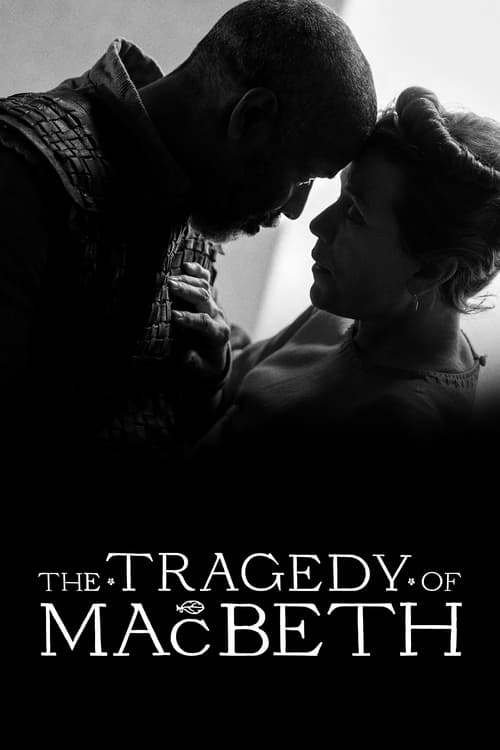
The Tragedy of Macbeth
2021 · Directed by Joel Coen
Woke Score
CriticCritic Score
Audience
Ultra Based
Critics rated this 72 points above its woke score. Among Ultra Based films, this critic score ranks #189 of 1469.
Representation Casting
Score: 35/100
The film features a racially diverse ensemble cast including Denzel Washington as the lead and several performers of color in supporting roles, representing a departure from traditional Shakespearean staging conventions.
LGBTQ+ Themes
Score: 0/100
No LGBTQ+ themes, characters, or representation are present in the film. The adaptation remains faithful to the heterosexual relationship dynamics of the original text.
Feminist Agenda
Score: 30/100
Lady Macbeth possesses agency and manipulative power within the narrative, reflecting Shakespeare's original text, but the film does not add contemporary feminist frameworks or commentary to these dynamics.
Racial Consciousness
Score: 20/100
While the casting includes Black performers and actors of color, the film does not engage in explicit racial commentary or consciousness. The diversity appears as casting choice rather than thematic engagement.
Climate Crusade
Score: 0/100
Climate themes are entirely absent from this Shakespeare adaptation. The supernatural elements remain focused on witchcraft and prophecy rather than environmental concerns.
Eat the Rich
Score: 0/100
No anti-capitalist messaging or critique of economic systems appears in the film. The narrative concerns feudal power structures specific to the play's historical setting.
Body Positivity
Score: 0/100
Body positivity themes are not present. The film makes no commentary on body image, representation, or physical diversity.
Neurodivergence
Score: 0/100
No representation of neurodivergence or disability appears in the film. Mental illness, where depicted, remains treated as tragic consequence rather than identity category.
Revisionist History
Score: 0/100
The film adapts a fictional tragedy rather than reimagining historical events. No revisionist historical narrative is present.
Lecture Energy
Score: 0/100
The film maintains a theatrical formality that prioritizes Shakespearean dialogue and dramatic momentum over contemporary preachy messaging or social instruction.


Synopsis
Macbeth, the Thane of Glamis, receives a prophecy from a trio of witches that one day he will become King of Scotland. Consumed by ambition and spurred to action by his wife, Macbeth murders his king and takes the throne for himself.
Consciousness Assessment
Joel Coen's "The Tragedy of Macbeth" is a visually austere, theatrically scaled adaptation that treats Shakespeare's text with reverent literalism. The film's most conspicuous engagement with contemporary sensibilities lies in its casting, which includes Denzel Washington as the titular protagonist and several performers of color throughout the ensemble. This represents a departure from centuries of stagecraft tradition, though the film itself refrains from any explicit commentary on this choice. The production design emphasizes surrealist abstraction over narrative naturalism, creating a work that feels more indebted to German Expressionism than to social realism.
The female characters, particularly Lady Macbeth as performed by Frances McDormand, occupy positions of considerable narrative agency within Shakespeare's original structure. Lady Macbeth's manipulation of her husband and her subsequent psychological dissolution reflect the playwright's own complicated examination of gender and power. However, this complexity predates modern feminist discourse by centuries, and Coen does not layer additional contemporary interpretation onto these dynamics. The witches function as supernatural agents rather than vessels for identity-based commentary. The film's commitment to the source material means that any progressive dimensions emerge largely through absence of traditional misogyny in the staging, not through active contemporary interventions.
What distinguishes this adaptation is its restraint. Coen offers us a lean, visually hypnotic rendering of ambition and moral collapse without the baggage of modern social messaging. The film's diversity of casting appears more as a simple fact of contemporary Hollywood than as a thematic statement. This is a work about power, masculinity, and the corrupting influence of unchecked ambition, and it makes no attempt to retrofit these concerns into twenty-first-century progressive frameworks. It remains, at its core, Shakespeare's meditation on tragedy, rendered in black and white with deliberate, almost monastic severity.
Analysis generated by our Consciousness Algorithm
Critic Reviews
“Of all Shakespeare’s plays, Macbeth may be the best-served by cinema, with terrific, distinctive adaptations over the years from Welles, Akira Kurosawa, Roman Polanski, and most recently Justin Kurzel, with Michael Fassbender and Marion Cotillard. Coen’s is something different again – though new would be entirely the wrong word. It resonates with the ancient power of a ritual.”
“The movie hits its stride immediately with a taut, athletic urgency and it contains some superb images – particularly the eerie miracle of Birnam Wood coming to Dunsinane, with Malcolm’s soldiers holding tree-branches over their heads in a restricted forest path and turning themselves into a spectacular river of boughs. This is a black-and-white world of violence and pain that scorches the retina.”
“Coen’s The Tragedy of Macbeth is the kind of visionary art that happens when a group of artists, at the top of their game, assemble to work on a legacy that’s near to their hearts because of the challenge, not in spite of it. Denzel and McDormand are fearless, and The Tragedy of Macbeth is an enthralling jolt of verse and just good old-fashioned dread.”
Consciousness Markers
The film features a racially diverse ensemble cast including Denzel Washington as the lead and several performers of color in supporting roles, representing a departure from traditional Shakespearean staging conventions.
No LGBTQ+ themes, characters, or representation are present in the film. The adaptation remains faithful to the heterosexual relationship dynamics of the original text.
Lady Macbeth possesses agency and manipulative power within the narrative, reflecting Shakespeare's original text, but the film does not add contemporary feminist frameworks or commentary to these dynamics.
While the casting includes Black performers and actors of color, the film does not engage in explicit racial commentary or consciousness. The diversity appears as casting choice rather than thematic engagement.
Climate themes are entirely absent from this Shakespeare adaptation. The supernatural elements remain focused on witchcraft and prophecy rather than environmental concerns.
No anti-capitalist messaging or critique of economic systems appears in the film. The narrative concerns feudal power structures specific to the play's historical setting.
Body positivity themes are not present. The film makes no commentary on body image, representation, or physical diversity.
No representation of neurodivergence or disability appears in the film. Mental illness, where depicted, remains treated as tragic consequence rather than identity category.
The film adapts a fictional tragedy rather than reimagining historical events. No revisionist historical narrative is present.
The film maintains a theatrical formality that prioritizes Shakespearean dialogue and dramatic momentum over contemporary preachy messaging or social instruction.