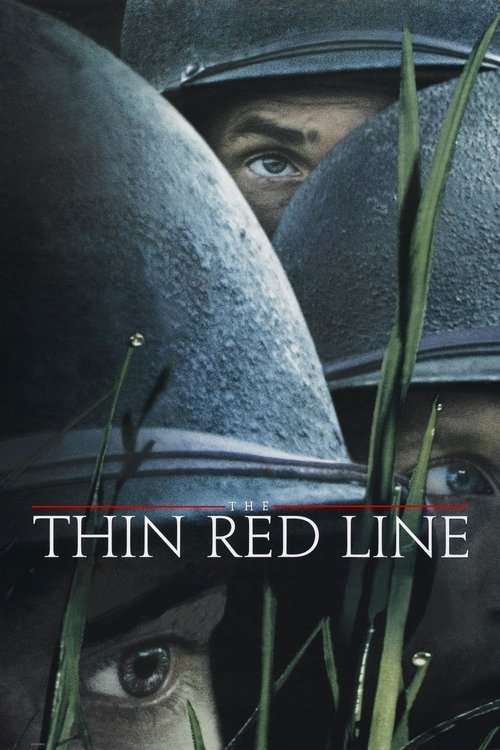
The Thin Red Line
1998 · Directed by Terrence Malick
Woke Score
CriticCritic Score
Audience
Ultra Based
Critics rated this 74 points above its woke score. Among Ultra Based films, this critic score ranks #419 of 1469.
Representation Casting
Score: 5/100
The ensemble cast includes some diversity and a few female characters (Miranda Otto), but they occupy peripheral roles in a male-dominated combat narrative. No active interrogation of representation occurs within the film's framework.
LGBTQ+ Themes
Score: 0/100
No LGBTQ+ themes, characters, or representation are present in the film. The narrative focuses entirely on heterosexual male soldiers.
Feminist Agenda
Score: 0/100
The film contains no feminist agenda or critique of gender relations. Women appear minimally and their roles are not explored through a feminist lens.
Racial Consciousness
Score: 0/100
While the cast includes actors of different racial backgrounds, the film does not engage in conscious examination of race, racism, or racial dynamics. Racial composition reflects historical segregation without commentary.
Climate Crusade
Score: 15/100
The film contains ecological imagery and mourning for the natural world damaged by war, showing concern for environmental destruction. However, this emerges from metaphysical contemplation rather than climate activism.
Eat the Rich
Score: 10/100
The film critiques military hierarchy, authority, and the institutional machinery of war, which could be read as anti-authoritarian. However, this operates through philosophical critique rather than economic analysis.
Body Positivity
Score: 0/100
Body positivity as a concept is entirely absent from the film. Bodies are presented as vulnerable to violence and suffering, not as sites of positive representation or acceptance.
Neurodivergence
Score: 0/100
No representation of neurodivergence, neurodivergent characters, or engagement with neurodivergent perspectives appears in the film.
Revisionist History
Score: 0/100
The film does not revise historical narratives or present alternative histories. It adapts a historical novel faithfully, exploring the Guadalcanal campaign without rewriting its factual basis.
Lecture Energy
Score: 0/100
Malick employs voiceover narration and philosophical meditations, but these serve artistic rather than preachy purposes. The film never lectures the audience about moral positions.


Synopsis
The story of a group of men, an Army Rifle company called C-for-Charlie, who change, suffer, and ultimately make essential discoveries about themselves during the fierce World War II battle of Guadalcanal. It follows their journey, from the surprise of an unopposed landing, through the bloody and exhausting battles that follow, to the ultimate departure of those who survived.
Consciousness Assessment
Terrence Malick's meditation on the Guadalcanal campaign arrives as a philosophical rebuttal to the conventions of war cinema, though not through the mechanisms we have come to recognize as modern social consciousness. The film dismantles the mythology of martial valor and masculine heroism that had accumulated around the combat genre, presenting instead a world of moral ambiguity where survival proves indistinguishable from complicity. The camera lingers on the natural world, on the beauty that persists despite human violence, creating a kind of ecological mourning that suggests something beyond the soldiers' comprehension has been violated. This is not cultural awareness in the contemporary sense, but rather a humanist critique of nationalism and authority that predates the frameworks we now use to discuss such matters.
The film's ensemble cast includes several women, though their presence remains marginal to the central narrative, and the racial composition of the combat unit reflects the segregated military structure of the actual war without comment or interrogation. Malick does not deploy his characters as vehicles for pedagogical statements about identity or systemic injustice. Instead, he treats all soldiers, regardless of background, as equally subject to the corrupting machinery of war. The film's revolutionary gesture lies in its refusal to celebrate the war effort, its insistence that even victory carries the weight of spiritual catastrophe. Nick Nolte's commanding officer emerges as a figure of tragic hubris rather than inspiration, a man whose adherence to duty becomes indistinguishable from cruelty.
What we encounter here is a war film that predates the contemporary discourse surrounding representation and identity, yet arrives at some of its conclusions through different pathways. The philosophical framework, the resistance to propaganda, the acknowledgment of ecological destruction, these elements read as sympathetic to progressive sensibilities without being animated by them. This is perhaps the most honest thing we can say about it: a serious film about serious subjects, made by a serious artist, operating within the moral vocabulary available to him in 1998. The score remains deliberately restrained, reflecting the film's refusal to traffic in the currency of modern social consciousness.
Analysis generated by our Consciousness Algorithm
Critic Reviews
“This just may be the greatest war movie ever made.”
“One of the most curious and perversely brilliant films ever made in the American studio system. It's a shining example of qualities we don't normally see in our big theatrical pictures: vast ambition, huge resources and technical genius mated to a unique and compelling vision of life.”
“Unique and courageous. It may be counted as one of the year's few steps forward in cinema.”
“But it is precisely with these contrapuntal strands of huge, timeless nature, of the complexity of every human mind, that Malick bloats his film into banality. [Jan. 25, 1999]”
Consciousness Markers
The ensemble cast includes some diversity and a few female characters (Miranda Otto), but they occupy peripheral roles in a male-dominated combat narrative. No active interrogation of representation occurs within the film's framework.
No LGBTQ+ themes, characters, or representation are present in the film. The narrative focuses entirely on heterosexual male soldiers.
The film contains no feminist agenda or critique of gender relations. Women appear minimally and their roles are not explored through a feminist lens.
While the cast includes actors of different racial backgrounds, the film does not engage in conscious examination of race, racism, or racial dynamics. Racial composition reflects historical segregation without commentary.
The film contains ecological imagery and mourning for the natural world damaged by war, showing concern for environmental destruction. However, this emerges from metaphysical contemplation rather than climate activism.
The film critiques military hierarchy, authority, and the institutional machinery of war, which could be read as anti-authoritarian. However, this operates through philosophical critique rather than economic analysis.
Body positivity as a concept is entirely absent from the film. Bodies are presented as vulnerable to violence and suffering, not as sites of positive representation or acceptance.
No representation of neurodivergence, neurodivergent characters, or engagement with neurodivergent perspectives appears in the film.
The film does not revise historical narratives or present alternative histories. It adapts a historical novel faithfully, exploring the Guadalcanal campaign without rewriting its factual basis.
Malick employs voiceover narration and philosophical meditations, but these serve artistic rather than preachy purposes. The film never lectures the audience about moral positions.