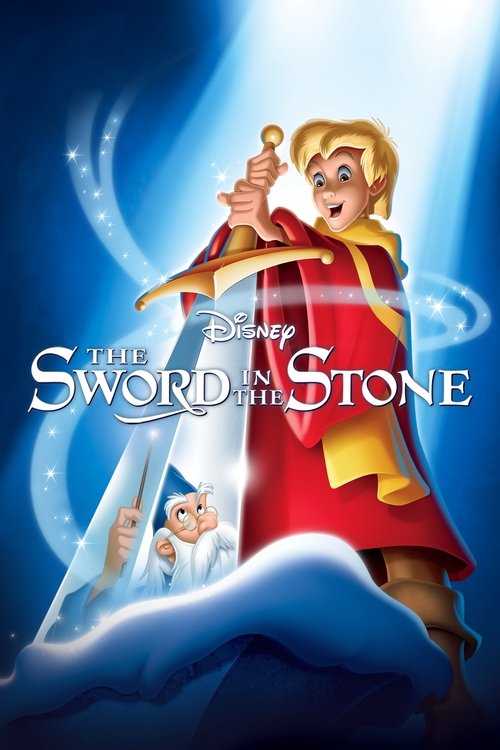
The Sword in the Stone
1963 · Directed by Wolfgang Reitherman
Woke Score
CriticCritic Score
Audience
Ultra Based
Critics rated this 57 points above its woke score. Among Ultra Based films, this critic score ranks #886 of 1469.
Representation Casting
Score: 0/100
The film features exclusively white male characters in positions of agency and importance. Female characters appear only peripherally and contribute nothing to the central narrative.
LGBTQ+ Themes
Score: 0/100
No LGBTQ+ representation, themes, or subtext of any kind present in the film.
Feminist Agenda
Score: 0/100
The narrative centers entirely on male characters and male achievement. No female characters possess agency or significance to the plot.
Racial Consciousness
Score: 0/100
Set in medieval England, the film contains no racial themes, representation, or consciousness whatsoever.
Climate Crusade
Score: 0/100
No environmental or climate-related themes appear in this fantasy adventure story.
Eat the Rich
Score: 0/100
The film actually celebrates aristocratic inheritance and destiny rather than questioning systems of privilege or wealth.
Body Positivity
Score: 0/100
The film contains no engagement with body image, body diversity, or body positivity messaging.
Neurodivergence
Score: 0/100
No representation or acknowledgment of neurodivergent characters or experiences appears in the film.
Revisionist History
Score: 0/100
The film adapts a fantasy interpretation of Arthurian legend without attempting any revisionist historical narrative.
Lecture Energy
Score: 5/100
Merlin's educational sequences contain some preachy elements about learning and wisdom, though these are presented as entertainment rather than moral instruction.


Synopsis
Wart is a young boy who aspires to be a knight's squire. On a hunting trip he falls in on Merlin, a powerful but amnesiac wizard who has plans for him beyond mere squiredom. He starts by trying to give him an education, believing that once one has an education, one can go anywhere. Needless to say, it doesn't quite work out that way.
Consciousness Assessment
The Sword in the Stone represents Disney animation at its most innocuous, a film so thoroughly devoid of contemporary social commentary that it barely registers on any meaningful scale of cultural awareness. The narrative concerns itself exclusively with the education of a peasant boy destined for kingship, a premise that accepts medieval hierarchy without irony or critique. Merlin's pedagogical efforts, while charming in their whimsy, amount to little more than sequences where animals teach lessons through slapstick comedy. The entire enterprise operates in a pre-political space where such concepts as representation, equity, or systemic analysis have not yet arrived. This is not a flaw, merely an observation about a film made during an era when such concerns held no sway over children's entertainment. The animation itself is competent if uninspired, and the voice performances serve their functional purpose without distinction. We observe this film the way we might examine a historical artifact, understanding it as a product of its moment rather than as a statement of any kind. The absence of progressive sensibility here is so complete that discussing it almost feels absurd, like scoring a medieval tapestry for its stance on modern labor practices.
Analysis generated by our Consciousness Algorithm
Critic Reviews
“The picture makes an eye-filling package of rollicking fun and thoughtful common sense. The humor sparkles with real, knowing sophistication.”
“At first glance, you might have expected the film to be a grand epic with some comedy. Instead, it’s largely a comedy with some serious moments.”
“Maybe the film works best as nostalgia for Baby Boomers who recall the picture from their childhood. ”
Consciousness Markers
The film features exclusively white male characters in positions of agency and importance. Female characters appear only peripherally and contribute nothing to the central narrative.
No LGBTQ+ representation, themes, or subtext of any kind present in the film.
The narrative centers entirely on male characters and male achievement. No female characters possess agency or significance to the plot.
Set in medieval England, the film contains no racial themes, representation, or consciousness whatsoever.
No environmental or climate-related themes appear in this fantasy adventure story.
The film actually celebrates aristocratic inheritance and destiny rather than questioning systems of privilege or wealth.
The film contains no engagement with body image, body diversity, or body positivity messaging.
No representation or acknowledgment of neurodivergent characters or experiences appears in the film.
The film adapts a fantasy interpretation of Arthurian legend without attempting any revisionist historical narrative.
Merlin's educational sequences contain some preachy elements about learning and wisdom, though these are presented as entertainment rather than moral instruction.