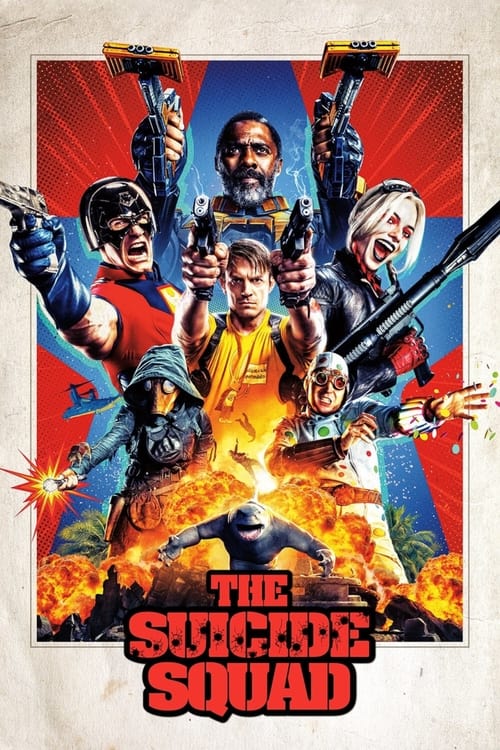
The Suicide Squad
2021 · Directed by James Gunn
Woke Score
CriticCritic Score
Audience
Woke-Adjacent
Critics rated this 24 points above its woke score. Among Woke-Adjacent films, this critic score ranks #72 of 151.
Representation Casting
Score: 72/100
The ensemble cast includes significant representation across racial and ethnic backgrounds, with Viola Davis and Idris Elba in prominent roles. The diversity extends beyond background casting to core narrative positions.
LGBTQ+ Themes
Score: 0/100
No LGBTQ+ themes or representation are present in the film. While the ensemble is large, there is no evidence of queer characters or relationships.
Feminist Agenda
Score: 45/100
Harley Quinn functions as an agent with narrative autonomy and moral agency, but the feminist elements are limited primarily to this single character. The film does not engage in systematic critique of gender dynamics.
Racial Consciousness
Score: 55/100
The film's anti-imperialist themes intersect with racial dynamics through its critique of American military intervention in a fictional Latin American nation, though explicit racial consciousness remains implicit rather than thematic.
Climate Crusade
Score: 0/100
No climate or environmental themes are present in the film. The narrative contains no engagement with ecological consciousness or climate-related messaging.
Eat the Rich
Score: 40/100
The film critiques American military-industrial complexes through satirical anti-imperialist commentary, but this critique remains surface-level and expressed through absurdist action rather than systematic economic analysis.
Body Positivity
Score: 0/100
No body positivity themes are evident. The film makes no explicit engagement with body image, body diversity, or fat acceptance messaging.
Neurodivergence
Score: 35/100
Certain characters display neurodivergent traits and mental health struggles, particularly Harley Quinn's established mental health issues, but these are often played for comedic effect rather than treated with consistent dignity.
Revisionist History
Score: 0/100
The film does not engage in revisionist historical narratives. While it critiques American foreign policy, it does not reframe historical events or present alternative historical interpretations.
Lecture Energy
Score: 25/100
The film's anti-imperialist messaging is woven throughout the narrative and action sequences rather than delivered through expository dialogue, maintaining a relatively light touch despite its ideological commitments.


Synopsis
Supervillains Harley Quinn, Bloodsport, Peacemaker and a collection of nutty cons at Belle Reve prison join the super-secret, super-shady Task Force X as they are dropped off at the remote, enemy-infused island of Corto Maltese.
Consciousness Assessment
James Gunn's "The Suicide Squad" presents itself as a violence-soaked comic book romp, but functions as a surprisingly coherent critique of American military interventionism and the casual brutality of foreign policy. The film's central conceit, wherein imprisoned supervillains are deployed to a fictional Latin American nation under the guise of a covert military operation, serves as transparent satire of how the United States government treats other nations as disposable chess pieces. This is not subtle work, yet Gunn's willingness to center anti-imperialist messaging within a major studio superhero film represents a genuine departure from the genre's typical geopolitical complacency.
The casting choices amplify these themes considerably. Viola Davis and Idris Elba anchor the narrative with considerable presence, and the film's ensemble includes performers from various ethnic and national backgrounds, creating a visual representation of diversity that extends beyond tokenism. Margot Robbie's Harley Quinn functions as the film's moral center, a character whose mental health struggles are treated with rough compassion rather than punchline exploitation. The ensemble structure means no single character dominates through traditional heroic virtue, instead distributing agency and narrative weight across the team members.
Yet the film's progressive sensibilities have clear limits. Its anti-capitalist commentary remains surface-level, expressed primarily through the absurdist violence rather than genuine systemic critique. The neurodivergent representation, while present, risks playing disability for laughs. Climate themes are entirely absent, and the feminist elements, though present through Harley Quinn's agency, do not constitute the film's primary ideological project. The result is a work that has absorbed certain contemporary progressive frameworks without fully committing to their deeper implications, content to gesture toward radicalism while remaining fundamentally a studio entertainment product.
Analysis generated by our Consciousness Algorithm
Critic Reviews
“The Suicide Squad is a gut-wrenching, gut-busting wild ride and DC’s best film in years. ”
“No one is safe, and decency is thrown out the window. Not since Deadpool has a movie ever been so f****d up. Though Deadpool wandered more into the sexual and scatological terrain, The Suicide Squad, instead, blurs the line between cartoon violence and gory realism.”
“The most derivative but finely tuned of superhero movies to come out in ages.”
“The Suicide Squad is crass, noisy and brash – a disturbing glimpse inside the mind of James Gunn.”
Consciousness Markers
The ensemble cast includes significant representation across racial and ethnic backgrounds, with Viola Davis and Idris Elba in prominent roles. The diversity extends beyond background casting to core narrative positions.
No LGBTQ+ themes or representation are present in the film. While the ensemble is large, there is no evidence of queer characters or relationships.
Harley Quinn functions as an agent with narrative autonomy and moral agency, but the feminist elements are limited primarily to this single character. The film does not engage in systematic critique of gender dynamics.
The film's anti-imperialist themes intersect with racial dynamics through its critique of American military intervention in a fictional Latin American nation, though explicit racial consciousness remains implicit rather than thematic.
No climate or environmental themes are present in the film. The narrative contains no engagement with ecological consciousness or climate-related messaging.
The film critiques American military-industrial complexes through satirical anti-imperialist commentary, but this critique remains surface-level and expressed through absurdist action rather than systematic economic analysis.
No body positivity themes are evident. The film makes no explicit engagement with body image, body diversity, or fat acceptance messaging.
Certain characters display neurodivergent traits and mental health struggles, particularly Harley Quinn's established mental health issues, but these are often played for comedic effect rather than treated with consistent dignity.
The film does not engage in revisionist historical narratives. While it critiques American foreign policy, it does not reframe historical events or present alternative historical interpretations.
The film's anti-imperialist messaging is woven throughout the narrative and action sequences rather than delivered through expository dialogue, maintaining a relatively light touch despite its ideological commitments.