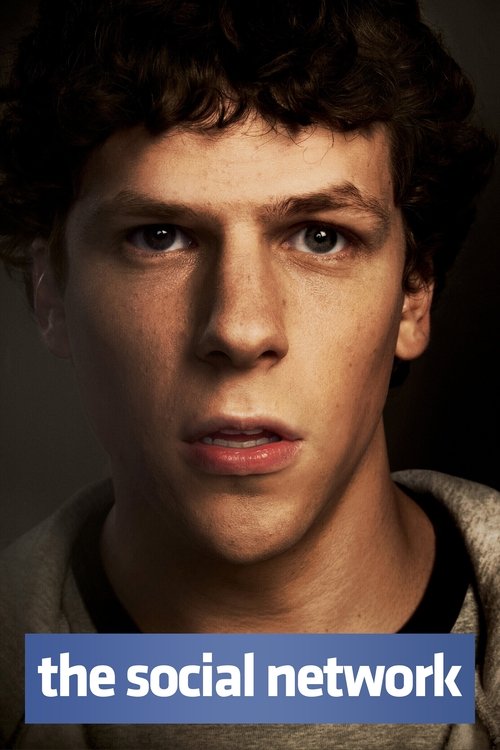
The Social Network
2010 · Directed by David Fincher
Woke Score
CriticCritic Score
Audience
Ultra Based
Critics rated this 91 points above its woke score. Among Ultra Based films, this critic score ranks #55 of 1469.
Representation Casting
Score: 8/100
The cast includes some performers of color (Brenda Song, Rashida Jones), but they occupy minor roles. The film's power structure and protagonist circle are overwhelmingly white and male.
LGBTQ+ Themes
Score: 0/100
No LGBTQ+ themes, representation, or content is present in the film.
Feminist Agenda
Score: 5/100
The film's treatment of women is dismissive at best and misogynistic at worst. Female characters exist primarily as romantic interests or legal complications for male characters, with little agency or depth.
Racial Consciousness
Score: 0/100
There is no engagement with racial themes, racial justice, or any consideration of how race shapes the world depicted in the film.
Climate Crusade
Score: 0/100
Climate change or environmental concerns do not appear in the film in any form.
Eat the Rich
Score: 0/100
The film presents capitalism and entrepreneurship as morally neutral or positive. Zuckerberg's ruthless exploitation of his friends is treated as regrettable personality flaw rather than systemic critique.
Body Positivity
Score: 0/100
There is no body positivity content or consideration of diverse body types in the film.
Neurodivergence
Score: 0/100
While Zuckerberg is portrayed as socially awkward, this is not framed as neurodivergence or treated with any particular consciousness or sensitivity.
Revisionist History
Score: 0/100
The film does not attempt to revise historical narratives or reframe historical events through a progressive lens.
Lecture Energy
Score: 0/100
The film does not include speeches or scenes designed to lecture the audience about social justice or progressive values.


Synopsis
In 2003, Harvard undergrad and computer programmer Mark Zuckerberg begins work on a new concept that eventually turns into the global social network known as Facebook. Six years later, Mark is one of the youngest billionaires ever, but his unprecedented success leads to both personal and legal complications when he ends up on the receiving end of two lawsuits, one involving his former friend.
Consciousness Assessment
The Social Network stands as a monument to the pre-woke cinema of the early 2010s, a film so thoroughly indifferent to progressive sensibilities that watching it now feels like observing an artifact from a different planet. David Fincher's ruthlessly efficient screenplay, adapted from Ben Mezrich's book, presents a world populated almost entirely by men in positions of power and decision-making, with women appearing primarily as objects of male desire, frustration, or legal complication. The film opens with Mark Zuckerberg's brutal dismissal of his girlfriend, and this tenor persists throughout: women exist in the narrative primarily as romantic conquests, social complications, or peripheral figures in boardroom scenes. The famous "I'm not a bad guy" speech that closes the film, where Zuckerberg desperately refreshes a Facebook page to monitor whether his ex-girlfriend has accepted his friend request, encapsulates the film's casual misogyny, treating female emotional labor as a puzzle to be solved by technological means.
The film's relationship to its subject matter is fundamentally uncritical in any progressive sense. Fincher presents the creation of Facebook with the aesthetic of a heist film, all sharp cuts and pulsing music, treating Zuckerberg's ruthlessness as morally neutral rather than condemnable. There is no interrogation of the platform's role in monetizing user data, no consideration of Facebook's impact on privacy or mental health, and certainly no examination of how the platform might disproportionately harm marginalized communities. The anti-capitalist energy one might expect from a film about a brilliant young man exploiting his friends for personal enrichment is entirely absent. Instead, we receive a celebration of competitive ambition and intellectual superiority, with Mark's betrayal of his friends treated as a regrettable but inevitable consequence of genius. The film's only gesture toward social consciousness is a vague disapproval of Zuckerberg's personal behavior, not his business practices.
What remains most striking is the film's complete absence of representation consciousness, diversity considerations, or any marker of 2020s progressive sensibility. It is a film made in the 2010s that feels aesthetically and morally rooted in a much earlier era of Hollywood filmmaking. The cast is predominantly white, the power structures entirely male-dominated, and the world depicted contains no visible evidence that concerns about representation, equity, or social justice exist anywhere in the universe. For a film about connecting the world, it constructs a remarkably narrow one.
Analysis generated by our Consciousness Algorithm
Critic Reviews
“With a thieves den of borderline-Shakespearian characters, a wickedly literate screenplay, potent direction by David Fincher, an exceptional ensemble cast and subject matter that speaks to a generation and well beyond, The Social Network is mesmerizing. ”
“Keep your eyes on Garfield - he's shatteringly good, the soul of a film that might otherwise be without one. The Social Network is the movie of the year. But Fincher and Sorkin triumph by taking it further. Lacing their scathing wit with an aching sadness, they define the dark irony of the past decade.”
“The film comes down to a mesmerizing portrait of a man who in any other age would perhaps be deemed nuts or useless, but in the Internet age has this mental agility to transform an idea into an empire.”
“It's an entertainingly cynical small movie. Aaron Sorkin's dialogue tumbles out so fast it's as if the characters want their brains to keep pace with their processors; they talk like they keyboard, like Fincher directs, with no time for niceties.”
Consciousness Markers
The cast includes some performers of color (Brenda Song, Rashida Jones), but they occupy minor roles. The film's power structure and protagonist circle are overwhelmingly white and male.
No LGBTQ+ themes, representation, or content is present in the film.
The film's treatment of women is dismissive at best and misogynistic at worst. Female characters exist primarily as romantic interests or legal complications for male characters, with little agency or depth.
There is no engagement with racial themes, racial justice, or any consideration of how race shapes the world depicted in the film.
Climate change or environmental concerns do not appear in the film in any form.
The film presents capitalism and entrepreneurship as morally neutral or positive. Zuckerberg's ruthless exploitation of his friends is treated as regrettable personality flaw rather than systemic critique.
There is no body positivity content or consideration of diverse body types in the film.
While Zuckerberg is portrayed as socially awkward, this is not framed as neurodivergence or treated with any particular consciousness or sensitivity.
The film does not attempt to revise historical narratives or reframe historical events through a progressive lens.
The film does not include speeches or scenes designed to lecture the audience about social justice or progressive values.